The War Is Terrible, and the Book Knows It

Ashley Miller, 21
16 reviews on RNKD · 8 min read
SPOILERS Spoilers throughout, including the ending.
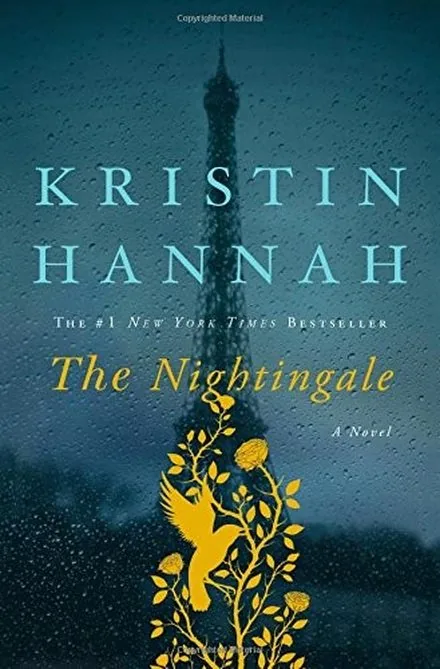
The first thing I noticed about The Nightingale was food. Not the fancy picnic at the beginning, although Kristin Hannah gives us one of those too, with champagne, cheese, ham, apples, and a daughter wearing a daisy crown. I mean the way food changes from something prepared and enjoyed into a ration, a line, a calculation, a favor, a risk, and eventually a reason to lie. Vianne is always counting what is left. Flour. Wood. Milk. Money. The number of people who need to eat. That part worked on me immediately because the occupation shows up as more than soldiers and flags. It is also the daily humiliation of standing in line for a piece of meat that is mostly bone while German soldiers eat the food your town produced.
This is a very emotional book, sometimes effectively and sometimes with all the subtlety of somebody dropping a full stockpot on the floor. I finished it, obviously, but there were multiple points when I thought, okay, I understand that these women are suffering. You can stop adding another injury now. Hannah does not believe one terrible event is enough to make a point. She will give you the death of a child, then starvation, then an execution, then a rape, then a concentration camp, and then somebody will still find the strength to say that love lasts. I am not saying those things did not happen. The problem is that the novel keeps reaching for the most painful possible version of every scene, and after a while I could feel the machinery.
Still, I cared. That is the annoying part.
The center of the novel is the relationship between Vianne and Isabelle, and their difference is clear from the beginning. Vianne is cautious, domestic, and committed to keeping her daughter alive. Isabelle is furious, impulsive, and desperate to do something that matters. Vianne wants to get through the day. Isabelle wants to fight the war. The novel keeps trying to make us choose between them, but I found the more interesting question to be why women are judged differently depending on which kind of survival they choose.
Isabelle gets called reckless because she is visible. She distributes resistance papers, carries messages, helps downed airmen, crosses the Pyrenees, steals bicycles, lies to soldiers, and walks into danger with the confidence of somebody who has not yet had enough time to understand how badly things can go. She is also genuinely irritating. She assumes courage will cover planning gaps, and sometimes the book treats this as charming when it should probably be a serious operational concern. If I were coordinating a dangerous escape network, I would not want the newest recruit making decisions because she had a strong feeling and an available bicycle.
But Isabelle grows. Her courage becomes less about wanting to be seen as brave and more about accepting responsibility for other people. The early Isabelle wants a role in the war because she is tired of being dismissed. The later Isabelle understands that every choice puts someone else at risk. The scene where she helps the British pilot in Paris is effective because it begins with a decision she knows is probably stupid. She does it anyway, then has to deal with the practical consequences: hiding the flight suit, finding clothes, getting rid of identification tags, keeping her father from discovering the man in the secret room. That is where the story is strongest. Heroism looks less like a speech and more like deciding what to do with a large pair of boots when someone is hiding in your bedroom.
Vianne’s arc is quieter but more complicated. At first, she believes obedience can protect her family. She accepts Captain Beck into her house, gives him the list of Jewish and communist teachers, and keeps telling herself that Pétain has surrendered to save lives. She is not stupid. She is afraid, and she has a child. The book is good about showing how fear turns ordinary decisions into traps. Vianne does not wake up one morning and become fearless. She makes one compromise, then another, then realizes that the compromises have helped the occupation function.
The list is the moment when I stopped treating Vianne’s caution as automatically virtuous. She knows the list may hurt people. She writes Rachel’s name anyway because Beck offers help with the prisoners’ postcards and because she cannot imagine what will happen if she refuses. Her reasoning is understandable. It is also wrong. The novel lets both facts exist, which is better than turning her into a saint who merely had a bad day.
Rachel’s story is where the book becomes hardest to read. Vianne’s betrayal gets Rachel fired, and later Rachel and her daughter Sarah are caught trying to cross into the Free Zone. Sarah is shot at the border. Rachel is deported. Vianne hides Rachel’s son, first as Ari and then as Daniel, and eventually has to give him back to his surviving relatives. The scene where Daniel is taken away is devastating because Vianne has spent years becoming his mother in every practical sense, while knowing that loving him does not make him hers to keep. The book’s argument about survival is clearest there. Sometimes protecting someone means accepting that you will lose them.
I also appreciated that Vianne’s resistance is built out of boring, repeatable work. She gardens, preserves food, teaches children, forges documents, hides people, and keeps records so the children might be identified after the war. This is the kind of labor that tends to disappear when people tell stories about heroism. It is not glamorous, only inventory, laundry, false papers, locked doors, and knowing which child must use which name. Vianne is not suddenly transformed into a different person. She applies the same practical competence she used to run a household to a much larger moral emergency.
Captain Beck is where the book nearly lost me. I understand what Hannah is doing with him. He is meant to show that a person can be part of an evil institution while still having a conscience, a family, and moments of decency. He brings Vianne food, helps her get news of Antoine, warns her about Rachel, and gives Ari false papers. He also wears the uniform of the occupying army, works within the Nazi system, and benefits from the violence around him. The novel knows this, but it spends so much time making him attractive, polite, sad, and conflicted that I kept wanting it to stop asking me to consider whether he was a good man.
He is not a good man in any uncomplicated sense. He is a German officer occupying a French home during a war of conquest. His kindness does not cancel his position. When Vianne kills him, the scene is morally messy because Beck is trying to find the pilot and has become dangerous, but I did not experience his death as a tragic loss of innocence. I experienced it as the consequence of a situation he helped create. Vianne is allowed to grieve him. I did not need to.
Von Richter is less complicated and more frightening. His violence toward Vianne is not written as a puzzle to solve. He is cruel, sexually abusive, and interested in control. The pregnancy that follows is another example of the book pushing directly toward maximum pain, but Vianne’s refusal to let him define her is emotionally important. Her conversation with Sophie about what is happening is one of the best scenes in the novel because Sophie already knows. Children in this book are constantly told to wait, be quiet, and believe that adults have a plan. Sophie understands that pretending nothing is happening is not the same as protecting someone.
The concentration-camp sections are brutal. Isabelle survives because she turns care into a discipline. She helps other women stand, share water, remember names, and keep moving. The book does not make survival clean or inspirational. Isabelle is sick, damaged, frightened, and still alive. When she finally returns to Vianne, she is not magically healed. She coughs blood, struggles to eat, cannot remember everything, and believes she is no longer beautiful. Her reunion with Gaëtan is moving, but it also has the slightly polished quality of a scene designed to be underlined in a book-club discussion.
That polished quality is my biggest problem with The Nightingale. The prose often explains an emotion immediately after showing it. A character grieves, and then the narration explains grief. A character makes a sacrifice, and then the narration explains what the sacrifice means. The repeated language about hearts, souls, memories, love, and being changed by war can be beautiful once. By the tenth time, I wanted somebody to take the metaphorical wreath off the table and let the scene stand on its own.
The 1995 framing story also took a while to work for me. The older narrator’s identity is not difficult to guess if you are paying attention to the structure, and the reunion ending is very carefully arranged to deliver every remaining emotional payoff. Vianne reveals the truth to Julien. Ari returns. Gaëtan confirms that he loved Isabelle all his life. The women who survived are publicly remembered. Vianne finally says that she was a Nightingale in her own way. None of this is subtle, but I cannot pretend I was unmoved. The scene with Ari carrying the photograph of Vianne and Rachel lands because the novel has spent so much time showing what it costs to save a child and then give him away.
I think my practical complaint here is that the book is too determined to prove its emotional value. The history and the women’s work are already enough. I did not need every sacrifice to be converted into a life lesson. The strongest moments are the ones involving a concrete task: moving a car to reveal a cellar, sewing a fake identity, hiding papers in a baguette, counting food, walking children past a checkpoint, or deciding whether to open a locked door. The book is most convincing when people have something that needs doing and no good options.
I would still recommend it, with qualifications. If you want a restrained historical novel, this will test your patience. If you dislike melodrama, keep a glass of water nearby because you may need a break. But if you are willing to accept a book that is sometimes blunt, repetitive, and openly designed to make you cry, there is a lot here that matters. The novel understands that resistance is not one heroic personality type. It can look like stealing a bicycle, hiding a child, writing down a name, sharing half a loaf, refusing to forget, or simply getting up again when the war has taken almost everything.
The ending’s best idea is not that wounds heal or that love lasts, but that survival creates obligations. The women who lived have to remember the people who did not. They have to tell the stories, return the children, admit what they did, and keep going without pretending they came through unchanged. That is why I finished this book even when it was pushing too hard. Under all the polished speeches and carefully timed tears, it understands the unglamorous work of staying alive. And honestly, that part is enough.