A Long Drive With No Safe Destination

Avi Mizrahi, 61
16 reviews on RNKD · 8 min read
SPOILERS This review discusses the whole book, including how it ends.
The first thing I check in a long journey story is not the scenery. It is the supply line. Who has water? Who knows the route? Who is responsible when the plan changes? Who is still useful when the wagon breaks, the weather turns, or the person in charge is no longer making sense? Lonesome Dove has many answers to those questions, and most of them are bad. That is part of what makes the book work.
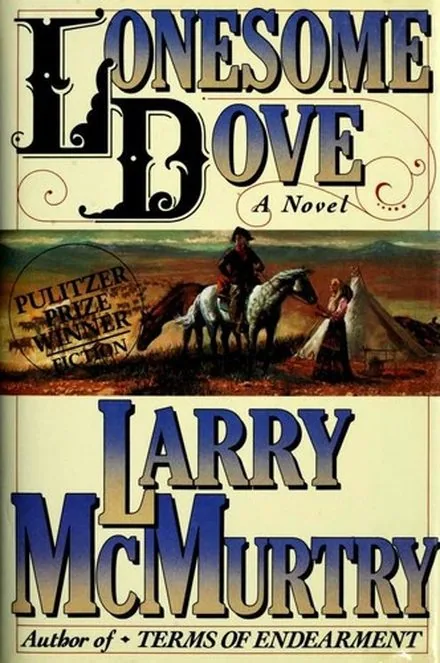
The book begins in Lonesome Dove, a dry and almost finished settlement near the Rio Grande, where former Texas Rangers Augustus McCrae and Woodrow Call have become partners in a small cattle and livery operation. The business is half broken from the beginning. The barn has no roof, the well is unfinished, the horses are difficult, and the town itself has little to offer except heat, dust, gambling, whiskey, and Lorena Wood, the local sporting woman. Gus talks, drinks, gambles, and avoids work whenever possible. Call works from morning until dark because work is the only structure he trusts. The difference between them is more than personality. It is their answer to life.
Gus believes that life is for enjoyment, argument, women, food, and conversation. Call believes that life is a series of duties which must be completed whether anyone enjoys them or not. He is the sort of man who would keep repairing a loading dock after the shipment had been cancelled because the repair was still waiting. Gus is the sort who would sit beside him and explain why the shipment was never worth sending. I understood both men, though I trusted Call more around a horse, a river crossing, or a bad order. I understood Gus better when he said the point was not simply to survive. A man who only works and suffers may be reliable, but he is not necessarily alive.
Then Jake Spoon returns, having accidentally killed a dentist in Arkansas with a buffalo rifle and a bullet meant for someone else. Jake brings the idea of Montana, where cattle can be taken north and fortunes made. Call immediately treats the idea as a task. Gus treats it as another opportunity for talk, women, and possibly Clara Allen, the woman who rejected him years earlier and married a horse trader instead. Jake himself does not want the work. He wants the idea of Montana without the dust, the cattle, the Indians, the rivers, or the responsibility.
That is the central problem of the whole book. People keep wanting the result without accepting the work required to reach it. Call wants Montana because he has become tired of a life that no longer needs him, but he does not understand what he is chasing. Jake wants a new life but keeps making the same choices. Lorena wants San Francisco because it represents a place where her life might finally belong to her, but she keeps trusting men who promise movement and deliver another kind of confinement. The young cowboys want adventure, money, and women, but the road mostly gives them thirst, fear, injury, and graves.
McMurtry is very good at showing how ordinary work continues beside disaster. Men dig wells, repair harness, brand cattle, cook beans, sharpen knives, and argue about card games while death remains nearby. The best example is the crossing of the Nueces, when Sean O'Brien rides into a nest of water moccasins and is bitten repeatedly. The scene is horrible, but what stayed with me was the work afterward. The men carry him out, dig a grave, wrap him in a piece of wagon sheet, and then move on. There is no proper funeral because the herd is waiting and the weather is changing. Augustus says that life is short and tells the rest to kick their horses. That sounds hard, but it is also true. A cattle drive cannot stop forever for every death.
The book keeps repeating this pattern until the repetition becomes its meaning. The wagon breaks. Bolivar leaves. A sandstorm scatters the herd. A boy is killed by lightning. Lippy nearly drowns when the wagon overturns. Water moccasins kill Sean. The grasshoppers strip the prairie. Cattle go blind from thirst. A grizzly bear fights the one-eyed Texas bull. Every plan is damaged by something physical, not abstract. Mud, heat, snow, thirst, bad horses, bad roads, bad luck. A person can be competent and still lose because the environment does not care about competence.
The treatment of the landscape is one of the book's strengths, but it is not always a comfortable strength. The land is beautiful, and the book gives it close attention. Morning light makes the chaparral look like it has been covered with diamonds. The plains seem endless. Rivers have their own moods. Snow is strange and frightening to men who have never seen it. But this beauty exists beside conquest. Call and Gus spent years killing Comanches and other enemies of settlement, and they know, at least in flashes, what their work made possible. Gus is especially honest about it. He says they killed Indians so bankers and lawyers could arrive. Call disagrees, but he cannot fully dismiss the point.
The book does not turn that recognition into a clean moral conclusion. That is one reason I respected it. The Rangers are not presented as modern heroes, but neither are the Indian characters given much room to exist outside the fears and crimes of the white characters. Blue Duck is a genuine monster, responsible for killing, torture, rape, and the theft of children. His violence is not softened. But he also becomes the book's main image of Indian danger, while the violence done by the Rangers and settlers is more often treated as history, duty, or the price of civilization. The book knows this contradiction exists. It does not solve it.
Lorena's story is the most difficult part to read. She has been used by men since she was a girl, and McMurtry does not disguise the physical and economic facts of that life. She is not a romantic prostitute waiting for one good man. She is tired, wary, practical, and often silent because silence is safer than allowing men to imagine intimacy. Jake convinces her that he can take her to San Francisco, but he is mostly a child who wants somebody else to take care of him. Blue Duck's kidnapping is brutal, and the later violence inflicted by the Kiowas is worse. Gus rescues her, but rescue does not repair her. She remains frightened and damaged.
I was glad the book did not pretend that Gus's kindness could erase what happened. Lorena eventually stays with Clara in Nebraska, and that is the closest thing she receives to a future. Clara offers her work, a room, and a place where she is not required to sell access to her body. It is a small settlement, not a grand rescue. That is more believable and more valuable.
Clara is one of the strongest characters in the novel because she is not waiting for a man to explain her life. She loses children, cares for an incapacitated husband, manages horses, bargains with men, and sees through both Gus and Call. She understands that love is not automatically a virtue. She also understands that a person can become a burden through weakness and call it devotion. Her criticism of Call is severe but correct. He abandons Newt emotionally even while providing food, work, and protection. He does not have to be cruel to do harm. He only has to refuse responsibility for what he has done.
That refusal controls the ending. Call finally learns that Newt is his son, or at least admits what he has known for years. He still cannot say it directly. Instead, he gives Newt his horse, his gun, and his father's watch before leaving to carry Gus's body back to Texas. It is a practical handoff, the kind of gesture I would understand immediately. Quantity, time, equipment, responsibility. But it is not enough. A horse is not a name. A gun is not an apology. The watch is not an explanation.
Gus's death is painful because he remains Gus almost to the end. He refuses to lose his leg, because he refuses to live as a reduced version of himself. That decision is vain, but it is also consistent. He wants to be buried in the place where he was happiest, Clara's orchard on the Guadalupe. Call carries him there, even though the request is unreasonable and the journey nearly destroys him. The final image is not a triumph. Call buries Gus beneath a damaged sign, then returns to Lonesome Dove to find the town changed and the Dry Bean burned. Bolivar is still there, beating the dinner bell. The work continues, but the people who gave the place its meaning are mostly gone.
The book is very long, and it repeats certain ideas more than necessary. There are too many conversations about women, whiskey, cards, and what will happen in Montana. Some of the sexual material is deliberately ugly, but the repeated attention can become exhausting. The plot also depends on people making choices that any practical person would reject. Jake brings Lorena into a cattle drive without a workable plan. Lorena follows him because she wants a different life. Gus leaves her alone near Blue Duck. Call keeps driving north after the mission has stopped making sense. These are not small errors. They are the engines of the tragedy.
Still, the length gives the consequences room to accumulate. By the end, the deaths do not feel like isolated shocks. They form an inventory. Sean. Bill Spettle. Deets. Jake. Wilbarger. The unnamed settlers. The people killed by Blue Duck. The horses and cattle. Gus. The list is long enough that the original dream of Montana has almost disappeared beneath it.
Lonesome Dove is not really about reaching a new country. It is about men who keep moving because stopping would require them to account for their lives. Call reaches Montana and loses the reason to stay. Gus reaches the end still arguing with the world. Lorena does not reach San Francisco, but finds a safer place by accident. Newt reaches adulthood without receiving the truth he needed. That is the quantity, the time, and who signed: everyone paid, and nobody got the result they ordered.
This is a powerful novel, but it is not a comfortable one, and it is not a clean adventure. It is about competence failing, affection arriving late, and history being built by people who do not understand what they are building. I would recommend it to someone willing to spend a long time watching a plan become a burden. I would not recommend it to anyone expecting the West to reward good intentions. It does not. The land keeps going, the dead remain dead, and the living carry whatever they failed to say.