A Library Is Still a Workplace

Avi Mizrahi, 61
16 reviews on RNKD · 7 min read
SPOILERS This review discusses the whole book, including how it ends.
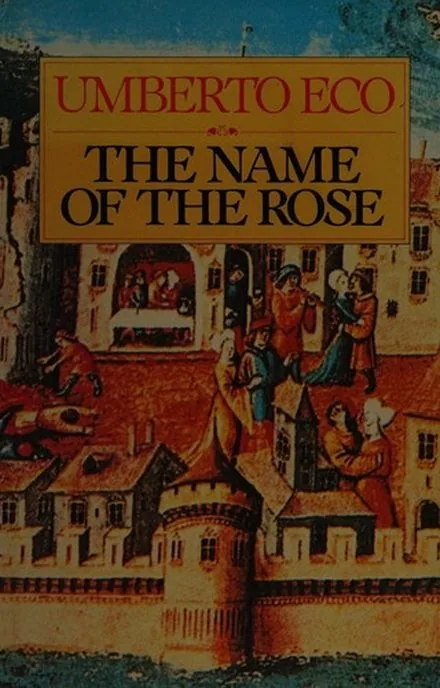
The first thing I check in a mystery is not the dead body but the handoff before the problem. Who knew what? Who was allowed to move where? Which rule was followed, and which rule was quietly bypassed? The Name of the Rose gives very good answers to those questions, although it takes its time getting there.
This is a long book about a murder investigation in a Benedictine abbey in 1327. Brother William of Baskerville arrives with his young assistant Adso and is asked to investigate the death of Adelmo, a young illuminator who fell from the Aedificium, the great building containing the scriptorium and the library. Soon Venantius is found head down in a vat of pig's blood. Berengar disappears and is later found drowned in the bath. Severinus is killed with an armillary sphere. Malachi dies during matins. The abbot disappears into the same machinery of secrecy. Then the library burns, along with most of the abbey.
That is the short version. The actual book contains theology, medieval politics, heresy trials, arguments over whether Christ owned property, debates about laughter, descriptions of food and architecture, discussions of poisons, several forms of sexual shame, the structure of a library, and enough Latin and Greek to make a warehouse inventory look like a children's exercise. Yet the book is not simply showing off its research. Eco is making the research part of the working machinery. These monks do not just live in a library. They compete for access, authority, information, and control of the documents. The books are stock, evidence, weapons, status objects, and sometimes poison containers. The library is not a quiet room but the central operation.
William is the reason I stayed patient through the long explanations. He is a good investigator because he begins with what can be checked. He looks at the horse tracks and the broken branches before he starts discussing demons. He notices the direction of the wind. He studies the position of the windows. He asks who was in choir, who had access to the kitchen, who could move through the Aedificium after the doors were locked. When someone offers him a theory about the Devil, he asks what the evidence shows. When someone offers him a theological principle, he asks who benefits from treating that principle as settled.
His method is practical, but the book does not pretend practical reasoning is perfect. William repeatedly forms a theory, then admits it may be wrong. He thinks the deaths follow the seven trumpets of the Apocalypse, and the pattern seems convincing until it turns out the deaths have different causes. He suspects one murderer, then discovers that each event involved a different mixture of guilt, fear, lust, jealousy, curiosity, and accident. His final explanation is not a triumph in the usual detective-story sense. He exposes Jorge, but he also admits that the case did not unfold according to the clean design he imagined. He found a pattern because he needed one in order to proceed.
That part worked very well for me. In operations, a clean report after the event can make a bad process look organized. You can draw a route on paper and make every stop appear planned. Then you ask when the customer changed the unloading address, who accepted the change, and whether the driver received the same version. The report is orderly because the chaos has already been removed. William understands something similar. The world leaves signs, but the signs do not come with a completed explanation. You have to decide which details matter, and you can decide incorrectly.
The novel's main argument concerns control of information. Jorge believes that knowledge must be guarded because ordinary people, and even many learned people, will use it badly. His particular fear is Aristotle's lost second book of the Poetics, which discusses comedy and laughter. He believes laughter weakens fear, and fear is what keeps people obedient to divine and earthly order. If people learn to laugh at what frightens them, they may begin to question the people who claim authority over them.
He is not entirely wrong about the power of laughter. A person who can make a powerful man look ridiculous has taken away part of that man's control. But Jorge's solution is the same bad solution used by every manager who hides a process because the staff might misuse it. He thinks preventing access will prevent bad decisions. Instead, it creates a closed system where curiosity becomes dangerous and every missing document becomes more valuable. The library is protected so aggressively that it becomes the source of the crimes committed in its defense.
The book is strongest when it shows this conflict through people rather than statements. Benno wants access to the library because he believes a scholar has the right to know. As soon as he receives the position of assistant librarian, he changes his view. He becomes part of the gatekeeping system he was criticizing. The cellarer Remigio once joined the Dolcinians in a rebellion against clerical wealth and later became an administrator who collects tithes and manages the abbey's stores. He has not solved his beliefs. He has simply changed jobs. Bernard Gui does not care about finding the actual murderer as much as he cares about connecting heresy to political ideas he wants to destroy. He turns an investigation into a shipment of predetermined conclusions.
That is where Eco is especially hard on institutions. Every authority figure says he is protecting order, truth, the church, the books, or the souls of the simple. In practice, he is usually protecting a position. The abbot wants the abbey's reputation protected. Jorge wants the library sealed. Bernard wants a confession useful to the Pope. The Italian monks want control of the abbey returned to local hands. The Franciscans want a theological position that also affects imperial power. Nobody is only serving truth. They are all attaching truth to a seat, a title, a library, a court, or a budget.
The historical debates about poverty can be difficult, but they are not irrelevant padding. The question of whether Christ and the apostles owned property is also a question about who has the right to make laws, administer wealth, and command obedience. William argues that the church's spiritual authority does not automatically give it control over every earthly matter. That sounds familiar because the same argument appears in modern disputes about institutions that claim expertise in one area and then demand authority over everything. The book does not offer a simple modern translation, but it shows how an abstract argument becomes a struggle over money, land, appointments, and punishment.
I did have problems with the reading experience. The book is repetitive. Several conversations explain the same conflict from another angle, and some of the long historical passages stop the investigation completely. I understand that Eco wants the reader to experience the density of the period, where every action is attached to an argument and every argument has a political consequence. Still, there were evenings when I thought the manuscript could have used better dispatch planning. A truck can carry a large load, but that does not mean every carton belongs on the same pallet.
Adso's narration also becomes excessive. He remembers every plant, animal, relic, costume, dish, architectural feature, and theological distinction with the same intensity. Sometimes this creates a convincing young man's awe. Sometimes it feels like a catalogue that has been left open on the loading dock. His encounter with the peasant girl is important because it breaks through his learned vocabulary. He has spent his life being told what women mean, what sin means, and what the body means. Then he meets a hungry young woman and discovers that his body has its own information. His response is overexplained, but the experience matters because it is the one event he cannot reduce to a system of signs.
The ending is the part that will divide readers. The library burns, Jorge dies, and William leaves with the knowledge that his reasoning was useful but not complete. There is no clean restoration. The abbey's system fails, most of the books are lost, and Adso spends the rest of his life collecting fragments. This is not a comfortable ending, but it is honest. A good investigation can identify causes without repairing the damage. Knowing who changed the delivery address does not bring back the lost stock or recover the hours spent waiting.
I finished The Name of the Rose with admiration, irritation, and more respect than affection. It is not a quick mystery, and it is not a historical novel that politely keeps its learning in the background. It makes the reader work through the same problems faced by William: how to separate evidence from interpretation, how to notice when authority is protecting itself, and how to admit that a useful explanation may still be wrong. The book's final lesson is not that truth is impossible, but that people are dangerous when they believe their explanation is more important than the people harmed by it.
Read it if you can tolerate long arguments, repeated theological disputes, and a mystery that keeps changing its paperwork. The murders will get you through the door. The real subject is what people do when they control the documents, the keys, and the definition of truth. That part is still happening everywhere.