Roundtable 4 READERS · 1 BOOK

The Calamity Club

by Kathryn Stockett · Literary Fiction · 2026

All four readers love Meg and Birdie and agree the plot piles on too many crises, though they differ on whether Garnett's late defeat by Welty earns the satisfaction it's reaching for.

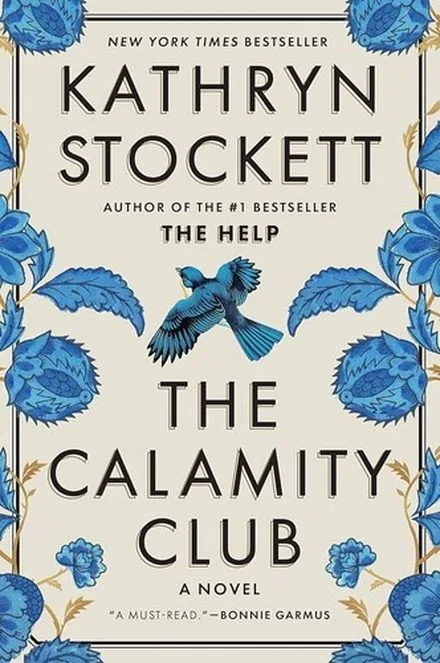
Cover of The Calamity Club by Kathryn Stockett
Genre
Literary Fiction
First published
2026
Length
about 638 pages
ISBN
9781954118812
RNKD readers
4

Cover artwork © its publisher, shown to identify the book under review. Rights

Verdicts at a glance

No RNKD reader scores a book out of five, so there is no average here. Just 4 people saying what they thought. Each of them wrote before reading the others.

READER 01 OF 4

The Girls Are the Point, Even When the Plot Forgets

Ashley Miller

Ashley Miller, 21

7 reviews on RNKD

WOULD RECOMMEND Finished the book

SPOILERS This review discusses the whole book, including how it ends.

Spoilers throughout, including the ending, the adoption, the hospital, the bank fraud, and the brothel that is technically a dance club until it very much is not.

The first thing I noticed about The Calamity Club is how much work its girls are doing while the adults congratulate themselves for providing opportunities. Meg is eleven years old and already knows how to count donated pennies, read adult letters, clean a room, lie when necessary, and identify which women in charge are pretending not to see the mold. Birdie is twenty-four and keeps a household, works at a store for three dollars a week, understands the books, repairs things, cooks, and takes a train to Oxford because her sister has stopped answering letters. Charlie survives prison, forced sterilization, poverty, and the loss of her child, then walks back into the story in a stained yellow dress and starts trying to get Meg back. These women are not waiting around for a lesson about resilience. They are doing unpaid or underpaid jobs because somebody has to.

That part worked for me. I cared about Meg almost immediately, and Birdie became the person I wanted to follow through every room, even when the plot kept assigning her another crisis. Meg’s voice is funny because she is observant, not because the book is trying to make childhood adorable. She understands that the orphanage’s welcome sign is lying. She understands that the adults prefer babies because babies can be shaped into the story adults want. She understands that sending twelve-year-olds to a cannery and calling it a wonderful opportunity is mostly a way to remove them from the building. When she asks whether the girls are paid, and Garnett explains that their wages go toward room and board, the arrangement is so obviously exploitative that even Meg can do the math.

The best relationship in the book is the one between Meg and Birdie. Birdie brings her two biscuits, newspapers, and fresh air. She paints the office blue because she cannot stand watching a child sit in a moldy room. Meg repaints Birdie in her mind, replacing the horns and slitted eyes with a face she trusts. There is no grand speech needed to explain why this matters. A person notices that another person is hungry, brings food, and does not make her perform gratitude. That is the entire moral argument of the novel, and it is stronger than most of the speeches delivered by its adults.

Birdie’s practical intelligence also made her chapters the most satisfying for me. She thinks in costs and time. She knows that a twenty-five-cent taxi fare matters, that a store credit arrangement is not the same as cash, that a mortgage does not disappear because a family has owned a house for generations, and that a yardman who is fired is still unemployed no matter how politely the owner explains the decision. When the Tartts’ money disappears, Birdie inventories the kitchen, finds the unpaid bills, calculates the mortgage, makes food from imported cans nobody knows how to use, and eventually learns to cook over a fireplace after the electricity is shut off. That is the kind of competence I believe in. Not a person standing in a doorway saying they are strong. A person figuring out how to make dinner with no butter and a dead refrigerator.

Birdie and Meg also notice the same thing: nice surfaces are not the same as decent treatment. The orphanage has a clean front room and a filthy office. Idlewilde has silver, velvet, and a private telephone, but the help goes unpaid and the backyard turns into weeds. The Heidelberg house has food, books, a lake, and a man who treats Meg like a person, but Lucille is lying about where Meg came from and using her as proof that she can still control her own life. The book keeps asking what a house is worth when the people inside it are unsafe. Sometimes it answers well.

It also answers the question too often. The Calamity Club has enough plot for three novels and seems determined to use every piece of it. There is the orphanage, the work program, the eugenics history, Birdie’s family money problems, the Tartts’ collapse, Rory’s fraud, his sexuality, his hospitalization, Charlie’s sterilization, the adoption, the Heidelberg family, Lucille’s drinking, Tom’s failed novel, the dance club, the brothel, the sheriff, the Anti-Vice League, the bank, the homecoming weekend, and the question of whether anyone can get safely to California. I was interested in many of these things. I did not need the book to keep proving it had another disaster in storage.

The shift from dime-a-dance business to brothel is where my patience started to go on break. Charlie first pitches a respectable dance club that can earn money from college boys who need partners. Then she reveals that the dance club is a front for prostitution because ordinary dancing will not make enough money. Birdie is horrified, reasonably. The women work under serious danger, the town is hostile to them, the sheriff is looking for an excuse, and the medical testing is being improvised in a cellar with stolen equipment. The situation should feel frightening and morally complicated. Instead, it sometimes feels like the book is excited to reveal another secret room.

There are scenes I liked in this section, especially the workers discussing rates, rest, disease, customers, and the difference between a safe house and a place that cheats women. Flossy’s story about choosing prostitution at twelve so her younger sister would not have to is devastating because it makes clear that one decision can become a life sentence even when it began as protection. The women are not presented as innocent angels, and that is good. They fight, insult each other, steal, lie, and still make sure somebody has eaten. Ruby can be cruel and loyal in the same conversation. Esmeralda is trying to get to the woman she loves in Paris. Virginia wants to become a doctor in a medical system that treats women as problems. These details gave the group real shape.

But the business itself becomes too neat as a solution. The girls need money, so the illegal operation makes money. The mortgage is threatened, so the club earns enough. Charlie needs a future with Meg, so the cash starts to look like a legal strategy. The risks do not disappear, but the accounting begins to make the story feel engineered. Birdie is the one person who should keep asking whether the numbers are realistic, because she knows what money costs. Instead, the book frequently rewards the most dangerous plan in the room.

I also had trouble with how race operates in the novel. The book clearly wants to show the violence of segregation, eugenics, forced sterilization, and the American Plan. Charlie’s arrest and sterilization are horrifying. The newspaper language and Garnett’s speeches show how easily respectable white women can turn prejudice into policy. Picador and Polly are treated with more individuality than the white volunteers who run the orphanage, and Birdie notices the difference between a store in Freedmen Town and the white businesses around the square. Those observations matter.

At the same time, the novel repeatedly uses racial slurs in dialogue and lets Birdie’s narration carry racist language from the period. Historical accuracy is not the same as historical clarity. The book wants the reader to understand that the language is ugly, but it sometimes places ugliness on the page so frequently that it becomes part of the texture rather than something the narrative is actively interrogating. The scenes involving Black characters can be perceptive, but they are still mostly filtered through white women’s moral awakening. I wanted more room for Picador, Polly, Lucinda, Ophelia, and the other Black women to exist outside the lessons they provide to Birdie or Meg.

Tom Heidelberg is the character I found most moving and most frustrating. He treats Meg gently. He teaches her to swim, gives her books, listens to her questions, and admits that his family wealth came from exploiting people. Those are real virtues. His death is painful because Meg has finally found an adult man who does not make her feel stupid or expensive. But Tom is also allowed to become a symbol of sensitive masculinity, failed privilege, literary ambition, addiction, and family disappointment all at once. His suicide is foreshadowed so heavily that I spent much of his later storyline waiting for the book to cash the check. When he dies, Meg blames herself for not reporting the drinking, and the story moves quickly toward her rescue. I wanted more attention paid to the damage left in the room instead of the next plot problem.

The ending gives Meg what she wants most. Her mother arrives, says she did not leave her on purpose, and takes her away from the orphanage. It is emotionally effective. Meg’s question, “Where in the hell have you been, Mama?” is exactly right. Charlie does not get a clean redemption, because she still made dangerous choices and lied to people, but she gets to tell her daughter the central truth. Birdie gets a future with Jack, or at least the possibility of one, and the bank forgives most of the Tartts’ mortgage. Garnett is finally challenged by Welty, which is satisfying even though it comes late. The ending is hopeful in the way a person can be hopeful after checking the account and finding enough money for gas, not in the way a person believes every problem has been solved.

I finished this book because Meg, Birdie, Charlie, and the other women kept giving me reasons to come back. I wanted to know whether Meg would escape, whether Charlie would get caught, whether Birdie would tell the truth, and whether anyone would stop calling exploitation a gift. I also wanted the book to slow down and trust its strongest material. The girls’ work, their hunger, their money, their friendships, and the exact mechanics of how people survive poverty were already enough. The novel did not need quite so many catastrophes to prove that.

The Calamity Club ultimately became a book about women trying to keep one another from being turned into someone else’s property. A child is treated as an adaptable object. A poor woman is treated as labor. A wife is treated as proof of a man’s respectability. A mother is treated as defective because powerful people have decided her child would be easier to manage without her. The book is at its best when its characters reject those definitions through practical acts: a biscuit, a letter, a clean room, a hand held under the water, a car driven north. It is messier and more melodramatic than it needs to be, but I believed in the women more than I believed in the machinery around them. That was enough to get me to the end.

READER 02 OF 4

A Good Intention Is Not a Safeguard

Jessica Brown

Jessica Brown, 48

14 reviews on RNKD

WOULD RECOMMEND Finished the book

SPOILERS This review discusses the whole book, including how it ends.

The Calamity Club is interested in what happens when people who have been denied ordinary choices decide that rules are no longer entitled to their obedience. That is a reasonable subject for a novel set in Mississippi in 1933, especially one involving an orphanage, forced sterilization, poverty, racial violence, Prohibition, and women who have been told that respectability is their only protection. Kathryn Stockett gives us plenty of material to think about. She also gives us a plot that repeatedly asks the reader to believe people will make dangerous decisions without first checking the obvious practical consequences. I finished it because Meg and Birdie kept pulling me back. I did not always believe the machinery around them.

The book begins with two stories that eventually intersect. Meg Lefleur is an eleven-year-old girl abandoned in an orphanage after her mother, Charlie, is arrested and sent to the state hospital at Ellisville. Meg is isolated by Garnett Pittman, the chairlady of the Lafayette County Orphan Asylum for Girls. Garnett removes her from school, keeps her in a moldy office, deprives her of mail, beats her, and repeatedly tells her that the supposed defects of her mother have been passed down to her. Meg responds by becoming funny, observant, difficult, and determined to remain a person in a place that prefers children to be quiet inventory.

Birdie Calhoun is Meg's twenty-four-year-old sister figure in the practical sense, though not by blood. She travels from Footely to Oxford to ask her wealthy sister Frances for money. Instead, she gets pulled into the orphanage's bookkeeping, notices that Garnett has diverted resources away from the older girls, and becomes attached to Meg. Birdie is one of the book's strongest characters because her kindness is not clean or self-congratulatory. She is nosy, judgmental, lonely, funny, and capable of making a bad decision while explaining to herself that she is simply helping.

The novel works best when it shows how people use procedures to avoid responsibility. Garnett has rules for everything. Girls cannot receive mail. Older girls are separated from babies. The window in Meg's office is boarded up, although the glass is mostly intact. Money intended for older girls is redirected toward a work program that sends them to a cannery and absorbs their wages for housing and board. Garnett always has a policy explanation ready, but the policy has no humane purpose. It is a way to turn cruelty into administration.

That part landed for me. I have spent enough time watching organizations hide behind a process that nobody can explain to recognize the pattern. Garnett is cruel, but the bigger problem is that she has arranged the institution so that every other woman can say she was following the rule, doing her best, or protecting the children. A policy nobody can explain is going to become six different policies. At the Orphan, the policy is worse than unclear. It is deliberately clear about who deserves care and who does not.

Meg's voice is the main reason the early chapters move so quickly. She is vulgar, inventive, and very funny, but the humor is not pasted over the suffering. When she describes a letter from prospective adopters who need an older girl because the wife lost an arm while chopping cotton, she sees the absurdity and the danger at the same time. When Birdie brings her biscuits and a newspaper, Meg understands that the real gift is not food. It is being treated as a person who can read and think.

Birdie and Meg's relationship is also where Stockett's structure is most effective. Birdie does not rescue Meg in a simple way. She paints the office, opens the boarded window, shares newspapers, asks questions, and then leaves. That temporary improvement makes the later cruelty worse. Once Meg has experienced fresh air and somebody taking an interest in her, being shut back in the office becomes intolerable. Birdie does not solve the institution. She gives Meg enough evidence to know that the institution is wrong.

The book's central problem begins when Charlie returns. Charlie is Meg's mother, though Meg believes she was abandoned. She was sent to Ellisville after being arrested for speaking to a Black man at a train station. Garnett arranged for her to be declared feebleminded and sterilized. The historical material behind this plot is appalling and important. The novel is right to connect eugenics, sexual policing, racism, class prejudice, and the state control of women's bodies. It is also right to show that the respectable women enforcing these systems are not merely ignorant. Garnett understands enough to use the system for personal revenge.

The transition from exposing that system to building the Calamity Club is where my patience faltered. Charlie persuades Mrs. Tartt to use her house as a dance club and then reveals that the dance club is actually a brothel. Birdie objects, then agrees to participate. The women hire Flossy, Ruby, Esmeralda, and the twins. Virginia Cunningham steals medical equipment and sets up a testing room in the cellar. The club becomes a temporary business with dance fees, room rent, liquor, cigarettes, and prostitution.

There is a persuasive argument inside this decision. The women need money. Priscilla's house is abusive. The law is designed to protect respectable men rather than vulnerable women. Charlie wants enough money to reclaim Meg and leave Mississippi. Birdie needs to save her family's home. Mrs. Tartt needs to keep Idlewilde. The club gives several women wages and, at least temporarily, a degree of control over their own work. The scenes in which the women share food, trade information, and set rules about disease and violence have more solidarity than many of the supposedly respectable spaces in the book.

But the book sometimes treats logistical danger as if it were only another item on Birdie's list. These women open an illegal brothel in the home of a prominent family, within driving distance of the sheriff and Garnett Pittman. They use a party line, then a telephone listed under the Tartt name. They advertise in newspapers. They recruit at a train station despite knowing police are watching for solicitation. They hire a Black band for a white establishment in a segregated town. They invite a medical student to steal equipment from a hospital and university. A business can be desperate and still need a risk assessment. Birdie knows this. The novel knows this. The plot sometimes forgets it.

The women are most convincing when their work is shown as work. Sheets need washing. Money needs counting. Condoms leak. Men are sometimes frightened, sometimes rude, sometimes violent, and sometimes simply young and confused. The book does not romanticize every customer or pretend that the women all share the same motives. Flossy's fear of aging, Ruby's anger, Esmeralda's desire to reach Paris and her female lover, and Virginia's determination to become a doctor give the group more definition than a generic found family would have had.

I especially appreciated that the women do not become morally pure simply because they have suffered. Ruby is cruel. Flossy is practical to the point of hardness. Charlie lies. Birdie lies while telling herself she is protecting people. Mrs. Tartt knows more than she admits and eventually chooses to keep the club open because the money is useful. That choice matters. She is not an innocent old lady who wanders into corruption. She makes a decision after hearing the facts, and she understands that the money may preserve her home and pay the women who worked for her.

The ending brings the consequences into the open. Mrs. Tartt discovers the truth, but instead of immediately turning the women in, she accepts the money and allows the club to continue. Birdie finally learns that the bank has forgiven almost all of the mortgage, but by then the money has already become necessary for everyone else. Welty tells Birdie that Meg needs to be retrieved from the Heidelbergs after Tom's suicide. Birdie and Frances confront Garnett at the orphanage, and Welty finally claims enough authority to stop Garnett from sending Meg back. Birdie goes to Byhalia, where Charlie arrives to reclaim her daughter. Meg recognizes her mother, and the novel ends with them driving away together.

I understood the emotional intention of that ending. Meg gets the thing she had stopped allowing herself to hope for. Charlie is not a perfect mother, but she was not the woman Garnett said she was. Welty does one decent thing far too late. Birdie chooses action over the careful waiting that has organized her life. These are meaningful resolutions.

Still, I wanted more attention to what happens after the reunion. Charlie is taking Meg away with limited money, a criminal record, a history of institutional abuse, and no stable employment. The Heidelbergs may not pursue the matter, but that is not the same as a legal resolution. The book earns the emotional relief of the final scene, but not all of its practical confidence. I wanted at least one paragraph acknowledging that freedom would involve more than driving away from Oxford.

I also wanted Garnett's power to be confronted more directly. She is exposed, but exposure is not accountability. She has helped sterilize Charlie, abused Meg, manipulated an orphanage, and used her public position to advance a private vendetta. The novel gives her a dramatic defeat, but it does not show a process that would prevent her from doing the same thing to another woman. That omission is not minor. Garnett's greatest weapon is the institution, and institutions do not disappear because one girl leaves in a car.

Even with those reservations, I kept thinking about the women in this book. The strongest idea here is that care is not the same as respectability, and a respectable institution can be more dangerous than a visibly disreputable one. The Orphan has rules, church support, committees, funding, an inspector, and a woman wearing a gold chairlady pin. The Calamity Club has bad furniture, bad bookkeeping, stolen equipment, and a private list of boundaries. One is legal and one is not. That distinction does not tell us which one is safer.

The book is too long and occasionally too pleased with its own complications. It also contains an impressive amount of historical research, and sometimes the research is visible as research instead of becoming part of the story. But Meg, Birdie, Charlie, and the women around them gave the novel enough life to carry me through the sections where the plot felt overextended. I finished The Calamity Club convinced that its central question matters: When the rules are built to protect the people causing harm, what choices remain? My answer is that people will take risks. The book's answer is that they may survive those risks, but survival is not the same as having a safe system to return to.

READER 03 OF 4

A Good Story With Too Many Open Doors

Michael Davis

Michael Davis, 44

11 reviews on RNKD

WOULD RECOMMEND Finished the book

SPOILERS This review discusses the whole book, including how it ends.

I finished The Calamity Club, although there were several points where I was not sure I would. The book begins with Birdie buying ninety-nine contraceptives in a 1933 Mississippi drugstore while pretending they are for somebody else, then moves between her story and Meg’s. That opening tells you what kind of novel this is going to be. It is funny, direct, interested in the details of ordinary work, and willing to put the ugliest facts of its period next to a joke about rayon underwear. The question is whether the book can keep all of those parts working together for 500 pages.

Mostly, it can. Sometimes it cannot. The result is a long, busy novel about women trying to survive institutions built by people who claim to be protecting them. It is also a novel about women who lie to one another because the truth has immediate costs. Those lies are not all equal. Some are meant to keep a child alive. Some are meant to preserve a social position. Some are meant to protect a husband from the consequences of his own decisions. The book is strongest when it makes those distinctions without explaining them for us.

Meg is the character who carries the book. Her first-person sections are the clearest and most consistent. She is eleven, hungry, lonely, exceptionally observant, and smart enough to understand that the adults around her are using rules to avoid responsibility. She does not always understand what the rules mean, but she understands who benefits from them. When the orphanage says that big girls are “past helping,” Meg notices that the babies get food, attention, and volunteers, while the older girls get belts, bad dresses, Scripture passages, and a work program at a cannery. She is not making a political argument. She is counting what is placed in front of her. That makes the argument harder to dismiss.

The relationship between Meg and Birdie is the best part of the first half. Birdie arrives at the orphanage to straighten out the books, but she cannot stop herself from noticing the mold, the boarded window, the bad food, and the way the money is being spent. She gives Meg biscuits, newspapers, fresh air, and work that matters. The sequence in which they clean the office and paint it blue is simple, but it works because the book understands that dignity can begin with a window that opens. Birdie does not save Meg through a speech. She removes boards, scrubs a wall, and lets her paint the trim.

That practical attention is also what makes Birdie believable. She is not naturally brave in the way novels often make brave people. She worries about money, reputation, train schedules, food, and whether a plan will work on Monday morning. When she agrees to help Charlie establish a dance club that is actually a brothel, she does not suddenly become a revolutionary. She calculates the mortgage, the taxes, the cost of food, the number of available girls, and the chance of being arrested. Her conscience is real, but so is her need to solve a problem in front of her.

The problem is that the novel eventually gives Birdie too many problems to solve. Rory’s financial collapse, Charlie’s sterilization, Meg’s adoption, Welty’s paternity, Garnett’s campaign against “feebleminded” women, the prostitutes’ histories, Birdie’s relationship with Jack, the Tartt foreclosure, the bank’s decision to forgive the mortgage, and the theft of the children’s futures all arrive in a steady line. Most of these threads are individually effective. Together, they create the feeling of a company that keeps adding urgent items to the agenda without closing any of them.

The book does not fail because it is long. It fails when it treats every discovery as if it needs the same amount of emphasis. Rory’s flight from the Tartt house is a strong plot turn. He has lost the family money through speculation, lied about losing his job, stolen valuables, and disappeared. When Birdie discovers that he has been sent to a hospital before for what the period calls “Homo Sexuality,” the story becomes more complicated. Rory has done real damage, but he has also been subjected to abuse disguised as treatment. The novel is right not to excuse him. It is also right to show that the family’s obsession with respectability helped produce the disaster.

The book too often treats a revelation as a substitute for a decision, and that is where it lost me a little. Mrs. Tartt finds out Rory has lost everything, then finds out he is gay, then finds out he was treated in a hospital, then has to sell the house’s contents. Each event is powerful. The accumulation should deepen her understanding of the family. Instead, it sometimes feels like the story is waiting for the next piece of information before allowing anyone to act. In business terms, the escalation is clear but the ownership is not. Everyone is responsible for something, and nobody is responsible for the whole mess.

The brothel plot is both the book’s most entertaining and most questionable section. I understood why Birdie goes along with it. She needs money for her family. Charlie needs money to retrieve Meg. The prostitutes need a place where the house rules are fairer than Priscilla’s. The house becomes an accidental coalition of women who have been failed by employers, families, doctors, courts, and churches. That is a strong idea. The practical details are also memorable. Bedsheets, condoms, cash envelopes, dirty dishes, rented rooms, liquor diluted with water, and the need to keep a band paid all make the business feel operational rather than symbolic.

The difficulty is that the novel sometimes enjoys the comedy of prostitution more than it examines the danger. Ruby’s insults are funny because Ruby is funny, but the book also knows that these women are working in a system where a customer can assault them, a sheriff can arrest them, and a disease can destroy their lives. The interview with the woman who already has syphilis is one of the strongest scenes in the book because Birdie and the others realize they are not simply choosing employees. They are deciding who is desperate enough to accept danger. The joke ends there. I wish more of the later business scenes had kept that same pressure.

Virginia Cunningham is a useful corrective to the book’s nostalgia. She is young, underpaid, angry at male doctors, and determined to attend medical school. Her scenes about medical testing and the treatment of women are informative without making her a saint. She steals equipment, lies to her supervisors, and performs medical tests in a cellar. That is not a safe arrangement. But she is also the person in the room asking whether anyone has considered the women’s health instead of only the men’s convenience. Her presence gives the novel an argument that is more specific than women deserve better. They deserve competent care, informed consent, and the ability to decide what happens to their own bodies.

Garnett is effective as a villain because her cruelty is administrative. She does not need to shout most of the time. She files papers, controls access, talks about funding, and turns prejudice into policy. Her hatred of Meg is personal, because Meg is Charlie’s daughter and Welty’s child, but Garnett expresses that hatred through committees and programs. That is the point. Institutions are dangerous when a private grievance can be presented as public morality.

The ending with Meg is emotionally earned. Birdie and Frances reach the orphanage just before Garnett can take her, and Welty finally admits his authority as Meg’s father. He gives Birdie the file and tells her to get Meg. That is not enough to redeem him. He abandoned Charlie, allowed Garnett to control the story, and failed to protect his daughter. But he finally does one useful thing at the moment when it matters. Birdie then meets Charlie in Byhalia and lets her reclaim Meg. Meg’s final question, “Where in the hell have you been, Mama?”, is exactly right. It is not sentimental forgiveness. It is the question that has been waiting since the opening chapters.

I also liked that Birdie does not become Meg’s mother. She helps, she lies, she risks herself, and she gets Meg out, but she does not turn the story into a reward for the most competent woman in the room. Charlie is Meg’s mother. The final reunion is messy and delayed and not magically sufficient to repair everything. That restraint matters.

The author’s note explains the historical material about eugenics, sterilization, the American Plan, and forced examinations of women. The research gives the book its moral foundation, but the novel itself is more persuasive when it stays with its characters instead of announcing the lesson. Meg sitting alone in the office, Birdie deciding whether to tell the truth, Flossy worrying about her son, and Mrs. Tartt dancing with Charlie all do more than a page of exposition.

The book’s center of gravity, for me, is this: The Calamity Club is about women building temporary systems of care inside institutions designed to classify, punish, and discard them. Those systems are imperfect and sometimes illegal. They still matter. The novel is at its best when it shows the work involved, rather than asking us to admire the idea.

I would have preferred fewer coincidences, fewer dramatic revelations, and a tighter middle. I would not cut Meg, Birdie, Charlie, Virginia, Flossy, or the scenes where practical labor becomes a form of resistance. The book occasionally overstates what its own characters have already made clear, but it earns the final feeling. By the end, I was not thinking about whether the Calamity Club was a respectable operation. It was never that. I was thinking about who had food, who had a place to sleep, who had a way out, and who was finally willing to tell the truth before another woman disappeared into a locked room.

READER 04 OF 4

A Good Book Buried Under Too Many Moving Parts

Noa Levi

Noa Levi, 27

11 reviews on RNKD

WOULD RECOMMEND Finished the book

SPOILERS This review discusses the whole book, including how it ends.

The Calamity Club starts with a girl buying ninety-nine prophylactics in a Mississippi drugstore because she needs to protect somebody else. That is a very good opening. Birdie is twenty-four, unmarried, practical, poor enough to count every coin, and funny enough to make a public humiliation feel like a private victory. She is hiding in the drugstore behind a tin of Brylcreem while Pripp talks without pausing for breath, then lies to the pharmacist’s assistant about the woman who needs the condoms. The scene tells us almost everything important about Birdie. She notices the actual problem, she solves it with the available materials, and she would prefer not to explain herself to people who have not earned the explanation.

I liked Birdie immediately. She has the kind of competence that makes other people assume she is content. She is not. She works at a general store for three dollars a week, keeps her mother and grandmother’s household functioning, understands numbers, repairs whatever breaks, and has learned to make jokes before somebody else can make them about her. Her sister Frances, by contrast, has married into a wealthy Oxford family and is trying to become the right kind of woman for that family. Their conflict is not simply that one sister is plain and one is pretty, or that one is poor and one is rich. Birdie believes usefulness is a form of dignity. Frances believes appearance is a form of protection. Both beliefs are understandable. Both are also damaging.

The book is strongest when it stays with those practical details. Birdie notices that the Tartt house is losing its furniture one room at a time. She notices the unpaid wages owed to Picador and Polly before the women are dismissed. She notices that a beautiful house can be a collection of overdue bills, empty cupboards, and people pretending not to know the electricity may be disconnected. When she enters the Bank of Lafayette County and learns that Rory has been fired, that the family owes thousands on the mortgage, and that he has been hiding the truth while continuing to perform the role of a busy banker, the financial disaster becomes concrete. It is not just a rich family falling. It is a list of decisions, missing payments, unpaid workers, and furniture loaded into trucks.

The book also gives Birdie a reason to leave her position as an observer. She meets Meg, an eleven-year-old girl locked in a moldy office at the Lafayette County Orphan Asylum. Meg is funny, hungry, angry, and much smarter than the adults who have decided what she is. Her mother, Charlie, disappeared after leaving Meg at Ophelia’s house, but the truth is that Charlie was arrested and sent to Ellisville, where she was sterilized after being labeled feebleminded. Garnett Pittman arranged much of this while publicly presenting herself as a Christian protector of orphaned girls. The institutional cruelty is not subtle, but it is effective. Garnett does not need to be a mysterious villain. She needs only a committee, a judge, a state institution, a husband with a medical title, and enough people willing to call punishment care.

Meg’s sections are often painful in a way the book earns. She does not describe the orphanage in adult language because she cannot. She describes the office as hot, moldy, and boring. She compares the stained ceiling to whatever her mind has available. She thinks about biscuits. She tries to make rules for a world that keeps changing the rules after she has followed them. The strongest moment in her storyline is not the adoption itself. It is when Birdie paints the office walls blue, opens the boarded window, and gives Meg a biscuit and a newspaper. The change is materially small. That is why it matters. Fresh air is not a metaphor here. It is fresh air.

The problem is that the novel keeps adding another major plot engine whenever one is already working. We have the orphanage, the eugenics program, Frances’s marriage, Rory’s financial fraud, Rory’s homosexuality and forced treatment, Charlie’s return, the Heidelberg family, Tom’s unfinished novel, Lucille’s drinking, the bank, the mortgage, the sexual double standard, the Anti-Vice League, the university, prostitution, race, the Great Depression, and a criminal enterprise run from the Tartt house. Most of these subjects belong in the same historical world. The issue is not that the book is ambitious. The issue is that it often treats every new crisis as if it needs its own entrance music.

The turn from dime-a-dance club to brothel is the clearest example. Birdie agrees to help Charlie run a respectable dance business so the Tartts can earn enough to keep the house and Charlie can save money to reclaim Meg. Charlie has already lied about the business, so Birdie’s anger is justified. Then Flossy arrives, explains the real operation, and the novel begins managing prostitution through a series of euphemisms, passwords, room clocks, condom purchases, disease testing, and business calculations. Some of this is sharply observed. Birdie trying to buy ninety-nine condoms without being arrested is funny because the logistics are funny. Virginia Cunningham stealing laboratory equipment and setting up a syphilis-testing station in the cellar is absurd, but her anger at male doctors who treat women as disposable is also serious.

Still, the brothel plot makes the book less credible whenever it seems designed mainly to connect every character to every issue. Birdie is supposed to be maintaining a front while also becoming close to women whose lives are shaped by violence, poverty, racism, disease, and coercion. The book knows the danger of the situation, but it sometimes moves too easily from danger to banter. Ruby is threatening violence, Flossy is discussing clients, Virginia is explaining gynecological procedures, and Birdie is making a cake. The details are memorable, but the accumulation can feel like the author is checking whether one more crisis will fit in the room.

The novel is better when its humor has a practical target. Birdie’s irritation with a campaign of furniture and charity language is very funny because she understands the difference between presentation and maintenance. She keeps asking who owns the problem and who is actually fixing it. Garnett’s orphanage is full of signs about Christian charity while the roof leaks, the girls are underfed, the mail is confiscated, and the money meant for older girls is redirected into a work program that does not even pay them. Birdie’s question is simple: if the charity cannot keep a window open or a roof repaired, what exactly is it protecting?

I also appreciated that the book does not make Birdie’s practical thinking automatically correct. She has a habit of delaying direct conversations until she has enough evidence to feel safe. She tells Tamar, or rather she tells herself in the shape of Birdie, that uncertainty can be managed if it is documented. She is brave when other people are in danger and hesitant when her own future is at stake. Her relationship with Jack is not a clean reward for becoming more open. He is married, separated, has a teenage son, and is trying to decide what responsibility means after years of failing at it. Birdie’s decision to tell him she cannot have children is painful because she has already decided the answer for him. Virginia is right to call this out. Birdie is afraid of being rejected, and just as afraid of being chosen and later treated as a failed version of what somebody wanted.

The ending brings the main threads together through a series of rescues. Tom dies after jumping into the lake with rocks tied to his body. Lucille becomes too unstable to care for Meg. Isabelle Heidelberg sends her away. Birdie travels to Byhalia to retrieve Meg, while Welty confronts Garnett at the orphanage and finally uses his authority as Meg’s father to stop her. Meg recognizes Charlie as her mother, and the book ends with Charlie driving her away from the Heidelberg house.

This works emotionally, but the timing is almost too efficient. Tom’s death, Lucille’s collapse, Welty’s late courage, Birdie’s adoption proposal, and Charlie’s rescue all arrive close together. The story has earned the reunion, especially after Meg has spent years believing her mother abandoned her. But the final movement is more mechanically satisfying than psychologically complete. Welty has spent eleven years avoiding responsibility, and a few sentences at the orphanage are enough to make him useful. Garnett’s power breaks because the right man finally speaks, which is exactly the kind of institutional logic the novel has spent hundreds of pages criticizing.

I finished The Calamity Club because Birdie and Meg kept earning another chapter. I wanted to know whether Meg would get out, whether Charlie would stop risking her freedom, whether Frances could see Garnett clearly, and whether Birdie would stop treating her own life as the least urgent item on the list. The book is too crowded, too eager to connect every historical horror, and sometimes too pleased with its own outrageousness. But it also has a real understanding of how people survive systems that call exploitation protection. It understands that a house can be a workplace, a debt, a prison, a memory, or a place where somebody finally gets fed.

For me, The Calamity Club ultimately became a book about the cost of making yourself useful. Birdie fixes the broken link, counts the money, washes the sheets, finds the missing girl, and waits until everyone else is safe before asking what she wants. The novel takes too long to make that question unavoidable, but it gets there. When Birdie finally chooses a future that is not just another emergency to manage, I believed her. That was enough to keep me reading.

Where they agreed

All four readers finish the book because of Meg and Birdie, not because of the plot around them: Meg's flat observations about who gets fed and who gets a belt, and Birdie's habit of solving problems with a biscuit, a coat of paint or an open window. Ashley, Michael and Noa each say the same thing in different words: the novel keeps adding another catastrophe, the eugenics history, the bank fraud, the brothel, Rory's hospitalization, before the last one has finished landing. All four also flag the same soft spot in the brothel storyline: the book treats the danger of running an illegal operation more like an accounting problem than a real risk.

Where they split

Ashley calls Garnett's late confrontation with Welty satisfying, even if it comes late. Jessica and Noa read the same scene more skeptically: Jessica says the book shows Garnett's dramatic defeat but never a process that would stop her from doing this to another girl, and Noa points out that Garnett only loses because a man with authority finally spoke up, the same institutional logic the book spends its length criticizing.

Written from the reviews above and checked by an RNKD editor against what the readers actually wrote. It adds nothing they did not say. How Roundtables work

Report an error on this page How we review Cover image rights