Roundtable 10 READERS · 1 BOOK

Demon Copperhead

by Barbara Kingsolver · Literary Fiction · 2022

Ten readers call the foster-care chapters the strongest writing in the book, but two say the constant wit carrying Demon through them sometimes flattens the grief instead of holding it.

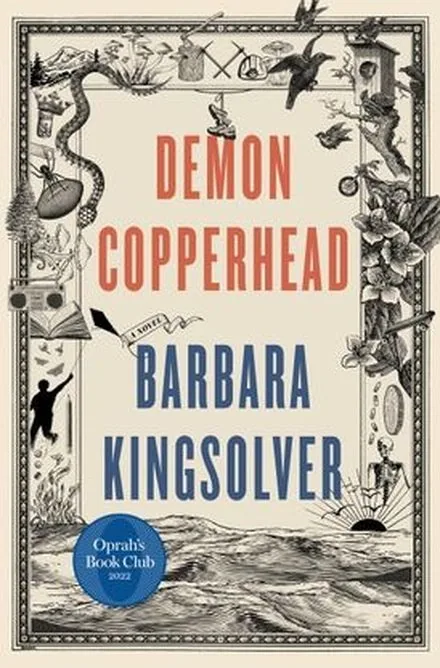
Cover of Demon Copperhead by Barbara Kingsolver
Genre
Literary Fiction
First published
2022
Length
about 560 pages
ISBN
9780571376490
RNKD readers
10

Cover artwork © its publisher, shown to identify the book under review. Rights

Verdicts at a glance

No RNKD reader scores a book out of five, so there is no average here. Just 10 people saying what they thought. Each of them wrote before reading the others.

READER 01 OF 10

A Whole Life Built Out of Emergency Repairs

Ashley Miller

Ashley Miller, 21

7 reviews on RNKD

WOULD RECOMMEND Finished the book

SPOILERS This review discusses the whole book, including how it ends.

Spoilers throughout, including the ending, the deaths, the addiction, and the part where the book keeps finding one more thing to put this kid through.

The first thing I noticed about Demon Copperhead is that Demon is doing adult work before anybody will admit he is a child. He remembers his mother’s schedule, finds her work shoes, gets her Mello Yello, signs forms, cleans up after her drinking, and learns to read the moods of men who are bigger than him. Later he works tobacco, drains battery acid, sorts garbage, sells pills, supports a girlfriend, and tries to make himself useful enough that someone will let him stay. The book is very good at showing the labor hidden inside a neglected childhood. Demon is not simply “resilient,” which is the word adults like to use when they want to compliment a child instead of asking who failed him. He is organized around survival because nobody gives him another job.

That is the part of this novel that stayed with me. Demon is always counting something. Food. Hours. Cash. Pills. The distance between one place and another. Which adult might be safe. How long until the next visit ends. How much work he can do before his body quits. Even his emotional life has a practical accounting system. He wants love, but he is always also asking what it costs, who might take it away, and what he will owe in return. I recognized that exact kind of thinking, not because my life resembles his, but because money and time make people do math in their heads even when nobody has asked for a spreadsheet.

The book begins with a voice that is immediately alive. Demon is funny, specific, crude, observant, and often wrong in ways that make sense for his age. He compares a birdhouse to a cluster of trailer homes, calls a city a hot mess that is not easily escaped, and describes the foster system as a product rotation system. He does not sound like an author giving a poor Appalachian child clever lines. He sounds like a boy who has learned that if he can name the absurdity of something, he has not been completely defeated by it. The jokes are not decorative. They are how he keeps a little distance from the worst parts of his life.

That humor also makes the cruelty land harder. Stoner hitting Demon over breakfast is awful, but what stays with me is how quickly Stoner turns violence into a lesson about discipline. Demon has to sit there with his cereal and decide that finishing breakfast counts as a win. Later Stoner locks him in his room, makes him scrub floors and carpet while breathing bleach and carpet cleaner, and then acts like Demon’s resistance proves he is defective. Demon understands that the punishment is not about cleanliness. It is about making him accept that another man owns the room, the house, the mother, and the definition of what happened.

Kingsolver does not make Mom easy to forgive. That was important. She loves Demon, and she also repeatedly puts him in situations where love cannot protect him. Her overdose and death on his eleventh birthday are not presented as one simple moral lesson about drugs. Demon is furious because her addiction has been made into his responsibility, and then she dies before he can stop blaming her. The funeral is especially brutal because he sees everyone building a wall around her. They decide she brought it on herself, which lets them feel safer. Demon does the same thing at first. It is easier to call her selfish than to understand the machinery of addiction that kept tightening around her.

The novel is also strongest when it refuses the idea that one loving adult can repair everything. Mrs. Peggot is one of the best people in the book, and the Peggot household is the nearest thing Demon has to a home. Still, they cannot permanently take him in. They are old, they are already caring for Maggot and Emmy, and they know their limits. That scene where Demon asks Mrs. Peggot if he can stay is one of the quietest devastations in the book. She is not rejecting him because he is unlovable. She is telling the truth about what she can do. This is more painful than a villain refusing to help because it is a real boundary. Good intentions do not create another bedroom, another income, or another decade of energy.

The foster homes show the other side of that calculation. Creaky Farm treats boys as labor and state checks. The McCobbs treat Demon as a monthly payment who happens to eat food. Mr. McCobb asking him to contribute cash for meals is so grotesque that it becomes funny, until the book reminds us Demon is actually hungry. He works at Golly’s Market for four dollars an hour, drains acid from batteries, sorts trash, and uses the food thrown out under the hot lamp as part of his pay. The money he earns is stolen to cover the McCobbs’ rent. When he finally takes it back, he is not making a triumphant escape. He is trying to preserve enough cash to stay alive.

I appreciated that the book does not turn poverty into a backdrop. It affects what Demon notices and what he thinks is possible. He wants the ocean, but distance is only the surface problem. Gas, transportation, food, permission, and the fact that every adult around him has a different emergency all stand in the way. Even when he reaches the coast in his imagination, he is still measuring the cost of getting there. His life is full of people telling him to dream bigger while handing him no bus fare.

Football matters to Demon as more than a sport: it is the first institution that looks at him and says he has a use beyond labor. Coach Winfield sees his size, speed, and ability to find a pass. Demon experiences the field as proof that he belongs somewhere. The language around the team is religious, and Kingsolver lets that belief feel sincere before showing its cost. Coach does love him, in his limited and damaged way, but he also ties Demon’s worth to performance. When Demon injures his knee, the pills that are supposed to help him recover become the next form of work. He plays through pain because being useful is the closest thing he has to safety.

The opioid section is hard to read, and I mean that as praise. It does not make addiction glamorous, but it also does not make Demon stupid. He knows the pills are dangerous. He knows the money, the risks, the people he is hurting, and the number of hours between doses. Knowledge is not enough. The most convincing detail is the difference between wanting to get high and wanting not to be sick. Demon keeps insisting he can manage the situation because he can still work, drive, draw, and make plans. Then the rest of his life quietly disappears around those tasks.

Dori is painful for exactly the same reason. She is loving, funny, generous, and completely incapable of building a life that is not organized around whatever will make the next hour bearable, not simply a tragic girlfriend who drags Demon down. Demon calls her his doll baby and thinks caring for her proves his love. It also turns him into her provider, caretaker, dealer, and jailer. Their relationship is not rescued by the fact that they love each other. Sometimes love is the mechanism that keeps two people trapped in the same room.

The book’s larger argument about Appalachia is less subtle than its character work, but I still found it useful. The chapters about coal, tobacco, land, labor, and the way people outside the region make hillbilly jokes are angry in a way I trusted. Mr. Armstrong’s lessons about company towns and labor history give Demon a vocabulary for understanding why his home has so few options. The people in Lee County are not poor because they failed to work hard enough. They have had land, labor, schools, and futures taken from them, then been mocked for the condition left behind. Demon’s phrase about being the dog of America is blunt, but it is also accurate to how the book sees the class contempt around him.

I did have moments where Kingsolver pushed the explanation too far. Demon’s narration is strongest when he is looking at a physical thing, like a dirty kitchen, a field of tobacco, a broken car, or a person holding a sandwich. Later, when he explains what his experiences mean, the writing sometimes becomes more obviously arranged. The adult Demon can be a little too good at turning every event into a neat theory. I still understood why he needed to do it. The whole book is an attempt to make a pattern out of damage. But the pattern occasionally shows its seams.

The ending worked for me because it does not pretend recovery erases the past. Demon gets clean, works at Walmart, draws comics, earns a GED, and starts building a life that belongs to him. He does not become magically healed or financially secure. He still has the knee, the dead people, the shame, the cravings, and the question of whether he can return to Lee County without being pulled back into every old role. He goes back anyway. He sees the place differently, including Devil’s Bathtub, where the water is beautiful and ordinary instead of permanently cursed. Then Angus offers him the ocean, and they drive toward it together.

That final trip is not a reward for being good. It is a practical act of friendship. Angus does not rescue Demon by taking responsibility for his life. She gives him a ride, snacks, a plan, and enough bluntness to keep him moving. Those are different things. The book has spent hundreds of pages showing adults confusing control with care, or care with control. Angus cares without pretending she owns the route.

Demon Copperhead is long. It is sometimes repetitive, especially when Demon circles the same question about whether he is worth keeping. But the repetition is also part of the experience. A life like his does not move from crisis to lesson to closure. It loops. It revisits hunger, work, abandonment, pills, and the desire to be chosen. By the time Demon is ready to leave, the ocean means more than a pretty destination. It means there is at least one large thing in the world he has not yet had taken from him.

I finished this feeling battered but not manipulated. The book wants me to care about a boy who is repeatedly treated as disposable, and it earns that care through exact details rather than inspirational speeches. Demon survives, but survival is not the whole victory. The better ending is that he starts making something. A comic, a story, a life, a way of seeing. He is still carrying the bottle. He is finally learning that the world inside it can be bigger than the place where he was trapped.

READER 02 OF 10

A Whole Life Built Out of Other People’s Rescue Plans

Emily Johnson

Emily Johnson, 29

11 reviews on RNKD

WOULD RECOMMEND Finished the book

SPOILERS This review discusses the whole book, including how it ends.

I finished Demon Copperhead, including the foster homes, the tobacco fields, the football career, the pill mill, the overdoses, the wrecked relationships, and the ending where Demon finally points himself toward the ocean instead of another disaster. This is a very long novel about a boy born into poverty in Lee County, Virginia, who keeps getting handed off between adults, institutions, and temporary solutions. It is also a novel about what happens when a person is repeatedly told that survival is a personal virtue while every system around him is designed to make survival harder.

The opening got me immediately. Damon is born in a trailer while his mother is unconscious from alcohol and pills, still inside the caul, and the first people to see him call him a little blue prizefighter. That is a strong introduction because it gives him both a fact and a story to cling to. He has been fighting since before he can speak, but he also understands that people like stories about children who are doomed. His nickname, Demon Copperhead, starts as an insult and becomes something he can own. That pattern repeats through the book. He takes the labels people use to dismiss him and turns them into equipment.

Demon’s voice is the main reason this novel works. He is funny, but the jokes are not pasted on top of the suffering. They are how he keeps track of what is happening. When he describes the Peggot family’s birdhouse as a bird-trailer clusterfuck, or compares the county’s economy to a shitburger happy meal, he is not trying to make poverty charming. He is making a language in which he can still be a person. The humor gets sharper when adults are pretending to be respectable. Stoner talks about discipline while punching a ten-year-old in the jaw. Foster care is described through paperwork and checks while the children are treated like inventory. The language keeps pointing at the gap between what people call a situation and what it actually is.

I paid attention to the domestic details because they tell you who is safe before the plot does. At the Peggots’ house, groceries go into the refrigerator, tools get returned, and children are expected to clean up after themselves. At Demon’s trailer, milk sits out until it turns and nobody knows where anything belongs. The difference is not that one house is perfect. The Peggots have their own secrets, limits, and failures. The difference is that their care has a routine. They notice whether a child has eaten. They remember birthdays. They make ham biscuits and quilts. They do not need a slogan about resilience because they are already doing the work.

The book is especially good at showing how abuse gets hidden inside ordinary authority. Stoner hits Demon, and he builds a whole language around the violence, using discipline, respect, attitude, and family as cover. When Demon bites him while trying to breathe, the system can record this as a child assaulting an adult. The caseworker asks careful questions, but the machinery is still more interested in sorting the situation than understanding it. Demon is removed from the home and placed with a foster farmer who makes the boys work tobacco fields until they are sick. Later, the McCobbs take him for the money and put him in a dog room, then take his wages to cover their rent. Each placement is technically a service. The result is that a child becomes more responsible for himself while the adults responsible for him keep failing upward or sideways.

The Creaky Farm chapters were some of the hardest to read and some of the best written. The tobacco work is described in enough practical detail that it stops being scenery. Topping and cutting are repetitive, dangerous labor. The children get nicotine poisoning, miss school, and are treated as disposable hands. Demon’s explanation of green tobacco sickness is more useful than a general statement that farming is difficult. He shows the work, the gloves, the sticky sap, the headache, the vomiting, and the fact that the crop is still treated as a family’s only possible route to survival. This matters because the book does not reduce the farmers to villains. Creaky is cruel, but the larger system is also real. Tobacco companies, government policy, land, slope, debt, and labor all sit in the same field.

The same is true of the opioid sections. Demon’s addiction does not begin with a single bad moral decision. It starts with a knee injury, a football culture that rewards playing through pain, doctors who keep prescribing, a pharmaceutical company selling safety, and a community where people are already desperate. Then the prescription becomes a pill to take on schedule, then a pill to avoid withdrawal, then the only thing that makes the day possible. Dori’s drug use develops in a similar environment, with her caring for her dying father and having access to his prescriptions. The novel never claims that nobody makes choices. It does show how limited those choices become when the medical system, the labor market, and the local economy all point toward the same drug.

I was angry at Demon during this part, which I think is the point. He lies to people who love him, abandons obligations, steals, drives while impaired, and keeps insisting he is the only person capable of keeping Dori alive. He is also correct that Dori may not survive without him. That is what makes the relationship so ugly. Their love is real, but it is also a closed system that rewards both of them for getting sicker. Demon calls Dori his doll baby and says he is protecting her, while also treating her as a responsibility he cannot put down. He cannot separate love from rescue. He has spent his entire life trying to earn a place by being useful, so a relationship in which somebody needs him feels like proof that he matters.

The book’s strongest relationships are the ones that interrupt this pattern. Tommy Waddles is kind without being sentimental. He helps Demon at the farm, gives him a shirt, draws skeletons because drawing is what he does when he is hurt, and later becomes his creative partner. Tommy has plenty of reasons to become bitter, but his kindness is not weakness. Demon sees that and still cannot always imitate it. Angus is even more important. She is blunt, funny, practical, and willing to tell Demon when he is making himself the center of a problem. She also understands that being competent can become a way to avoid admitting fear. Their friendship is convincing because she does not simply save him. She argues with him, gives him presents he actually wants, and leaves when she needs to leave.

I also liked June Peggot, although the book makes her almost impossibly capable. She is a nurse, a foster mother, a medical advocate, a person who can handle a family crisis, and the only adult who consistently understands that addiction is not solved by scolding. Her knowledge of the opioid crisis is close to Demon’s experience, but not identical to it. She sees the pill mill, the pharmaceutical company, the clinic, the patients, and the paperwork. Demon sees the hunger inside the body. Their perspectives finally meet when she tells him that the crisis was done to them, not because they had no choices, but because the available choices were manipulated for profit.

There are places where the novel explains its point after the scene has already made it. Demon sometimes pauses to give a full political or historical lecture about what has happened to Appalachia. Most of these arguments are worth hearing, especially the discussions of coal companies, land ownership, labor organizing, school funding, and the way stereotypes make exploitation easier. Still, the novel occasionally repeats the explanation after the emotional evidence is already clear. I did not need quite so many reminders that the mountains were stripped, the schools were neglected, and the people were blamed for the resulting poverty. The scenes of children working tobacco or sitting in a foster home with no food had already made the argument.

The ending earns its hope without pretending that recovery is a clean reset. Demon gets sober, takes Suboxone, works at Walmart, studies for his GED, draws comics, and builds a life that is smaller than his childhood fantasies but more stable. He does not become a football star, rescue Dori, repair the county, or turn his trauma into a neat lesson. He becomes a person who can choose what to do next. That is a modest outcome, but the book has spent hundreds of pages showing how difficult it is to reach even that.

I also appreciated that the final movement does not treat leaving as the only form of success. Demon goes back to Lee County and sees the people and places that shaped him. The visit is painful, but he notices things he could not notice before: the birds, the witch hazel, the color of the water, the Australian family at Devil’s Bathtub. He can return without pretending the place did not hurt him. Angus offers him the ocean, and they drive toward it. The point is not that the ocean will fix him. It is that he is finally moving toward something because he wants to see it, not because somebody else has shoved him down that road.

This is a book about poverty, addiction, foster care, labor, and the damage done when people confuse endurance with care. It is also about art as a practical tool. Demon draws because drawing gives him a way to see what happened, make a record, and imagine a person who could intervene. The Red Neck strips and High Ground project do not magically solve anything. They let him make something that was not there before.

I found the novel exhausting in places, but not because it was long. It was exhausting because Demon keeps being required to start over with fewer resources and more damage. That repetition is part of the argument. Children are told they are resilient when what they actually need is food, a safe bed, a medical appointment, a working school, and an adult who keeps showing up. Demon gets some of those things, usually one at a time, and learns that accepting help is not the same as becoming helpless.

The book left me thinking about all the people who call a child strong because they have decided not to protect him. Demon is strong, but he should never have had to prove it so many times. I finished the novel grateful that he eventually gets to want something as ordinary as a future, and angry that the future had to be fought for by a boy who should have been allowed to draw comics, eat enough dinner, and grow up without being everybody’s unpaid emergency plan.

READER 03 OF 10

A Life Built Out of Other People’s Damage

James Wilson

James Wilson, 38

12 reviews on RNKD

WOULD RECOMMEND Finished the book

SPOILERS This review discusses the whole book, including how it ends.

There are long books that feel long because the author has mistaken size for importance, and there are long books that make you forget to check how many pages are left. Demon Copperhead is firmly in the second category. It is a large, angry, funny and often exhausting novel about a boy who keeps being handed the consequences of decisions made by adults, institutions and companies that will never have to meet him. I read the whole thing, and by the end I felt as if I had spent years with Demon rather than a few weeks. That is praise, although not always comfortable praise.

There are major spoilers throughout.

Demon is born in a trailer in Lee County, Virginia, to a teenage mother who is using drugs and barely conscious during the delivery. That opening tells you what kind of book this is going to be. Demon gets himself born, as he puts it, but almost everything after that depends on whether somebody else is willing to notice him. His mother, June Fields, loves him, but love in this book is not treated as a magic solvent. She is trapped in addiction, loneliness and bad judgement. She gets sober, relapses, marries the violent Murrell Stone, gets sober again, becomes pregnant, and dies of an oxycodone overdose on Demon’s eleventh birthday. None of this makes her a monster. It also does not make her a reliable parent. The novel is strongest when it allows both facts to remain true at the same time.

Kingsolver gives Demon a voice that is immediately distinctive. He is sharp, vulgar, observant and constantly trying to work out the rules of a world that keeps changing the rules after he has learned them. He compares foster homes to football teams, people to superheroes and poverty to a game where the equipment has already been taken away. Some of the jokes are crude enough to make you wince, especially when they come from a child who has learned adult ugliness without having the power to understand it. But the humour is not decoration. It is how Demon keeps a little control over events that would otherwise flatten him.

The first part of the book is about the Peggots, his neighbours and the closest thing he has to a family. Mammaw Peggot and Peg give him food, rules, practical skills and the feeling that he belongs somewhere, even though they cannot permanently take him in. Their kindness is not sentimentalised. They are older, tired and already raising their grandson Maggot, whose mother Mariah is in prison after attacking the abusive Romeo Blevins. The novel spends a long time on Mariah’s story, and it earns that time. She is not simply an example of a bad mother or a criminal. She is a young woman who is abused, disbelieved and punished for surviving in a way the court finds unacceptable. Her story also establishes one of the book’s central ideas: people with power are very good at describing violence as an individual failure when it is more convenient than examining the conditions around it.

Demon’s childhood with Maggot is not safe in any conventional sense, but it contains freedom. They roam the woods, swim in creeks, hunt, draw superheroes and sleep in a dog pen. The distinction matters. Demon knows the difference between being poor and being unwanted. The Peggot home has limited money, old furniture and a crowded family network, but it has food in the refrigerator and adults who know where things are. His own trailer has no such order. That contrast is one reason the later foster homes are so effective. Kingsolver treats neglect as more than dramatic abuse: it is also the repeated experience of nobody remembering your shoes, your birthday, your school books or whether you have eaten.

The Creaky Farm section is brutal. Demon is sent to a foster home run by Mr. Crickson, who uses boys as unpaid labour while collecting foster payments. The boys are Tommy Waddles, the kind and overweight reader who draws skeletons, Swap-Out, who has cognitive disabilities and is treated as disposable, and Fast Forward, the charismatic high school quarterback who rules the household. The farm work is described in enough detail that I began to feel the ache in my back and shoulders. Tobacco topping and cutting are not presented as rustic hardship with a picturesque edge. Children are exposed to nicotine poisoning, dangerous equipment, school absence and exhaustion because the economics of the farm leave no room for anybody to say no.

This is where the novel’s argument becomes very clear. A child like Demon is repeatedly told that he must make better choices, while nearly every available choice has been narrowed by poverty, addiction, weak schools and adults who are making money from his lack of alternatives. The book is not saying that individual decisions do not matter. Demon makes plenty of foolish decisions, and the novel does not excuse all of them. It is asking how much responsibility can reasonably be placed on a child who has been denied the information, security and time needed to make an adult decision.

Fast Forward is the most important complication. He is cruel, manipulative and dangerous, but he also gives Demon a name, a place in the squadron and the first serious praise he has received for his drawings. He calls him Diamond. Demon believes this means he has been seen. That belief matters more than the fact that Fast Forward is exploiting him. Kingsolver is good at showing why people stay loyal to harmful figures. Fast Forward does not need to be good all the time. He only needs to be the person who once made Demon feel valuable.

The opioid crisis enters the novel through the lives of people who do not look like villains. Doctors prescribe oxycodone. Pharmaceutical representatives promise safety. Patients take what they are told to take. Families sell pills because they need money. Young people experiment because the drugs are available everywhere and because being numb can feel like the only rest they are likely to get. Demon’s injury during football is the turning point. He is prescribed hydrocodone, then OxyContin, and is encouraged to play through pain. The football culture around him treats physical damage as evidence of commitment. Coach Winfield sees Demon’s talent and gives him a home, but he also values him as an athlete before he understands him as a child. The care and the exploitation are tangled together.

Demon’s relationship with Dori is painful because it begins with exactly what he has always wanted. She sees him, chooses him and makes him feel wanted. She is also caring for her dying father while using the medication that surrounds them. After Vester dies, they become a household of two young addicts, living on frozen food, stolen goods and whatever drugs they can obtain. Demon knows the situation is killing them, but he also thinks leaving Dori would be an act of cruelty. This is the point at which love becomes another word for mutual destruction. The scenes are difficult to read, not because Kingsolver is trying to shock the reader, but because Demon’s reasoning is recognisable. He does not stay because he thinks addiction is glamorous. He stays because Dori needs him, and being needed is the closest thing he has to a stable identity.

The book is at its best when it stops treating recovery as a single act of will. Demon eventually reaches treatment through June Peggot, who recognises that he needs medical support rather than another lecture about character. The recovery sections are quieter, but not easy. He has to keep deciding not to use. He works at Walmart, attends meetings, makes friends with other people trying to survive and begins drawing again. I liked that sobriety does not magically restore his old life. He still has a damaged knee, grief, anger, shame and a limited education. He has to build something from what remains.

There are times when the novel explains its politics too directly. Demon sometimes sounds less like a boy remembering his life and more like an adult essayist who has been waiting to make a point about corporate power, Appalachian stereotypes or public policy. Most of the time Kingsolver earns the commentary through the story. The school board’s preference for football over academic opportunities, the disappearing coal jobs, the underfunded social services and the pill mill all belong to the same structure. But now and again the explanation arrives after the scene has already made the point. I could have done without a few of those signposts.

The length is also a real issue. Demon’s voice is engaging enough to carry a substantial novel, but not every event has equal weight. Some secondary characters appear for a long time and then leave the story, while others remain in Demon’s mind because they represent a version of the life he might have had. Tommy is particularly memorable. He survives foster care without becoming hard, marries Sophie and builds a life through patience and work. His friendship with Demon is one of the book’s quiet successes because Tommy does not rescue him. He tells him the truth, even when the truth is unwelcome.

The ending, with Demon sober and travelling with Angus towards the Atlantic Ocean, is hopeful without pretending that everything is fixed. He is finally moving towards the ocean he has imagined since childhood. It is a good ending because the ocean stands for more than a destination: it represents the part of Demon that survived every attempt to reduce him to his circumstances. He is not cured of being angry, restless or afraid. He has simply reached a point where those things no longer get to make every decision.

Demon Copperhead is a Dickens adaptation, but it never feels like a museum piece. Kingsolver takes the orphan story and places it inside foster care, rural poverty, school inequality and the opioid epidemic. The result is sometimes overfull and occasionally too eager to explain itself, but it is also alive in a way that many grand social novels are not. I cared about Demon’s food, shoes, drawings, football, family arguments and bad decisions. I wanted him to stop reaching for the next thing that promised rescue. I also understood why he kept reaching.

This is a book about damage being passed down through families, institutions and economies, and about the people who interrupt that process in small, practical ways. Mrs. Peggot cooks. Tommy tells the truth. Ms. Annie notices the drawings. June keeps turning up. Those acts do not erase what happened to Demon. They give him enough ground to stand on while he works out what to do next. That is not a small achievement. It is the whole point.

READER 04 OF 10

A Long Way Through a Very Bad System

Jessica Brown

Jessica Brown, 48

14 reviews on RNKD

WOULD RECOMMEND Finished the book

SPOILERS This review discusses the whole book, including how it ends.

The practical question in Demon Copperhead is not whether a child can survive a terrible childhood. Damon Fields survives because surviving is the work available to him. The better question is what survival does to a person after the immediate danger has passed. Can he recognize care when it is offered without a condition attached? Can he stop treating every kindness as a debt? Can he distinguish loyalty from being used? Barbara Kingsolver gives those questions a very long answer, with foster homes, football, tobacco fields, a pill mill, a dead mother, an absent father, an opioid epidemic, several dangerous men, one extremely committed dog, and enough covered-dish meals to support a small church basement.

I finished it. I am glad I did. I am also going to say clearly that this book is too long, and the fact that I finished a book this long should not be mistaken for my belief that every page needed to be there. My calendar is not a moral document, but I did have to make several appointments with myself to keep going.

Demon’s voice is the main reason the book works. He tells his story as an adult looking backward, but he does not erase the child he was. He can explain the structure of poverty, addiction, neglect, and exploitation while still remembering the exact humiliation of not having socks. That balance is difficult. A less careful narrator would either make childhood Demon impossibly wise or make adult Demon conveniently forgetful. Kingsolver lets him be both perceptive and foolish. He notices the system, but he also wants to be chosen by the most charismatic person in the room. He understands that Fast Forward is dangerous, then keeps wanting Fast Forward’s approval. He knows Dori is not saving him, but he cannot stop calling their mutual destruction love.

This is where the book feels most psychologically honest. People do not always choose the safest person. They choose the person who makes them feel visible, especially when visibility has been in short supply. Fast Forward names Damon Diamond and gives him a place in the Hillbilly Squadron. Coach Winfield sees a football player before he sees a damaged boy. Dori sees somebody who can help her stay supplied. Even Stoner, in his own abusive way, offers Demon a role, although it is the role of an enemy who must be disciplined. Demon keeps confusing being needed with being loved because, for much of his life, those are the closest available substitutes.

The early chapters are excellent. Damon’s birth in the caul, his mother passed out on the bathroom floor, the Peggots taking him in by degrees, and his friendship with Maggot establish the book’s central tension without announcing it. The Peggots’ home is not presented as a magical safe place. It has rules, clutter, family arguments, an empty dog pen, a dead birdhouse, and adults who cannot solve every problem. That matters. Mrs. Peggot and Mr. Peg offer Damon genuine care, but they are not able to become the permanent parents he needs. When Mrs. Peggot finally tells him they cannot keep him, the scene is painful because nobody is being cruel. They are simply old, tired, and honest about what they can manage. A child can be rejected by decent people and still feel rejected.

The book is particularly good at showing how institutions turn people into categories. Damon becomes a case, a hardship placement, a check, a biter, a difficult boy, a potential athlete, a foster success story, and eventually an addict. The adults around him often have a checklist, a payment schedule, or a professional vocabulary for what is happening. Miss Barks genuinely cares about him, but she is overworked, young, and trying to leave a job that does not pay enough to support the life she wants. She tells Damon to speak up for himself because that is advice she understands. She does not understand that a child in foster care has already learned the cost of being inconvenient.

That is one of the strongest criticisms in the novel. People repeatedly ask vulnerable children to be articulate, resilient, grateful, and self-advocating while providing them with unreliable adults and unsafe choices. Damon is told to ask for seconds when he is being underfed by the McCobbs. He is told to explain what he needs to people who have already decided he is a problem. He is praised for handling everything himself, which is another way of saying nobody intends to handle it for him. The phrase “resilient” is treated with appropriate suspicion. A child should not have to survive a wreck to be admired for walking away from it.

The McCobb section is hard to read and very effective. The family takes Damon for the monthly payment, hides his actual room, underfeeds him, uses his wages, and monitors him with a baby camera. None of this is presented as a cartoon villain situation. Mrs. McCobb is overwhelmed, Mr. McCobb is vain and financially reckless, and the children are hungry for attention and snacks. Their household is a series of bad decisions made under pressure. That does not excuse them. It does show how exploitation often looks in practice. It is not always a stranger in a dark alley. Sometimes it is a person asking an eleven-year-old to contribute to the grocery bill.

The opioid sections are the emotional and political center of the book. Kingsolver makes the mechanics visible: the pill mill, the sales representatives, the pain scores, the cheap prescriptions, the secondary market, the teenagers sharing pills, and the way a legitimate medical injury can become a chemical trap. Damon does not begin with a dramatic declaration that he wants to destroy his life. He begins with a knee injury, a prescription, and adults telling him to follow the dosage instructions. Then he discovers that the medication does more than reduce physical pain. It silences fear, grief, shame, and the demand to keep functioning. The drug becomes a solution to every problem that cannot be solved by working harder.

June’s explanation that the pharmaceutical companies “did this to you” is useful, but the book does not let that explanation absolve Damon. He still makes choices. He drives while impaired, supplies drugs to others, abandons responsibilities, and refuses help because accepting help feels like admitting he is weak. The system creates the conditions, but Damon still has to live with the consequences. That distinction is important, and the novel generally maintains it.

I did have one recurring problem with the book. Kingsolver sometimes explains the lesson after the scene has already made it clear. Demon will describe a painful event, then pause to tell us what it meant historically, politically, morally, and personally. Often the additional reflection is valuable. Sometimes it is the literary equivalent of sending a follow-up email to confirm that we understood the first email. The narrator’s voice is lively enough to carry these sections, but the repetition accumulates.

The same is true of the book’s structure. Demon’s life contains so many institutions of failure that the pattern is clear well before the end. Foster care fails him. School fails him. Football offers belonging but makes his body and value dependent on performance. Medicine fails him. His family members love him but cannot consistently protect him. The novel keeps adding examples. Some are memorable, such as the tobacco fields and the Creaky Farm. Others feel like another item placed in an already full drawer.

The tobacco work is worth the space. The descriptions of topping, cutting, hanging, and curing tobacco turn labor into physical knowledge. Demon learns that the crop is both the source of a family’s income and the source of poison. The farms are not simply noble rural communities being attacked by outsiders. They are places with exploitation, pride, cruelty, generosity, and bad options. The novel is strongest when it refuses the easy version of Appalachia. It shows people who are proud of their work and angry at being mocked, while also showing how the same culture can excuse violence, neglect, racism, homophobia, and male authority.

Demon’s education through Mr. Armstrong is one of the book’s more direct political sections, and I liked it. Mr. Armstrong explains coal extraction, labor history, the Battle of Blair Mountain, racial migration, stereotypes, and the way companies controlled land, schools, and opportunity. He does not ask his students to feel ashamed of where they come from. He asks them to understand who benefited from the conditions they inherited. That is a different kind of education from the usual lecture about personal responsibility. It leaves room for individual choices without pretending those choices occur on level ground.

The football sections are also better than I expected. Football gives Damon more than a ladder out of poverty. It gives him a body that other people value, a team that depends on him, and a public identity that temporarily defeats the label of foster child. When his knee is injured, he loses more than a sport. He loses the explanation for why people should keep him. Coach sees his talent, but Coach also turns that talent into a condition of belonging. The relationship is affectionate, exploitative, paternal, and transactional all at once. Demon is not wrong to be grateful. He is also not wrong to feel used.

The ending earns its hopeful quality because it does not offer a miracle. Damon enters recovery, works an ordinary job, builds a creative life, and learns to stay sober one day at a time. He does not become untouched by what happened. His knee still hurts. His dead remain dead. Maggot’s future is uncertain. Emmy’s recovery is uncertain. Damon still has to decide whether returning home is possible without returning to the person he was there.

The final drive toward the ocean with Angus is the right ending. The ocean has represented escape, danger, imagination, and a promise that the world is larger than Lee County. Damon does not reach it through a scholarship, a football championship, or a romantic rescue. He gets there because a friend understands that sometimes a person needs someone else to say, in practical terms, we are going now. The trip matters as much as the destination. He is no longer waiting for permission to want something.

Demon Copperhead is a compassionate novel about people who are repeatedly treated as disposable and who still manage to make attachments, art, jokes, meals, teams, and families. It is also a novel that could have used an editor with a firm deadline and a willingness to remove several explanatory paragraphs. I can work with both truths. The book is overbuilt, but its central judgment is sound: people do not become worthless because institutions have learned how to use them cheaply. Damon has to learn that about himself, and so does the reader.

READER 05 OF 10

A Hard Life, Told Without Looking Away

Michael Davis

Michael Davis, 44

11 reviews on RNKD

DEPENDS Finished the book

SPOILERS This review discusses the whole book, including how it ends.

I finished Demon Copperhead, and I am glad I did. I am also not going to pretend it needed every page it used to get there. This is a long novel about a boy born into poverty in Lee County, Virginia, who moves through addiction, foster care, abuse, football, first love, grief, and recovery while trying to figure out whether his life belongs to him or to the people and institutions that keep making decisions around him. It is also a modern Appalachian version of David Copperfield, which sounds like the kind of comparison that could make a book feel like homework. Here it mostly works because Kingsolver is not using Dickens as decoration. She is using the structure of a child being pushed from one adult arrangement to another, while the adults explain their failures as necessity.

Demon is born to an eighteen-year-old mother who is already addicted, raised partly by the Peggots next door, abused by his stepfather Stoner, and eventually placed in foster care after his mother dies of an oxycodone overdose on his eleventh birthday. That is enough material for several novels, and Kingsolver keeps adding more. Creaky Farm, the McCobb household, Coach Winfield's home, Dori's house, the pill clinic, the halfway house. Most of the people Demon depends on are also damaged, compromised, exhausted, or trying to make money from somebody else's emergency. The result is not subtle, but it is convincing. Demon does not experience childhood as a sequence of lessons. He experiences it as a series of handoffs.

The voice is the book's biggest asset. Demon tells his own story in a fast, funny, defensive Appalachian vernacular that can turn from a joke to a knife wound in one paragraph. He compares people to superheroes, cars, animals, comic-book villains, and household objects because that is how he learned to understand the world. When Stoner beats him, Demon thinks in terms of a supervillain and a gamma warrior. When he loses a home, he thinks of being removed from the game. When he sees the ocean, he sees the one large thing he believes cannot defeat him. These are not ornamental comparisons. They are the mental equipment of a boy trying to survive situations he has no adult vocabulary for.

The early chapters are especially strong. Demon and Maggot running through the woods, sleeping in the empty dog pen, shooting at creek debris, and treating Mrs. Peggot as a shared grandmother create a believable version of happiness. It is not safe or prosperous, but there is a place for everything. Mrs. Peggot keeps food in the house, corrects bad language, makes their clothes, and pays attention. That matters because the book later shows what happens when care becomes conditional. At the McCobbs' house, Demon is underfed and treated as a line item. Mr. McCobb asks him to contribute cash for meals, then takes his wages to pay rent. The story does not need a speech about exploitation. The missing food and the peanut butter jar make the point.

The foster-care sections are difficult to read, but they are also where the novel earns its argument. Creaky Farm operates as a small business built around children nobody has the power to protect, not simply an evil foster home. Tommy Waddles, Swap-Out, and Demon are labor. The system has paperwork, checks, rules, and caseworkers, but none of that guarantees that a child will be fed, educated, or believed. Miss Barks cares about Demon, but she is overwhelmed and young. She wants to become a teacher and leaves DSS for a better job. Demon experiences this as abandonment because that is what it feels like, even though her decision is understandable. The book is good at showing how reasonable decisions can still injure children.

The same applies to Demon himself. He is not presented as a pure victim. He lies about his age, steals, takes drugs, abandons school, helps distribute pills, and treats people badly when he is scared. He can be selfish and cruel. His relationship with Dori is not a simple romance destroyed by addiction. He loves her, and he also uses her as proof that somebody needs him. He calls her his doll baby and turns himself into her provider, which gives him a job he understands while allowing him to avoid facing his own collapse. The tenderness and the damage are tied together. That is much more honest than turning addiction into either a moral failure or a tragic disease that removes all responsibility.

The opioid sections are the strongest argument in the novel. Kingsolver shows how the pills move through the community as medicine, wages, social security, favors, theft, and eventually identity. Dr. Watts is not an isolated monster. He is part of a chain that includes pharmaceutical sales tactics, disability, layoffs, injured workers, poor medical access, and people who have no realistic way to manage pain or withdrawal. The book does not excuse the people who sell or abuse the drugs. It does insist that individual choices are being made inside a system that has already narrowed the choices. June explains that doctors and drug companies found communities where disability and chronic pain were common, then treated those places as markets. Demon has already lived the consequences by the time he can understand the business model.

I appreciated that the novel does not make recovery inspirational in the usual clean way. Demon enters treatment because he has run out of options and because June refuses to let him disappear. He does not suddenly discover a better self. He has to wake up and choose again, which is exactly the kind of unglamorous work he is least prepared to do. The sober-living house, the warehouse jobs, Walmart, the library, and the other recovering men give the later part of the novel a practical texture. Chartrain, a former basketball player who lost his legs in the military, becomes important not because he delivers a perfect speech but because he has learned how to live with limits Demon cannot yet accept.

The novel is less effective when it becomes certain that every injustice is connected to every other injustice. The coal companies, the school system, the pill manufacturers, the military, poverty, class contempt, regional stereotypes, and the failures of foster care are all part of the same argument. They do connect, but Kingsolver sometimes explains the connection after the scene has already shown it. Demon can spend several pages making the point that his county has been used, mocked, and abandoned, then the book gives him another example. By that stage I understood. The repeated explanation occasionally makes him sound less like a teenager remembering his life and more like a carefully briefed adult narrator.

That is the central tension in the book. Demon is supposed to be telling his story from the future, so he can understand things the child could not. But the voice is so consistently sharp and entertaining that I sometimes felt the author behind him, making sure every event landed. The jokes are often excellent, especially when Demon compares local politics, school hierarchy, football, and addiction to comic-book logic. Still, there are stretches where every person has a memorable nickname, every house has a grotesque detail, and every tragedy arrives with a line designed to be underlined. I could hear the machinery. Not constantly, but enough to notice it.

The ending is earned, even if it is more hopeful than I expected. Demon does not get a clean rescue. He gets treatment, work, friends, an online comics career, and the possibility of returning to Lee County without immediately being swallowed by it. The final drive with Angus toward the ocean is a good ending because it is not a victory lap. He has not solved poverty or repaired his knee or brought back Dori, Hammer, his mother, or any of the other people he lost. He is simply moving toward something he has wanted for most of his life, with somebody who knows what he has survived and is not asking him to pretend it never happened.

I did have one practical objection. The book is very long, and the repetition is not always doing new work. Demon is repeatedly placed in a new household, repeatedly discovers that adults cannot be trusted, repeatedly turns to work or drugs or sex to manage his fear, and repeatedly explains the regional contempt that surrounds him. The pattern is the point, but the pattern could have been tightened. Some of the later relationship material, especially around Dori, could lose several scenes without weakening the story. I still wanted to keep reading, but I also kept checking how much book remained.

What stayed with me was not the football success or the romance. It was the difference between being useful and being cared for. Demon is valued as a worker, athlete, provider, artist, or source of money long before he believes he deserves care without producing something. Coach sees a football player. Creaky sees labor. The McCobbs see a check. Dori sees a rescuer. Even Demon sees himself as a person whose worth has to be demonstrated through endurance. The people who help him most, especially June, Angus, Tommy, Annie, and eventually his recovery companions, do something different. They expect him to take responsibility, but they do not require him to earn the right to remain alive.

This is a hard novel about a hard place, but it is not a book that thinks people from that place are hopeless. It is angry at the institutions that keep turning children into labor, patients into revenue, and whole counties into jokes. It is also honest about the damage people do to each other while trying to survive. I would not call it an easy recommendation because of the length, the violence, the addiction, and the amount of grief. But I would recommend it to anyone willing to stay with a narrator who is funny because the alternative is to scream, and who keeps trying to find a usable future after nearly every adult around him has spent years telling him what he is worth.

READER 06 OF 10

The System Keeps Calling It a Personal Failure

Noa Levi

Noa Levi, 27

11 reviews on RNKD

WOULD RECOMMEND Finished the book

SPOILERS This review discusses the whole book, including how it ends.

Demon Copperhead is about a boy who keeps being told that his next mistake is the problem, while every adult system around him is built to turn his mistakes into revenue. He is born to a mother whose addiction and instability make him vulnerable, then passed through a sequence of adults who feed him, use him, supervise him, neglect him, admire him, or claim to save him. The book eventually becomes an account of the opioid crisis in Lee County, Virginia, but it starts with a more basic question: what happens to a child when every available version of care comes with conditions?

The answer is not subtle. Demon is hungry, hit, worked, sexualized, undereducated, medicated, exploited, and repeatedly told to be grateful for the opportunity. The adults around him often have their own explanations. His mother is sick. Stoner believes discipline means violence. Crickson needs foster payments. The McCobbs need food money and rent. Coach Winfield needs a football player. Dr. Watts needs patients. Purdue needs sales. The county needs something to blame. None of these explanations is false enough to be dismissed, which is exactly why the damage keeps moving.

Kingsolver’s most effective choice is making Demon practical before making him philosophical. He notices the actual link between things. He remembers who has the key, who has the food, which road gets washed out, whether the water pump is running, and what somebody’s job really consists of. He is the kind of child who knows the adults are lying because he can see what the lie is protecting. When Stoner says he is teaching discipline, Demon notices that he is hitting a ten-year-old. When the McCobbs claim he is fed properly, Demon notices that he is drawing pictures of food at night. When the foster system praises resilience, he notices that resilience is often the name given to a child after the adults have decided not to help.

That perspective gives the book its strongest moral argument. Demon is not rescued by one exceptionally wise adult. He survives through a messy chain of partial interventions. The Peggots feed him and protect him, but cannot permanently take him in. Miss Barks sees him more clearly than the other caseworkers, but leaves for a better-paid career, which is both understandable and devastating. Coach gives Demon status and a genuine sense of belonging, but also makes his value dependent on football. June understands the medical and social crisis around her, but cannot save every person who walks into her clinic. Even the decent people are operating inside shortages of time, money, authority, or imagination.

This is where the book felt most convincing to me. It does not treat care as a feeling that solves things. Care is food, transport, paperwork, a clean shirt, a person who remembers the appointment, a ride home before the roads get dangerous. It is also labor, and labor costs something. The adults who provide it are often underpaid or exhausted. The ones who control resources are frequently more interested in protecting their position than in protecting children. Who owns fixing the broken link? In this book, the answer is usually nobody, which means the child becomes the temporary repair.

Demon’s voice is a major reason the novel works. It is funny because he is observant, not because the suffering itself is treated as a joke. He compares foster homes to prison and dodgeball, calls bad institutions by the names they have earned, and uses superheroes as a private system for understanding power. The superhero language also gives him somewhere to put feelings he cannot state directly. Fast Forward becomes Fast Man, a person whose attention feels like a superpower. Stoner becomes a villain. Mr. Dick’s kite becomes a way to send words toward the sky when ordinary communication has failed.

The voice does have a cost. Demon’s jokes and comparisons are so constant that they sometimes flatten the emotional distance between events. His mother’s overdose, the death of his baby brother, Dori’s decline, and the deaths at Devil’s Bathtub are all filtered through the same alert, improvising intelligence. That is psychologically plausible. A child who has had to keep moving may not have the luxury of a clean tonal shift. But as a reading experience, it can make the novel feel as if it is explaining its own pain while refusing to sit quietly inside it.

The length creates a similar problem. I understood why the book needed room. Demon has to grow from a child who thinks his grandmother is assigned to him into a young man who can identify the economic machinery behind his mother’s death. The farming passages matter. The foster homes matter. Football matters because it gives Demon an identity beyond victimhood. The cartooning matters because it becomes the first thing he creates for its own sake, not only something useful to somebody else. Still, the novel repeats certain discoveries. Demon learns that adults fail him, then another adult fails him in a slightly different way. He learns that poverty limits choices, then the book gives him another example. The accumulation is intentional, but it sometimes feels like the same approval trail with a new filename.

The football section is both compelling and uncomfortable. Coach Winfield sees Demon’s physical ability and gives him a place in the team, which is not nothing. Demon is not wrong to love the field. He loves the structure, the bodies moving according to a plan, and the temporary certainty that comes from executing a play correctly. But Coach also reproduces the logic that has already hurt Demon. A boy is valued because he can perform. When Demon injures his knee, the team’s needs and his own fear of becoming nobody combine with prescription opioids. Coach does not intend to destroy him, but intention is not a safety system. The book is very good on this point. A person can care about you and still put you in danger because they are committed to the wrong measure of your worth.

The Dori relationship is the hardest part for me to read. Demon calls her a fairy, a doll, a rescue case, and the love of his life. She has cared for her dying father and been treated as a child by nearly everyone, so I understand why she reaches for the first thing that makes her feel safe. But their relationship is not a romance in any stable sense. It is two teenagers using each other as medication. Demon provides drugs, food, transport, and emotional containment. Dori provides sex, tenderness, and the promise that his usefulness is love. After Vester dies, that arrangement becomes impossible to disguise. When Dori dies of an overdose, Demon is left with grief and relief, and the book is honest enough to allow both.

The same honesty appears in the ending. Demon’s recovery is not a clean transformation. Suboxone, sober living, part-time work, the library, drawing, and a few people who keep showing up give him a life, but not a repaired childhood. He still has a damaged knee, dead friends, complicated loyalties, and a place he cannot safely return to in the old way. The decision to drive back to Lee County, visit Coach, see his grandmother, and then accept Angus’s offer to go to the ocean is not a cure. It is a test of whether he can revisit the map without becoming the person he was there.

Angus is the book’s most important relationship because she refuses both pity and mythology. She calls Demon out when he turns dependence into romance or mistakes being needed for being loved. She also understands that leaving is not automatically betrayal. Their final drive toward the Atlantic is not sentimental in the usual way. She is not saving him, and he is not saving her. They are two people who have survived the same house in different bodies, finally going somewhere neither of them has to earn by performing.

There is a lot of Dickens in the structure, including the orphan narrative, the social critique, and the belief that telling the story can influence the present. Kingsolver makes the parallel visible, sometimes too visible. Demon’s first-person voice is much more than a modernized David Copperfield, but the adaptation occasionally announces its intentions when the events already make the point. I did not need the book to tell me that children are shaped by poverty, or that the opioid crisis was engineered and then blamed on its victims. I needed it to keep showing me who profited, who looked away, and who had to clean up afterward. It does that often enough to justify the scale.

I finished Demon Copperhead, but not quickly. It is too long to call effortless, and too emotionally forceful to call merely immersive. My main reservation is that the novel sometimes turns every consequence into another speech about the system that caused it. The speeches are usually right. They are just not always necessary. The scenes with Tommy, Mr. Dick, June, Annie, and Angus already carry the argument through specific behavior, which is stronger than a paragraph explaining the conclusion.

Still, the book stayed with me because its central question is practical rather than abstract. What does a child need to become a person who can make choices? Food. Safety. A stable place to sleep. School that is more than a holding area. Adults who do not confuse obedience with health. Work that does not turn talent into a leash. A chance to make something that is not immediately consumed by somebody else’s emergency.

Demon eventually gets some of those things. He does not get them in time to avoid damage, and he does not get them for free. That is the point. The book is not asking me to admire his resilience. It is asking why resilience was required so early, and who benefited from calling it a character trait.

READER 07 OF 10

A Whole Life Built from Temporary Fixes

Omer Friedman

Omer Friedman, 22

8 reviews on RNKD

WOULD RECOMMEND Finished the book

SPOILERS This review discusses the whole book, including how it ends.

I finished this book, which is not the same as saying it always respected my time. Demon Copperhead is a very long novel about a boy born into poverty in Lee County, Virginia, and the systems that keep explaining his suffering as a personal failure. It is also a book about foster care, addiction, coal country, football, bad adults, useful adults, and the strange amount of work required to remain a person when everyone around you is treating you as a problem to be processed.

There are major spoilers in this review, including the ending.

The opening is excellent. Damon Fields, who becomes Demon Copperhead, begins by saying, “First, I got myself born,” which is funny until the joke has finished forming and you realize the book is already arguing against the idea that people are responsible for the conditions they enter. His mother is eighteen, addicted, and passed out on the bathroom floor. He is born in the caul, which gives him the superstition that he will never drown. That detail matters because Demon spends the entire novel looking for some place where the water cannot reach him.

What impressed me first was how Kingsolver makes poverty physical. It is not a paragraph about economic hardship followed by a normal plot. It is the milk left on the counter until it turns, the bad carpet, the borrowed shoes, the free-lunch forms, the food that disappears from the kitchen, the money taken from a child’s wages to cover rent. Demon understands the world through objects and tasks. He notices who has a working belt in the back seat, who puts groceries in the refrigerator, who knows where the tools are. This is the part that worked on me most. If somebody tells you a family is loving but the refrigerator has no food and the adults keep losing track of the child, the refrigerator is more convincing.

The Peggots are the first real home Demon experiences. Their house has rules, food, cousins, arguments, and people who notice when a child is missing. Mrs. Peggot calls him Damon when everybody else has replaced his name with a nickname. Mr. Peggot teaches him birds, hunting, fishing, and how to look at a thing before deciding what it is. This family is not perfect, but their care is practical. They feed him, give him clothes, let him sleep in the dog pen, and come looking when he disappears into foster care. That felt more emotionally honest to me than some of the larger speeches about love later in the book.

Then Stoner arrives, marries Demon’s mother, and turns the trailer into a punishment site. His first major act is to punch a ten-year-old boy in the jaw because he thinks Demon is being disrespectful. Later he makes him scrub floors and carpet with bleach until he is sick, locks him in his room, and attacks him when he tries to call an ambulance for his mother. The violence is not subtle, and it should not be. What Kingsolver gets right is the confusing part around it. Demon still wants his mother to choose him. He still watches her face for evidence that she sees what is happening. Her failure is not presented as a simple lack of love. She is frightened, addicted, ashamed, and repeatedly willing to accept a dangerous man’s version of events if that is the price of keeping her life together.

Demon’s mother dies of an oxycodone overdose on his eleventh birthday. The funeral scene is devastating because Demon refuses the emotional role assigned to him. He is expected to mourn properly, but what he mainly feels is anger. He notices the ugly dress, the people judging her, the funeral director’s son flirting in the limousine, and the fact that his unborn brother is in the casket with her. The novel understands that grief does not arrive in a clean shape. Sometimes the first useful feeling is rage because rage is the only thing holding the structure up.

The foster-care sections are the strongest sustained part of the book. Creaky Farm is a business that happens to involve children, not simply a bad foster home. Mr. Crickson needs boys during haying and tobacco season, and the state money is part of the farm’s operating budget. Tommy Waddles and Swap-Out are not protected from the farm’s work because their limitations are treated as inconveniences. Demon is sent into tobacco fields where he develops green tobacco sickness, which is nicotine poisoning from handling wet plants. The scene is horrifying partly because the work is described so clearly. Stab, chop, lift, slam, repeated all day. The children are not being taught responsibility. They are being used because their bodies are available.

Tommy is the character I carried through the whole book. He draws skeletons because he cannot explain what is happening any other way. He takes other people’s punishments and makes himself smaller so the group can continue. Demon sees this and still participates in the arrangement. That is important. Demon is not presented as morally pure because he has suffered. He is sometimes cruel to Tommy, lies to people who are trying to help him, and keeps accepting Fast Forward’s attention even after seeing how badly Fast Forward treats the other boys.

Fast Forward is the novel’s most interesting false hero. He gives Demon the name Diamond, praises his drawings, and makes him feel chosen. He also steals from the younger boys, uses them, distributes pills, and lets Tommy be beaten for his own mistake. Demon needs Fast Forward to be good because the alternative is admitting that the person who made him feel powerful was another person exploiting him. When Fast Forward later dies at Devil’s Bathtub, falling from a cliff while showing off, the death is not a redemption. It is a final refusal to become the legend Demon wanted him to be.

The opioid sections are difficult to read, but they are not difficult because the book is unclear. Demon’s addiction starts with legitimate prescriptions after his knee injury. He is a football player, and pain medication is treated as part of returning him to the field. Dr. Watts runs a pill mill while telling people pain is the fifth vital sign. Dori gives Demon fentanyl, oxycodone, and whatever else is available, initially as a form of intimacy. They share the drugs because sharing is how they understand love. The most frightening part is how ordinary the process becomes. A prescribed pill, a refill, a resale in a parking lot, a pharmacy bag, a patient waiting in the rain. No one step looks like the whole disaster.

I did think the novel sometimes explains its own point too often. Kingsolver is very good at showing the economic and social machinery around Demon, but then Demon will stop and explain the machinery again. The book trusts its scenes less than it should. The same argument returns in different forms: poverty is not laziness, addiction is not a moral defect, the mountains were exploited, children were abandoned, and people are blamed for surviving badly. All of these points are true within the book, but by the final third I occasionally felt I was being handed the return slip for a product I had already bought.

The length creates another problem. The novel’s generosity can turn into accumulation. Demon has one traumatic placement after another, one symbolic object after another, one adult who sees a part of him and then fails him or saves him temporarily. The repetition is sometimes the point, because a child in foster care experiences instability as routine. But the emotional effect becomes flatter when every new event arrives already marked as another wound. I wanted more ordinary time, not because the suffering should be softened, but because ordinary time would show more clearly what the suffering had changed.

Still, the book’s best scenes are very good. Demon and Angus stealing a Christmas tree from Creaky Farm and decorating it with spoons, CDs, earrings, candy, and random household objects is one of the few moments where joy is not presented as a reward. They make it themselves. The Christmas chapter also explains why Demon’s practical view of love matters. He does not need an abstract family. He needs somebody to remember that Christmas exists, buy the right food, and make a ridiculous tree.

The ending avoids the easy version of recovery. Demon gets clean through treatment, lives in a sober house, works at Walmart, studies for his GED, draws comics, and builds a life through small repeated decisions. He does not become a football star again. Dori dies. Hammer dies trying to save Fast Forward. Angus leaves for school but chooses social work and returns to the region. Tommy moves to Pennsylvania, marries Sophie, and becomes a father. These outcomes are not equal, and the novel does not pretend they are. Recovery gives Demon a future, not a refund.

The final trip to the ocean with Angus is exactly sentimental enough to work. Demon has spent his life imagining the ocean as the one big thing that cannot swallow him. He nearly reaches it with Fast Forward, Maggot, and Emmy, but that trip collapses into drugs, betrayal, and withdrawal. He finally goes with Angus, driving east in a blue car, eating M&Ms and arguing about oysters. The book ends before they reach the water. That is the right choice. The ocean is no longer a prize waiting at the end of his suffering. It is simply ahead of him, and he is moving toward it with somebody who knows what he has survived.

Demon Copperhead is too long, too explanatory, and sometimes too determined to make every theme visible. I still finished it because Demon’s attention to the actual world kept pulling me back. He notices the price, the broken latch, the food left in the fridge, the person carrying the heavier load. That is also what the book asks the reader to notice. People are not abstract failures. They are bodies in rooms, children waiting for a ride, workers handling dangerous materials, and patients standing outside a clinic in the rain.

The central achievement is that Demon’s survival does not look like triumph. It looks like learning to keep a job, make a drawing, lock a door, ask for help, and wake up the next morning without taking the pill that would make the morning disappear. That is not a small ending. It is the only one this book could honestly give him.

READER 08 OF 10

A Whole Life Held Together by People Who Keep Showing Up

Sarah Williams

Sarah Williams, 51

8 reviews on RNKD

DEPENDS Finished the book

SPOILERS This review discusses the whole book, including how it ends.

I finished Demon Copperhead with the strong impression that Damon Fields needed an office manager, a proper safeguarding plan, and somebody willing to write down who was responsible for him before the next adult disappeared. His mother, stepfather, foster carers, social workers, teachers, coaches, dealers and relatives all have moments when they try to help, but the arrangements around him are so improvised that a child is repeatedly left to manage the consequences. People say they have his back, then lose the paperwork, miss the warning signs, take the money, or simply decide that another crisis is more urgent. The book is about addiction and poverty, obviously, but for me it became a book about task ownership. Who is picking him up? Who is feeding him? Who has the keys? Who knows where the child is sleeping tonight? Nobody seems to have a complete answer for very long.

There are spoilers throughout, including the ending.

Damon, who becomes Demon Copperhead, is born to an eighteen-year-old mother in a trailer in Lee County, Virginia, while she is intoxicated and barely conscious. He is raised in and out of neglect, with the Peggots next door providing the nearest thing he has to a functioning family. His best friend is Matthew Peggot, called Maggot, and the two boys spend their early years roaming the woods, playing superheroes, and accepting whatever rules apply in the house they happen to be standing in. The Peggot household has food put away, clothes that fit, people who notice when a child has gone quiet. Damon’s home does not. That difference is established early, and Kingsolver keeps returning to it without making the point feel redundant. A working household is not perfect, but somebody knows where the towels are.

The opening is one of the book’s great strengths. Damon’s voice is immediate, funny and watchful. He notices the birdhouse with no birds, the empty dog pen, the food left out on the counter, the way adults call him a child while expecting him to remember his mother’s work shoes and medication. His comparisons come from comics, television, cars and the rural life around him, which means that the narration is not simply a young voice made colourful by an adult author. It is a boy trying to understand danger by turning it into something he can name. A violent stepfather becomes a supervillain. A foster home becomes a prison or a farm or a military squadron. A friend who makes him feel valuable becomes Fast Man. The language is crude when it needs to be, but the crudity is not there for decoration. Damon has learnt that words are part of how people sort one another into winners, losers, respectable people and rubbish.

I laughed a lot in the first third of the novel, often at details that were not funny in themselves. Damon worrying about whether the Peggots will have enough electricity in Knoxville, measuring his height against his mother with a cereal box, and treating the ocean as the one large thing that cannot swallow him are all excellent examples of humour doing practical work. It gives the reader a way into a child’s mind without asking us to admire his suffering. That matters, because this is a book with a great deal of suffering in it. Damon is beaten, starved, exploited, abandoned, exposed to drugs, and repeatedly treated as a useful body rather than a person. The humour keeps him from becoming a symbol of deprivation. He remains a difficult, vain, funny, selfish, generous boy who wants good shoes and attention and the chance to be somebody.

The foster-care sections are the most difficult and, to my mind, the most convincing part of the book. At Creaky Farm, Damon, Tommy Waddles and Swap-Out are treated as labour, with payments and school attendance arranged around what the farm needs. Damon is made to work tobacco, becomes ill from nicotine poisoning, and is kept out of school during the harvest. Later, at the McCobb home, his wages are taken to pay rent without his permission, and he is placed in a dog room while the family’s own children have the bedroom he was promised. He is hungry enough to steal food from the house at night, while a baby monitor records him doing it. The administration around these homes is not presented as a single evil machine. It is worse in a more ordinary way. People are tired, underpaid, compromised, frightened of losing their placements, or convinced that the child should be more assertive. One caseworker tells Damon that if he wants something, he needs to ask for it. This is advice given by somebody who has not understood that children in care learn very quickly what asking can cost them.

I especially appreciated that the book does not pretend kindness solves the system. Tommy is kind. Miss Barks is kind. The Peggots are kind. Coach Winfield, for all his failures, sees an ability in Damon that nobody else has recognised. Mr Armstrong and Ms Annie notice that Damon can draw. These people matter, but none of them can simply repair the conditions around him. Even the Peggots, who have effectively raised Maggot and helped raise Damon, cannot take him permanently because they are old, ill and already stretched. Their decision breaks Damon’s heart, but it is not presented as a secret moral failure. There is a difference between loving a child and being able to provide the legal and practical structure that child needs. That is an uncomfortable distinction, and the novel allows it to remain uncomfortable.

The second half moves into the opioid crisis, and Kingsolver is very clear about the chain of responsibility. Damon’s knee injury is treated with painkillers, even while adults around him argue about whether he is taking them correctly. Dori introduces him to fentanyl and the two of them move from using prescribed medication to buying and selling drugs. Dori is more than a glamorous bad influence. She has cared for her dying father from a young age, has been given access to dangerous medication, and has no adult life beyond being needed by somebody ill. Damon loves her and becomes her carer, supplier, cleaner and partner, while both of them become less capable of managing a household. Their home is eventually a place of empty food packaging, dirty clothes, broken appliances and a dog that seems to be the only creature with a clear plan.

This part is bleak, but it avoids the simple idea that addiction is a series of poor choices made by people who should have known better. Damon sees the profit in the pill mill, the pressure on disabled and injured people, the way doctors and drug companies turn pain into a market, and the way a rural county is left with very little treatment. The most frightening sentence in the book is not a dramatic description of withdrawal. It is the recognition that the pills become the only available structure in a life where everything else has failed. Take one to work. Take one to sleep. Take one to stop the shaking. Take one because somebody you love cannot be left alone. Then the day is organised around getting the next one.

I did find the novel too long. The voice is strong enough to carry a great deal, but there are stretches where the same emotional and political point is made again after it has already landed. Damon’s reflections on being a hillbilly, on the contempt directed at Appalachia, on the economic damage caused by coal companies and the medical exploitation of poor communities are often persuasive. They are also sometimes repeated in slightly different forms. The book wants to make sure the reader understands that these people did not simply make themselves poor, ignorant and addicted. Fair enough. It did not need quite so many reminders.

The football material worked better for me than I expected. Damon treats football as a system with roles, timing and consequences. A team depends on more than one talented person. A tight end has to execute the play, block properly and do the job that makes somebody else’s success possible. That is exactly how Damon understands value. He is desperate to be useful because usefulness has been the nearest thing to safety in his life. Coach Winfield’s attention is therefore both genuine care and a trap. Damon believes he is loved because he can perform, and Coach is not consistently able to separate the boy from the player. When Damon’s knee is injured and he begins using the medication prescribed for it, the entire arrangement collapses.

I was also grateful for Angus. She is sharp, funny and frequently right in a way Damon finds irritating. She is the person who sees that he is confusing being needed with being loved. She also understands that competence does not protect people from harm. Angus is not allowed to become a tidy solution. She has her own anger, asthma, family pressures and fear of leaving Lee County. Her eventual decision to study social work feels earned, not because she has been appointed the wise one, but because she has spent years watching adults fail to protect children and has decided to learn how the machinery works.

The ending is hopeful without being neat. Damon gets clean, enters sober living, works at Walmart, studies for his GED, develops his comics and begins a graphic history of Appalachian dispossession. Tommy finds Sophie and builds a life in Pennsylvania. Maggot is sent into the justice system and later begins recovery with Mariah. Emmy enters treatment and starts again in Asheville. Damon returns to Lee County after several years away, visits June, Miss Betsy, Mr Dick and Coach, and finally sees Devil’s Bathtub as a place that contains more than the death he assigned to it. He meets an Australian family there and helps their child make leaf boats. That is a small scene, but it matters. He is no longer only the child waiting to be rescued. He can be the person who explains the landscape to somebody else.

The final journey with Angus towards the ocean is the right ending. Damon has spent the whole novel wanting to reach the water because he believes it cannot defeat him. Angus does not promise that the ocean will cure him. She simply takes him there, in winter, when there are no crowds and no peacocks in swimming costumes. She offers him oysters, which I would refuse on principle, but the offer is affectionate. More importantly, she offers him movement without pretending it will erase where he came from. Damon is still carrying his dead, his injured knee, his mistakes and the people he could not save. He is also still drawing.

I would not call this an easy book, and I would not recommend it to somebody wanting a short, quiet read about a boy overcoming adversity. It is long, explicit and frequently painful. But the length does reflect the argument. A child is not ruined by one bad day. Damage accumulates through missed appointments, unchallenged cruelty, lost paperwork, closed schools, bad wages, empty cupboards, profitable prescriptions and adults who decide that somebody else must be responsible. Recovery is also cumulative. One person gives Damon food. Another gives him a room. Somebody else gives him a drawing assignment, a lift, a contract, a key, a reason to show up, or simply a place to sit.

That is what stayed with me. Nobody saves Demon Copperhead alone. He survives because, at different points, people keep showing up, even when they are tired, wrong, frightened or unable to keep him permanently. The book asks what might happen if those people were supported before they reached the point of exhaustion. I had no neat answer by the final page. I did have the feeling that someone ought to write the names beside the tasks, check the dates, and make sure the child has eaten.

READER 09 OF 10

A boy cannot carry an entire county

Sophie Taylor

Sophie Taylor, 26

13 reviews on RNKD

WOULD RECOMMEND Finished the book

SPOILERS This review discusses the whole book, including how it ends.

Demon Copperhead is about a boy who keeps being told that his next problem is the one he can solve by trying harder. His mother needs him to be a reason to stay sober. His stepfather needs him to become disciplined. The foster system needs him to be manageable. Football needs him to be bigger, faster and obedient. Addiction needs him to find the next pill. Even the adults who genuinely love him often hand him another responsibility and call it a chance.

I found that exhausting, but not because the novel is badly paced. The exhaustion is the point. Demon is born to a teenage mother who is using drugs, grows up in poverty in Lee County, is abused by his stepfather Stoner, loses his mother to an oxycodone overdose on his eleventh birthday, and then moves through foster homes where he is hungry, exploited and treated as a source of income. He is also funny, observant, talented at drawing and desperate to be wanted. Kingsolver makes all of those facts occupy the same space. Demon is not a symbol of a social crisis. He is a boy who wants a proper dinner, a clean pair of socks, a place to keep his drawings and somebody who will still be there next week.

The David Copperfield connection is obvious, but it is useful rather than decorative. Like Dickens, Kingsolver is interested in the machinery that turns vulnerable children into labour, statistics or moral warnings. The book keeps showing us the person behind the label. “Foster child” becomes Demon on a farm, hauling hay and cutting tobacco. “Orphan” becomes a child deciding whether to steal food from a younger foster sibling. “Drug addict” becomes somebody whose body is so sick that getting out of bed is an achievement. The labels are not false, exactly. They are just nowhere near sufficient.

The foster-care sections were the hardest to read. At Creaky Farm, Demon, Tommy Waddles and Swap-Out are not being raised so much as used. Creaky takes boys when the farm needs labour and DSS money when the farm needs money. The boys are fed, though not reliably enough, and sent to school when their work schedule allows. Tommy is beaten for wasting water that Fast Forward has actually wasted. Demon is forced to work through tobacco sickness until he vomits. The book is very specific about the work: topping, cutting, spearing, hanging and stripping tobacco. That specificity matters. This is not a vague bad childhood where a child is “made to grow up too soon”. It is a child putting in a full day of dangerous agricultural labour, then trying to sleep in clothes that smell of sweat, tobacco and cow shit.

I kept thinking about the people who describe themselves as practical while making a child absorb the cost of their failure. Mr McCobb asks Demon to contribute to his food, puts him in a dog room, monitors him with a baby camera and then uses his wages to pay the family’s rent without asking. Creaky calls himself a Christian while running a slave farm. DSS workers are not presented as monsters in every scene. Miss Barks cares about Demon, but she is overloaded, underpaid and convinced that asking a child to be more assertive will solve a household’s dishonesty. That felt uncomfortably plausible. The problem is not one unusually evil person. It is a system in which every adult has a reason for not looking closely enough.

Demon’s narration is the reason the book can sustain this much misery. He explains things plainly, then undercuts himself before the sentiment becomes too neat. When he says that a child is a terrible thing to be, “in charge of nothing”, he is not delivering a thesis. He is describing the practical problem. He cannot leave, earn enough, challenge an adult safely or arrange his own medical care. He can draw. He can lie. He can remember where food is kept. He can make himself useful. Those are the tools available to him.

His drawings also give the novel its best argument about imagination. Demon does not draw because art saves him in a clean, uplifting way. He draws because pictures are one of the few areas where he is in charge. Fast Forward calls him Diamond, then uses his talent to make the Hillbilly Squadron feel like a team. Later Ms Annie sees that he can do more than copy superhero poses. The Red Neck comic, created with Tommy for the local newspaper, becomes the first work Demon makes that answers back to the people who have made him feel ashamed of where he comes from. It is not subtle, but it does not need to be. A coal miner superhero restoring electricity to an old couple’s trailer is exactly the fantasy the county has been denied in real life.

I liked the book most when it allowed kindness to remain practical. Mrs Peggot feeds Demon without making a performance of generosity. Aunt June notices that he wants the ocean and takes him to an aquarium. Tommy gives him clothes, explains farm work without mocking him and later becomes his partner at the newspaper. Angus is particularly good because she does not treat Demon as a project. She will tell him when he is being a selfish idiot, then clean up his vomit and lie to Coach for him. Her affection is not soft, and that makes it believable. She expects him to become more than his damage without pretending the damage is irrelevant.

I was less convinced by the way some of the characters operate as clear moral forces. Fast Forward is compelling as Demon’s first model of power, a foster boy who can make other people admire him, but the book sometimes makes him so obviously dangerous that Demon’s loyalty becomes difficult to believe. Rose explains the truth about his violence, and by then I was waiting for Demon to catch up. That delay is psychologically understandable, but the novel occasionally spells out what his actions have already established. The same happens with Dr Watts and Purdue Pharma. Their role in the opioid crisis is real and important, but the book can sound as if it is preparing a slide deck titled “How This Happened” after already showing us the patients.

The opioid plot is still devastating. Demon does not become addicted because he is secretly corrupt or because one bad friend offers him a shortcut. He is injured playing the sport that gives him status, prescribed oxycodone by adults who believe pain should be eliminated, and praised for playing through the injury. The pills turn from treatment to necessity so gradually that he can keep calling himself responsible. Dori’s addiction is more chaotic, but she too has been trained to understand medication as care. The most frightening detail is not the pill mill itself. It is the ordinary language around it: pain scores, safer-than-safe drugs, legitimate prescriptions, a doctor’s instructions. Nobody needs to feel like they are making a dramatic choice.

Dori and Demon’s relationship is painful because love genuinely exists inside the damage. He looks after her, resents looking after her, wants her to get clean, and then brings her drugs because watching her suffer feels worse than enabling her. She is not simply a femme fatale or a helpless victim. She cared for her father for years, she knows how to make Demon feel wanted, and she is also incapable of keeping a house functioning or protecting either of them from the next dose. Their romance begins with intensity because both of them mistake rescue for intimacy. It continues because separating would mean admitting that love has not been enough.

The ending does not offer a miracle. Dori dies of an overdose. Fast Forward and Hammer die at Devil’s Bathtub, after Fast Forward falls from the cliff and Hammer goes into the flood trying to save him. Maggot faces the consequences of supplying drugs. Demon finally accepts treatment, lives in a sober house, takes Suboxone and starts making comics. He does not become magically well. He gets a job, studies for his GED, learns how to use a computer and keeps choosing sobriety. That is the right scale of hope for this book. He does not defeat poverty, addiction or the whole history of exploitation. He stays alive long enough to make work about them.

The final journey to the ocean works because it is not a reward for recovery. Angus takes him. They drive east in winter, with bad snacks, cold weather and no grand speech about healing. Demon has spent the whole novel being told to wait for the better place, the better family, the better version of himself. At the end, he gets to move towards something he wanted before anyone decided what he was worth. The ocean is still not going to save him. It is simply there, and he is finally going to see it.

This is a very long book, and it repeats its central argument because Demon’s life repeats the same structure: an adult offers help, the help comes with conditions, the conditions become another form of labour, and somebody else profits when he fails. I did not need every explanation of the opioid crisis or every cruel foster placement to understand that. I also cannot pretend I wanted every page. There were sections where the emotional pressure felt so carefully calibrated that I could see the author arranging the furniture before the next disaster arrived. The novel is not understated. It wants to make sure I understand who was harmed, who benefited and how the harm travels forward.

Usually that would do my head in. Here, the repetition mostly earned its place because the people keep changing while the system stays recognisable. Demon survives Stoner, Creaky, the McCobbs, the pill mill and his own addiction, but the survival is not a personality trait that exempts him from needing help. He needs other people. The book’s best correction to the usual survivor narrative is that resilience is not the same as doing everything alone.

I finished Demon Copperhead feeling impressed, sad and slightly battered. I also kept thinking about the practical details: the empty fridge, the child-size air mattress, the hospital paper gown, the tobacco flowers left on graves, the box of drawings Demon carries from house to house. Those details are where the novel is strongest. They show what a life is made of after the speeches have finished.

This is not a comfortable book, and it is not a tidy one. It is a book about what happens when a child is expected to become his own parent, his own caseworker, his own provider and eventually his own rescue project. Demon does not win because he was secretly exceptional. He gets further because a few people keep seeing the actual file, not the label on the folder. That is the bit I’m taking away. Someone can be difficult, damaged, angry, addicted and still worth the trouble of staying with. Someone can also need more than love, more than grit and more than one decent adult. They need food, housing, healthcare, education and a chance to make something that belongs to them.

Demon gets the chance to draw. Then he gets in the car with Angus and goes to see the ocean. For once, the next page is not another punishment.

READER 10 OF 10

Who Is Doing the Work?

Yael Shapiro

Yael Shapiro, 46

11 reviews on RNKD

WOULD RECOMMEND Finished the book

SPOILERS This review discusses the whole book, including how it ends.

One practical question first: who is doing the work in this novel? Mrs. Peggot, June, Miss Barks, Annie, Tommy, Angus, and eventually Demon himself, although the book spends a long time showing what happens when children are expected to perform adult labor without adult power. Barbara Kingsolver treats poverty as more than the absence of money: it is the constant conversion of children into transport, childcare, housekeeping, emotional support, farm labor, and eventually drug procurement. Somebody has to clean the floor, find the shoes, call the ambulance, feed the baby, carry the body, fill out the form, and explain why the child is not in school. The person doing it is usually the person with the least ability to refuse.

I finished Demon Copperhead, and this review discusses the entire novel. The book is a modern Appalachian reworking of David Copperfield, following Demon from his birth in a trailer to his years in foster care, farm labor, football, addiction, recovery, and an uncertain but possible future as a cartoonist. It is enormous, angry, funny, sentimental, and very difficult to put down. It is also sometimes so determined to make every point clear that I wanted to take a red pen to the page and write, “Show me where.” Kingsolver gives us the argument, the example, the historical explanation, and then Demon explains what all of it meant. Usually I believed her. Sometimes I wanted her to trust the reader for five minutes.

The book’s strongest decision is to make Demon’s voice both funny and damaged. He speaks in the language he has inherited, including the cruelty, exaggeration, sexual confusion, superhero comparisons, and local expressions. His jokes are not decoration. They are the method he uses to stay present when the alternative is to understand what is happening to him. When Stoner beats him, locks him in his room, forces him to scrub floors and carpets with bleach, and uses homophobia to isolate him from Maggot, Demon turns the man into a comic-book villain. When his mother dies from oxycodone on his eleventh birthday, he becomes angry because anger is more manageable than grief. When he is hungry, he draws food. When he is abandoned, he draws people being rescued.

That last point matters. Demon is more than a clever narrator. He is a child who keeps trying to convert experience into something he can hold. His drawings begin as superheroes and become, later, Red Neck, a comic about Appalachian workers, poverty, coal, tobacco, and the humiliations people are expected to swallow. The movement from superhero fantasies to political art is one of the novel’s best developments. It shows him learning that a story can do more than rescue one person. It can name the system that keeps producing the same wreckage.

The foster-care sections are devastating because they are so specific. Creaky Farm does not read like a general statement about bad homes. It smells of cow manure, mouse droppings, stale clothes, tobacco, and food that is never quite sufficient. Creakson keeps boys because the money matters, then uses their bodies as farm equipment. Tommy Waddles is punished for wasting water that Fast Forward wasted, because Fast Forward is protected by charisma and football. Demon understands the unfairness but still wants Fast Forward’s approval. That is an important distinction. Abuse does not automatically produce clear moral judgment. Sometimes the person who helps you survive also teaches you how to accept domination.

The book is especially good on this kind of contradiction. Demon knows that Fast Forward is dangerous, but also remembers him as the first person who made him feel talented. Fast Forward calls him Diamond, praises his drawing, gives him a place in the Hillbilly Squadron, and makes him feel chosen. He also steals, manipulates, humiliates, deals drugs, exploits girls, and finally lures Demon toward the place where he knows Demon’s deepest fear is waiting. The final confrontation at Devil’s Bathtub is more than a plot event. It is the collapse of a childhood religion. Fast Forward was never a superhero. He was a boy with power over other boys, and then a damaged young man repeating the only form of power he knew.

Demon’s addiction is written with similar honesty. The novel does not turn the opioid crisis into a morality play about bad decisions. Demon does make decisions, including bad ones. He hides pills, lies to people who are trying to help him, abandons school, sells drugs, and refuses surgery and treatment because football and Dori seem more urgent. But the book keeps asking what kind of choice exists when pain is constant, opportunity is absent, and the drug is presented first as safe medicine. Oxycontin arrives through doctors, insurance, pain clinics, disability, sports injuries, and pharmaceutical salesmen. It does not enter the story as an obvious villain. It comes wearing a white coat and carrying paperwork.

Dori is where my patience was most tested, and that is partly the point. She is vivid, affectionate, funny, and catastrophically unable to live without being cared for. Demon turns her into another rescue project because he has been trained to confuse love with responsibility. He feeds her, finds drugs, cleans the house, manages the car, and keeps her alive after overdoses. He also becomes angry that she will not improve in the way he has planned. Their relationship is not romantic salvation. It is two adolescents recreating a household without the knowledge or resources to run one. The sex is not the important part. The important part is that both believe being needed is proof of being loved.

I was less persuaded by the novel when it moved into its most explicit explanatory passages. Kingsolver is at her best when Demon sees a tobacco field, a school bus, a pharmacy line, a dead body, or a girl hiding food in a bedroom. The details make the politics unavoidable. But the historical lectures sometimes arrive with their conclusions already attached. The book explains the coal companies, the land economy, the stereotypes, the school system, the pharmaceutical industry, and the destruction of local work. Much of this is necessary. The trouble is that Demon occasionally sounds less like a person remembering his life and more like a very well-prepared author who has been waiting for the correct paragraph.

Still, I would rather read a novel that occasionally overexplains an urgent truth than one that treats poverty as atmosphere. The book never lets the reader forget the practical arrangements behind every crisis. Miss Barks has too many children and too little authority. The foster families need the payments. The school has no money for academic competition but finds money for football. June is expected to treat the medical consequences of a national corporate crime with a clinic, paperwork, and whatever time remains after seeing patients. Even Coach, who genuinely loves Demon, initially values him through his usefulness on the field. The affection is real. So is the condition attached to it.

There is also real pleasure in the people who do not fit the machinery. Mrs. Peggot feeds Demon because feeding him is what she does, though she cannot adopt him. Tommy makes a life from books, newspapers, and patience. Mr. Dick writes Shakespeare onto a kite and gives Demon the sentence that matters most: “Never be mean in anything. Never be false. Never be cruel. I can always be hopeful of you.” Angus refuses to let Demon turn self-destruction into a philosophy. Annie sees that art is work, not an extracurricular reward for a gifted child. These people do not magically repair him. They provide evidence that another form of life exists.

The ending is appropriately modest. Demon is not cured by insight, talent, or love. He is in recovery, taking Suboxone, working, drawing, studying for his GED, and building a life that is not yet secure. He returns to Lee County and sees it differently, which is not the same as escaping it. He and Angus drive toward the Atlantic, and the ocean remains the future rather than a completed achievement. This could have become sentimental. Instead, the novel understands that hope is practical labor. You keep the car running. You show up. You take the next pill that prevents the worse pill. You answer the email. You draw another panel.

What stayed with me was not the plot’s biggest suffering, although there is plenty of it. It was Demon noticing who gets to be careless. Bettina Cook can assume education, money, transportation, and a future. Demon has to earn the right to imagine one. The children at school who waste food, the families who discard clothing, the people who own land and the people who only own their labor all live inside different rules. Kingsolver’s argument is that talent exists everywhere, but opportunity is distributed with extraordinary cruelty.

Demon Copperhead is too long, too explanatory, and sometimes too pleased with its own jokes. I also finished it quickly, thought about it during work, and kept returning to its people after I closed it. That is a reasonable amount of power for a novel to have. It made me ask, repeatedly, who is doing the work, who gets credit, and what kind of help is offered only after a child has already been damaged. The answer is not comforting. The book’s answer is that survival is usually collective, even when the institutions insist on treating it as an individual responsibility.

Where they agreed

Every reader singles out the same thing: Demon's voice, built from comic-book comparisons and dark jokes, carries the book without ever turning his suffering into decoration. Ashley, James and Sophie all point to the foster-care chapters at Creaky Farm and the McCobb house as the toughest and best writing here, the kind that makes poverty a matter of an empty fridge rather than a paragraph about hardship. Nearly everyone also flags the same weakness: the book explains its own political point again after the scene has already made it, and by the last third several readers say they'd already understood.

Where they split

Most readers say Demon's humor is never only decoration, that the jokes are how he survives what's happening to him. Noa and Michael read some of the same passages differently: both say the constant wit occasionally flattens the emotional distance between events, and Michael writes that at points he could hear the machinery of the story being arranged around him.

Written from the reviews above and checked by an RNKD editor against what the readers actually wrote. It adds nothing they did not say. How Roundtables work

Report an error on this page How we review Cover image rights