The Escape Is Never the Point

Daniel Cohen, 35
18 reviews on RNKD · 9 min read
SPOILERS This review contains major spoilers, including the fate of Thomas, the disappearance of Joe, and the ending.
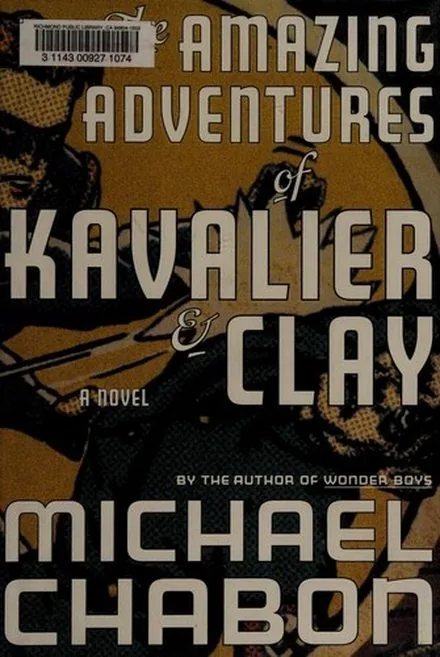
The Amazing Adventures of Kavalier & Clay is a novel about escape, and gradually it becomes a novel about what escape costs. That distinction matters, because the book is full of spectacular ways to get out of things: Houdini tricks, locked boxes, forged documents, hidden identities, comic book alter egos, immigration routes, magic acts, political fantasies, and finally a rubber-band stunt from the Empire State Building. But none of the important escapes solves the underlying problem. Joe gets out of Prague and loses his family. Sammy invents the Escapist and gets trapped in a business contract. Rosa escapes the limitations of domestic life through her art but not through the emotional consequences of her choices. Even the book's final movement, when Joe comes home, is less a victory than a decision to stop hiding.
That's a strong structure for a very long novel. It's also why the length sometimes feels justified and sometimes feels like a product feature nobody was willing to remove. Chabon has packed an enormous amount into this book: wartime New York, Prague under Nazi occupation, the early comic book industry, vaudeville, radio, magic, Surrealism, Antarctic exploration, suburban America, the Holocaust, queer life, marriage, fatherhood, intellectual property, and the specific emotional damage of being young when history decides your life for you. Most of it connects. Some of it is there because Chabon enjoys making the world larger, more decorated, and more verbally elaborate.
Chabon introduces Sammy Klayman already in sharp focus. Sammy Klayman is seventeen, short, physically limited by polio, overconfident in the particular way of somebody who's practiced confidence as a technique, and stuck in a Brooklyn life he wants to escape through money. Then Joe arrives from Prague, carrying eleven newspapers and the responsibility of an entire family left behind. Sammy has exaggerated his position at Empire Novelty, claiming to be more of an artist than an inventory clerk. Joe has studied art and can draw. The immediate partnership is therefore built on two different kinds of dishonesty. Sammy is pretending to be competent. Joe is pretending not to be desperate.
The early scenes at Empire are some of the funniest and most useful in the book, because they show comic books as a business before they become a myth. Sheldon Anapol sells novelty products, has the instincts of a good operator, and immediately sees that Superman has created a market. Sammy sees the opportunity too, but he also wants recognition. He wants to be an editor, an owner, a serious creator, and the person who understands why the new form matters. Anapol wants a product that sells. Both positions are reasonable. The contract that leaves Kavalier and Clay with almost none of the rights is also entirely predictable.
That contract becomes the book's central permissions failure. Joe and Sammy create the Escapist, but Empire owns the character, the radio rights, the film rights, the merchandise, and eventually Luna Moth as well. The authors receive wages and limited royalties while Anapol and Jack Ashkenazy become wealthy. Sammy understands the situation too late, and Joe understands it emotionally before he understands it legally. The novel is very good on this point. Ownership isn't the same as contribution, and being the person who made the thing doesn't mean you control what happens to it. If this sounds like a product-management lesson, that's because it's also a product-management problem, only with more murder, Nazis, and golden keys.
Joe's escape from Prague is the strongest section of the book. Bernard Kornblum's training is absurdly specific and therefore believable within the novel's heightened reality. The locks, picks, ropes, breath control, the failed stunt in the Moldau, and the eventual hiding place of the Golem all make Joe's flight feel like a sequence of technical procedures performed under impossible conditions. The great strength of these scenes is that the mechanism never erases the emotion. Joe can pick a lock, but he can't pick his way back into his family's life after abandoning them at the station. The Golem is smuggled out in a coffin, but the real cargo is the guilt Joe carries.
Thomas is especially important, because Joe's escape is inseparable from a promise he can't keep. He tells his brother he'll meet him in New York. He says it with the confidence of a boy who needs to believe that a future can be arranged through determination. Thomas's drawing of Houdini drinking tea while falling through the sky is one of the book's best images, and it works because it isn't just a symbol of freedom. It's a child trying to imagine enough time to survive the fall.
The novel's account of comic book creation is at its best when it treats the heroes as emotional engineering. Sammy asks why a costumed hero fights crime. Joe asks what the why is. Their answer is the Escapist, whose power isn't exactly strength but the ability to get out and free other people. The character's origin comes from Joe's escape, Sammy's longing for his father, the memory of the Mighty Molecule, and both men's need to turn helplessness into an action sequence. The Escapist is a business product, but he's also a container into which the cousins pour feelings they can't express directly.
This is why Joe's anti-Nazi comics eventually start to fail him. The more powerful the Escapist becomes, the less convincing the victories feel. Joe can have him catch artillery shells, defeat armies, and drag Hitler before a world tribunal, but the real Jews of Prague remain trapped. The Escapist is strongest when he protects ordinary people, refugees, children, and workers. He's weakest when the fantasy pretends violence can solve history. Joe knows this before he can act on it. The book's later artistic breakthrough arrives when Anapol bans Nazi stories because of the film deal. Forced away from direct revenge, Joe and Sammy turn toward structure, memory, minor characters, and the lives of powerless people. The ban is commercially cynical, but it accidentally gives them better material.
The Citizen Kane section explains this shift clearly. Joe realizes that comic books can use image and narrative together in a way that isn't merely a cheaper version of newspaper strips or movies. The later stories, especially Kane Street, are more interested in perspective than in punching. This is where the novel makes its best argument for comics as an art form. It doesn't say that comics can be art. It shows what formal control looks like when the creators stop copying the most obvious superhero template and start using panels, silence, layout, and point of view to control time.
I liked Luna Moth more than I expected to. She begins as a commercial decision, a female superhero with enormous breasts and a costume designed to sell to boys. But she becomes a place where Joe can combine his fascination with Rosa, Winsor McCay's dream logic, and a more flexible approach to page design. The character is obviously sexualized, and the book knows that. It doesn't fully solve the problem, but it understands the contradiction. Luna Moth is both an object produced for consumption and a formal experiment that lets Joe escape the rectangular panel. That's a more interesting contradiction than the novel's occasional claim that the strip is marvelous.
Rosa is the character I trusted least at first and understood best later. She's funny, talented, sexually direct, politically engaged, and emotionally evasive. Her dreambooks and food paintings aren't just eccentric decoration. They're her method of holding experience still long enough to inspect it. She wants Joe, then refuses to ask him for the life she wants. She becomes pregnant, doesn't tell him, and marries Sammy partly to protect herself and the child, and partly because Sammy is available when Joe isn't. This is a cruel decision. It's also a credible one. The novel doesn't pretend that love automatically produces good behavior.
Sammy's marriage to Rosa is the book's hardest relationship to judge. He's gay, loves Tracy Bacon, and marries Rosa after Bacon leaves for California and the war closes around them. The marriage provides stability for Rosa and Tommy, but it's also an act of self-erasure. Sammy becomes a father, editor, husband, and provider while steadily abandoning the parts of himself he can't explain in public. His testimony before the Senate committee is humiliating, but the relief afterward is real. He's finally forced out of the secret. Deasey's observation that the exposure may be Sammy's golden key is one of the few moments when the novel states its central idea directly and correctly. A secret can be a chain even when it protects you from punishment.
The novel is less successful when it makes every character's pain arrive with a carefully placed object or extended historical aside. There are many excellent details, but the book often explains the meaning after the scene has already done the work. We get the comic image, the historical context, the emotional interpretation, and sometimes a later account of how the image was received. Chabon is rarely unclear, but he's often unwilling to leave a good scene alone. A reader can admire the machinery and still want a smaller control panel.
The Antarctica section is the most obvious example. Joe and Shannenhouse are stranded at Kelvinator Station, everyone else dies from carbon monoxide, and Joe becomes obsessed with monitoring the German base at Jotunheim. The setting is vivid and the psychological logic is sound. Joe wants one enemy he can reach. He wants to convert helplessness into a mission. But the section also feels like the novel has temporarily changed books. The dogs, the stove, the radio, the absurd game of Lupe Velez, the German geologist, and the flight across the ice are memorable, yet the whole sequence delays the emotional work the story has been preparing since Thomas's death.
Still, the ending earns more than I expected. Joe finds the Golem's remains in a crate, but what returns to him isn't the supernatural creature. It's dirt from the Moldau, his father's card, and the evidence that the past can't be restored by recovering its objects. Joe can't bring back Prague. He can't bring back Thomas, Rosa's lost years, or the life he might have had. He can return to the family that remains and tell the truth to his son. Sammy leaves for Los Angeles, not because the marriage collapses in one dramatic scene, but because he finally refuses to remain in a life built around concealment. The final card, with the family name changed to Kavalier Clay, is sentimental, but it's earned.
The book's final argument is that escape is useful only if it changes what you do after you get out. Joe spends most of his life trying to become a person who can't be captured, owned, or hurt. That makes him a compelling artist and a terrible partner. Sammy spends most of his life trying to make himself necessary to other people. That makes him reliable and miserable. Rosa turns pain into stories, but she can't draw herself out of the consequences of love. None of them becomes uncomplicated. They stop pretending that freedom means having no obligations.
This is a demanding novel, and its reputation isn't based on nothing. It's inventive, emotionally serious, historically alert, and unusually good at showing how popular art can carry private grief into public life. It's also overbuilt. There are sections I admired more than I enjoyed, and several moments when I could see the author arranging the furniture around an emotion instead of trusting the emotion to stand on its own. But the central design holds. For me, the book ultimately became a story about people who mistake escape for freedom, then spend decades learning that freedom requires choosing where to stay.
I finished it. I'm glad I did. I would not recommend reading it when you need something efficient. It has too many rooms, too many corridors, and too many locked doors. But some of those doors open onto work that's genuinely difficult to forget.