Roundtable 4 READERS · 1 BOOK

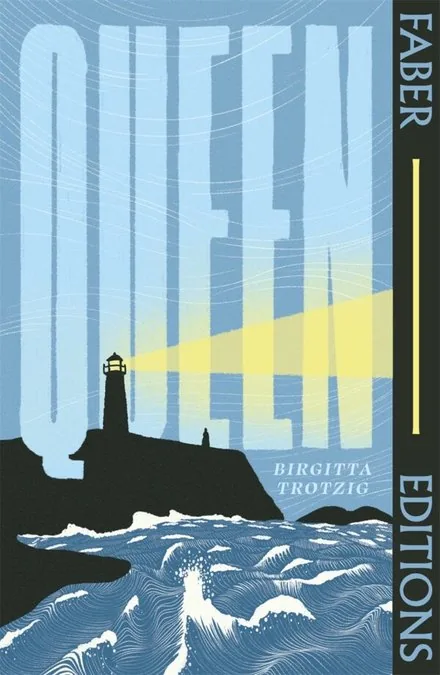
Queen

by Birgitta Trotzig · Literary Fiction · 1985

Four readers agree Queen's cruelest character, Judit, only softens once she starts sitting beside a woman she once locked out, calling that small, costly gesture the book's closest thing to grace.

Genre
Literary Fiction
First published
1985
Length
about 176 pages
RNKD readers
4

Verdicts at a glance

No RNKD reader scores a book out of five, so there is no average here. Just 4 people saying what they thought. Each of them wrote before reading the others.

READER 01 OF 4

A Hard Life Is Not the Same as a Strong One

Ashley Miller

Ashley Miller, 21

7 reviews on RNKD

DEPENDS Finished the book

SPOILERS This review discusses the whole book, including how it ends.

This review covers the entire plot, including how it ends.

Queen is about people who mistake endurance for virtue. Endurance is the only thing anyone ever taught them to do. It's also about poverty, family loyalty, sexual violence, religious longing, immigration, mental illness, and the damage people cause when they decide love gives them the right to manage someone else's life. This isn't a comfortable book. It isn't even especially interested in being readable in the ordinary sense. It keeps circling back to the same bleak question: what happens when a person survives by hardening themselves, then discovers that hardness has made tenderness nearly impossible?

The novel opens with an unnamed widow arriving in rural Skåne from New York in 1930. She's lost her husband, Viktor Lindgren, in a New York tenement fire, and remembers almost nothing clearly. What she has is fear, fragments, bodily memories, and a coat that makes everyone stare. She arrives at the farm where Viktor was born, run by his sister Judit, known throughout the area as the Queen. That setup sounds simple, but the book immediately starts moving backward through several generations, showing how this family became a group of people who are alive together but almost never able to reach one another.

Judit is the center of the novel, though "center" makes her sound steadier than she is. As a girl she's forced into responsibility early. Her mother goes psychologically absent after giving birth to Viktor. Her father is gentle until he isn't. Her older brother Albert is slow, sensitive, isolated, and repeatedly humiliated. Judit carries the household, raises Viktor, works the farm, manages the money, and decides nobody will drag her family into the poverty surrounding them. She's capable the way people become capable when there's no one else left to do the work. She's also controlling, cruel, suspicious, and deeply afraid of needing anyone.

That combination is what makes Judit more interesting than a simple "strong woman" character. She isn't strong in the inspirational social-media sense. She's strong the way a locked door is strong. She keeps out hunger, debt, shame, dependence, and other people's demands, but she also keeps out help. The local poor come to the farm because Judit's father feeds them. Judit gradually drives them away. She believes she's protecting the family, and materially she often is. But she also believes poverty is a moral and physical force that will swallow anyone who lets it get close. Her disgust toward need is partly a fear of becoming needy herself.

I understood her logic, which made her behavior more upsetting, not less. She doesn't act randomly. She sees what needs doing and does it. She notices the poorly covered potatoes, the wasted sugar, the farm equipment falling apart, the money disappearing. She falsifies weights and accounts, hides resources, fights the bank. Then she applies that same management style to human beings. Albert gets ordered around because he's passive. Viktor gets disciplined because Judit has decided he must become the kind of man who can rescue the farm. The Polish widow gets confined to a room and put to work because Judit sees her as an economic threat and as someone whose vulnerability might infect the household.

This is where the novel got difficult for me in a very specific way. Queen is full of people doing terrible things for reasons that are understandable. That doesn't make the things acceptable. Viktor sexually coerces the girl from Torp, then treats his own obsession as love. Later, in America, he clings to the Polish woman after meeting her during a violent assault on unemployed workers. Their connection feels moving at first, since both are terrified, hungry, and alone. They hold onto each other in a city that has made them feel disposable. But the book won't let that moment become a romantic rescue. Viktor disappears, returns, disappears again, and leaves her with nothing. His need doesn't make him safe.

The same holds for Albert. He's mocked, beaten, sexually shamed, treated as though he's defective. He has almost no power in the family. It's easy to feel protective of him. But he isn't harmless just because he's suffered. When he and the Polish widow have sex, she isn't mentally present. She's searching for the dead Viktor, living inside a trauma that has nearly erased her. Albert recognizes, at least afterward, that something in her is damaged and unreachable, but recognizing it doesn't undo what he's done. The book refuses the convenient idea that a lonely, gentle person automatically makes a gentle choice.

That refusal is one of the strongest things about the novel. Nobody gets to claim innocence just because they're wounded. Judit hurts people because she's afraid. Viktor hurts people because he wants to be loved and can't accept anyone's refusal. Albert hurts someone because he mistakes being needed for being welcomed. The Polish widow is hurt by war, displacement, poverty, sexual exploitation, and grief, but the novel refuses to turn her into a symbol of pure suffering. She's mostly inaccessible, even to herself. Her silence isn't a lesson for the people around her. It's a condition they keep trying to use, interpret, or solve.

The writing is intense and repetitive, sometimes to the point of exhaustion. Trotzig keeps returning to the sea, the lighthouse beam, mud, darkness, hunger, fire, stone, blood, mouths, bodies. Normally I'd complain that this kind of repetition hammers the same emotional point too many times. Here, though, the repetition is part of the experience. These people are trapped in patterns they can't name. The prose circles because the family circles. Judit keeps growing more controlling, Viktor keeps fleeing and returning, Albert keeps waiting for permission to exist, and the Polish widow keeps drifting farther from ordinary life. The language never gives the reader a clean way out of that repetition.

Still, I didn't love every part of the style. There are long passages where the metaphors pile up so heavily that I stopped processing individual sentences and just waited for the paragraph to end. The book wants every physical detail to carry spiritual and emotional weight. Sometimes that works beautifully, especially when the landscape mirrors the family's fear. Sometimes a dead body just gets described through another five layers of sea, stone, darkness, and decay. I could feel how serious the writing was even when I could no longer feel the scene itself.

The New York section stayed with me the most. Viktor arrives believing America will let him escape the farm, Judit, and the person he's become. Instead, he gets absorbed into unemployment, hunger, factory violence, and a city that doesn't care whether he survives. His encounter with the Polish woman isn't a fresh start. It's two damaged people finding temporary warmth in the same disaster. When he leaves and later comes back, she keeps the room because she believes he might return. That detail devastated me. The room becomes less a home than a receipt proving her life with him happened. She can't give it up, because giving it up would mean losing even the possibility of his return.

The ending finally changes Judit, but not through some grand confession. After the Polish woman gives birth to Lydia, Judit takes the child from her and tries to fold the girl into the family she's spent her life defending. Then the child's face unsettles her. Lydia resembles nobody. She isn't Viktor returned, isn't Judit's child, isn't proof that the family's suffering produced something meaningful. She's a separate person. That discovery breaks Judit's possessive story about love. Later, when the Polish woman is sent to a psychiatric hospital, Judit starts visiting her every month. She can't repair what she's done. She can't make the woman understand her. She sits beside her anyway.

That's the closest thing the novel offers to grace, and I believed it precisely because it's so small. Judit doesn't suddenly turn kind. She becomes capable of staying beside someone she can't control. When Albert comes to her after the Polish woman is taken away, Judit finally cries and lets him hold her. The Queen isn't defeated by poverty, the bank, the farm, or the sea. She's defeated by the fact that another person's suffering can't be managed into safety.

The afterword spells this interpretation out, maybe too explicitly. It describes Queen as a book about returning to other people, softening, and recognizing that the person cast out as Other is also the self. I was glad to have that context, but I didn't need the author's explanation to understand the final movement. The novel had already made the point through Judit sitting beside the unresponsive woman month after month, with no reward and no sign that forgiveness will ever arrive.

This is a demanding book about people who want love but keep trying to turn it into ownership, obedience, rescue, or proof. It isn't a book I'd hand to someone looking for a comforting family story, and I'd warn anyone sensitive to sexual violence, coercion, child abuse, starvation, and prolonged psychological collapse. I also would not pretend it is an easy recommendation. There were sections where the prose felt like work, actual work, not the pleasant kind that leaves you feeling productive afterward.

But the work leads somewhere. Queen understands that the people who call themselves strong may be the ones most afraid of being touched by another person's need. It understands that suffering doesn't make anyone morally pure. Most of all, it understands that care isn't the same as control. Judit spends most of her life trying to save people by deciding what they're allowed to be. She only starts to change once she stays with someone who can't give her obedience, gratitude, or even recognition. That's a difficult ending, and a real one.

READER 02 OF 4

A family held together by the wrong person

Noa Levi

Noa Levi, 27

11 reviews on RNKD

DEPENDS Finished the book

SPOILERS This review discusses the whole book, including how it ends.

Queen is about a woman who turns competence into a form of captivity. Judit is called the Queen because she's strong, decisive, hardworking, and almost impossible to move once she's chosen a direction. She runs the failing farm in Bäck, manages her brother Albert, raises her youngest brother Viktor, keeps the accounts, controls the food, refuses certain compromises, and treats every weakness around her as another problem she has to contain. She doesn't just want to survive. She wants to be the person who keeps everyone else from falling apart.

I recognized the mechanism right away, though not the scale. Judit is always checking what's changed, who's responsible, and which small failure will turn into a larger one if nobody takes ownership. She sees a farm losing land, money, animals, and social standing, and her response is to work harder and tighten control. When her father gives food to wandering poor people, she watches them eat with compassion and disgust at once. She understands their condition isn't their fault, but she also believes it must never be allowed to become her family's condition. That contradiction isn't a side detail. It's the whole book.

Judit's strength is real, and so is the damage it causes.

The novel opens by making the farm feel less like a home than an emergency procedure that's been running for generations without anyone checking whether it still works. The gates are barred against hunger. The roofs sag. The family sells pieces of the property to survive. The father reads scripture and thinks about God while the practical work goes undone. Judit notices what's happening and takes over by increments, first because someone has to, then because she no longer believes anyone else can be trusted with it.

That's the part of Judit I found most convincing. She isn't strong because she's discovered some superior philosophy. She's strong because other people keep failing in front of her, and she keeps being the one left to clean up the result. Her father is gentle but passive. Albert is kind, frightened, and unable to act without instruction. Viktor is energetic, damaged, violent, and impossible to contain. Judit becomes the family's operating system. There's no off switch, and eventually she can't tell the difference between keeping things running and owning everyone inside them.

Trotzig is very direct about this damage, even when the prose itself isn't direct at all. The book repeats images of mud, water, darkness, stone, fire, hunger, and drowning until they become a second weather system. Someone is always being pulled down, dissolved, buried, or sealed inside something. Sometimes the repetition clarifies the family's emotional structure. Sometimes it made me feel the novel was asking me to approve the same sentence again after I'd already understood it.

I had to adjust my reading pace. This isn't a book that gives you a clean sequence of event, consequence, event, consequence. It circles. A scene happens, then the book returns to the feeling underneath it, then to an image that's already appeared, then to the family history behind that image. That can be powerful. It can also feel like a process that never closes. I kept wanting someone to name the actual problem and decide what could still be repaired. Queen has no interest in that kind of relief.

The most painful relationship is Judit's with Viktor. She raises him after their mother's illness and absence, and she turns him into a project. Her dream is that he'll grow strong enough to help her restore the farm. She isn't controlling him because she enjoys power. She's attached her entire idea of survival to him. He's supposed to be the person who proves her sacrifices were worth something.

Viktor cannot be that person. He's a frightened, impulsive, sexually reckless man who hurts people and then seems unable to grasp the size of the damage. He gets the lighthouse keeper's daughter pregnant, and after her death he forces himself on another young woman from Torp. The novel doesn't excuse him. His history explains the shape of his damage, but it doesn't make his actions harmless. That distinction matters, especially since the people around him keep converting responsibility into another family burden. Judit pays for children he may have fathered. She manages the consequences. Viktor moves through life as though his pain were the only fact that deserved attention.

His departure for America is the first point where Judit's control visibly fails. She treats emigration as a practical solution, a way to remove the problem from the farm. Viktor experiences it as another fall into an unknown world. His years in New York aren't presented as an escape or a fresh start. He loses work, goes hungry, is beaten in a crowd of unemployed workers, finds the Polish woman, loses her, returns, and eventually dies in a fire. The sequence is brutal because it removes the usual promise that leaving home might let someone become a different person. Viktor takes the farm's damage with him.

The New York sections also changed how I understood the book's poverty. In Bäck, hunger is a local fact that can be kept outside a gate, at least for a while. In New York, poverty is a mass. It's workers pressed together at a factory entrance, bodies driven forward by the need to be selected, then driven back by batons. Viktor feels his own feet trampling soft things. The scene isn't subtle, but it works. The individual man who caused so much harm is also just one body among many being treated as disposable.

The Polish woman is where the novel becomes hardest to read. She survives war, displacement, assault, hunger, unstable work, and the loss of her family. When she meets Viktor in the crowd, they cling to each other because each is falling and the other body happens to be there. Their relationship holds real tenderness, but it isn't a rescue. They're both too damaged to build a safe life. After Viktor dies, she arrives in Bäck carrying her memories, her poverty, and the possibility that she's pregnant.

Judit responds to her as an enemy, because she sees need as a threat. She puts the widow in a room beside the cows, makes her work for food, limits where she can go, and refuses to let her enter the house. The Polish woman isn't treated as a person with a claim on the family. She's treated as an incoming demand. Judit's fear about the farm's ownership is practical, but that practical fear quickly turns into moral permission. If the woman is dangerous, then cruelty becomes management.

Albert's response is different, though it takes him most of his life to become capable of acting on it. He notices the widow, or tries to. His attention is clumsy, frightened, and often mixed up with fantasy. He wants to marry her because he believes God has finally given him a place in life. He also genuinely wants to care for her. The book doesn't turn him into a secretly perfect man. He's spent years obeying Judit because obedience is easier than deciding anything for himself, and he stays confused about what the Polish woman needs. But he eventually recognizes that she isn't an object inside Judit's system.

The birth of Lydia brings the family's arrangement into the open. Judit takes the child because the mother is ill, then decides the girl belongs with her side of the family because she has Viktor's eyes. Albert accepts this at first, since he's never been taught to challenge Judit. The Polish woman withdraws further until she's taken to a hospital and spends the rest of her life in an almost unreachable state. This is where Judit's care becomes impossible to separate from possession. She believes she's protecting Lydia. She's also taking another person's child because she can't stand being left outside the decision.

What finally breaks Judit isn't an argument. It's recognition. After the Polish woman has been removed, Judit begins visiting her every month in the hospital. She sits beside the bed and looks at the woman who can't respond. This isn't a clean redemption. The harm remains. The Polish woman has lost her home, her child, her language, and any path back to ordinary life. Judit can't repair that by showing up with sweets or sitting quietly. But she's stopped pretending the woman is an adversary.

The line that stayed with me is Judit's cry: "She is me! She is me!" It isn't a claim that the two women have lived the same life. They haven't. It's the recognition that Judit's categories have failed her. The woman she placed on the other side of the gate isn't some different kind of creature. She's another person whose life has been damaged by hunger, violence, dependence, and other people's decisions. Judit can only see this after she's helped make the damage worse.

Albert's change is quieter and, for me, more moving. He starts out as the person everyone has filed away as weak. He's mocked, beaten, shamed, and controlled. He also carries his own failures and retreats from other people whenever shame gets too strong. And yet he's the one who can eventually hold Lydia without needing her to prove anything. He visits the Polish woman. He takes Judit into his arms when she finally cries. His late ability to act doesn't erase all the years he spent avoiding it, but it gives the ending a small practical truth: a person doesn't need to become powerful to become present.

The afterword by Hanne Ørstavík made the ending more explicit than I'd have preferred, but it also helped me understand why the book is built this way. Ørstavík writes about returning to Queen during depression and recognizing Judit's hardness as close to her own. She connects the novel to the possibility of softening, of drawing a larger circle that can hold contradiction instead of forcing one side outside it. I usually get suspicious when an afterword explains a book's emotional solution for me. Here it felt useful, because the novel itself commits so hard to pressure, repetition, and symbolic language that I wasn't always sure whether its final movement was toward grace or just another form of suffering.

I finished Queen, but I didn't enjoy every part of reading it. The novel is physically and emotionally demanding. It repeats its images until they become almost oppressive, and some characters stay so thoroughly enclosed in their patterns that I wanted more ordinary speech, more practical disagreement, more evidence that they could choose something else. At times the book's intensity felt earned. At other times it felt like the prose was applying pressure because the scene itself hadn't done enough yet.

Still, the book stayed with me, because its central problem is precise. What happens when the person keeping everything functioning starts believing that functioning gives her the right to decide who belongs? Judit doesn't fail because she's too strong. She fails because she can't imagine care that doesn't include control. The farm, the widow, Lydia, Albert, and Viktor all become things she has to arrange. By the time she understands that the woman in the hospital is also herself, she's already spent a lifetime treating other people's vulnerability as an emergency only she is qualified to manage.

Queen isn't a comfortable book about forgiveness. It's a book about seeing another person after you've already done harm, and about the fact that recognition is necessary but not sufficient. I admired it more than I liked it. The prose can be exhausting, but the question it keeps returning to is worth the exhaustion: if survival requires making yourself hard, what happens when that hardness becomes the thing keeping anyone from reaching you?

READER 03 OF 4

A hard book about what happens when strength becomes a prison

Sophie Taylor

Sophie Taylor, 26

13 reviews on RNKD

DEPENDS Finished the book

SPOILERS This review discusses the whole book, including how it ends.

Queen begins with a woman arriving in rural Sweden from New York, sent back at the expense of the American government after her husband dies in a tenement fire. She's muddy, exhausted, almost unable to speak, and carrying only fragments of what happened to her. The people at the farm in Bäck call her Viktor's widow, though she's rarely given much room to be a person in her own right. The farm is run by Judit, known as the Queen, and her brother Albert. The real subject of the novel is how these three people have been shaped by poverty, family duty, shame, and the belief that survival requires becoming harder than everyone else.

The opening has no interest in getting you comfortably settled. It moves between 1930, the family's earlier history, the famine years of the nineteenth century, and Viktor's life in America. The narrative keeps returning to the farm, the sea, the lighthouse beam, and one basic question: what does a person owe other people when there's barely enough to keep themselves alive? The answer in Queen is never tidy. Generosity can become control. Duty can become ownership. Faith can be a way to stay alive, or another form of self-deception. A person can do harm while genuinely believing they're the only one holding everything together.

Judit is the center of this problem. As a girl she's handed her newborn brother Viktor and told, in effect, that he'll have no mother except her. She's still a child herself, but she takes the instruction seriously. She works, protects him, disciplines him, and builds her entire identity around being the person who can manage what nobody else can. Her father is gentle but weak. Her mother is physically present but psychologically absent after the birth. Albert is slow, anxious, and repeatedly humiliated. Viktor is lively, difficult, and deeply vulnerable, though his vulnerability comes out as cruelty and recklessness. Judit decides Viktor must become strong enough to help her save the farm. She isn't just raising a brother. She's constructing a future in which she'll finally be safe.

This is where the book turned painful rather than bleak. Judit isn't hard because she feels nothing. She's hard because she feels too much and has decided that feeling can't be allowed to interfere with the work. She can't accept weakness in Viktor, because his weakness reminds her of everything she's spent her life trying to prevent. When he's abusive, irresponsible, and dangerous, she doesn't know how to respond except by tightening her grip. She never sees that her care has become another enclosure. The book is very clear this isn't a noble sacrifice. It's a form of love that has stopped recognizing the other person as separate.

There's a scene after their father's death when Viktor comes back from wandering and Judit realizes she can no longer control him. It's a small shift in practical terms, but it changes the whole family arrangement. Albert still obeys her. Viktor doesn't. Judit feels disgust for Albert's obedience, because it proves that command isn't the same as closeness. She's spent years trying to make herself indispensable, and now the person she most wants to keep is the one person she can't make stay. That's the point where her strength stopped looking like competence and started looking like panic with better posture.

Viktor's story in America is devastating, though the book never presents emigration as a clean escape from the farm. He arrives in New York intending to take America, which is about as realistic as announcing you're going to take Bristol by force because you have a suitcase. He loses his luggage almost immediately, works unpleasant jobs, becomes unemployed, goes hungry, and is beaten in a crowd trying to get work at a factory. During the riot he holds the hand of a Polish woman, and that accidental contact becomes the closest thing either of them has to shelter. They live together in a room, both carrying the dead and displaced parts of their previous lives.

The relationship between Viktor and the Polish woman is one of the strongest sections of the novel, and also one of the hardest to read. They don't rescue each other. They cling together because the world has become too large and hostile to face alone. Their intimacy mixes with confusion, hunger, violence, and the need to pretend that closeness has produced a future. When Viktor disappears and eventually returns, damaged and unable to explain himself, she takes him back anyway. Later, when she's repatriated to Sweden after his death, the whole journey feels less like a return than another removal. She hasn't found home. She's been sent to the next place where other people get to decide what happens to her.

Trotzig doesn't let Viktor remain only a victim. His treatment of women is appalling. He gets the lighthouse keeper's daughter pregnant, and his response is terror and evasion rather than responsibility. He later forces himself on the girl from Torp, and the scene is told through his confused longing rather than through any clear moral framing. The novel doesn't excuse him, but it does show how a person treated as an object of correction can start treating other people as objects in turn. That connection isn't an excuse. It's an explanation of how damage travels.

Albert is the character I found hardest to leave behind. He's mocked for being slow, sexually inexperienced, and easily overwhelmed. He's humiliated when people laugh at his public claims of virginity, and retreats further from ordinary life afterward. His religious hope is sincere, but he uses it to turn fear and shame into a system he can understand. He wants to be delivered from the world rather than learn how to live in it. His marriage to Viktor's widow is both uncomfortable and unexpectedly tender. He sees her as a person who might still be reached, while Judit sees her as a threat to the farm. Albert isn't suddenly transformed into a strong man. He starts acting despite being afraid, which is more convincing and more moving.

The title becomes most complicated after Viktor's widow gives birth to Lydia. Judit takes over the child almost immediately. At first she believes the baby belongs to her family because Lydia has Viktor's eyes. She treats the girl as another chance to preserve what's been lost. Then she looks at the child and understands that Lydia isn't a replacement for Viktor or an extension of herself. Lydia is a separate person, strange and vulnerable, resembling nobody else. Judit's realization isn't presented as a clean conversion. She still has to be taught, painfully, that love isn't the right to possess someone.

The ending is quiet but not easy. Viktor's widow is sent to an institution after collapsing into a state of near-total withdrawal. Judit begins visiting her every month. She sits beside the bed and looks at the woman she's imprisoned, controlled, and treated as an adversary. There's no grand reconciliation and no useful conversation. The woman may not know Judit is there. Judit may not know what forgiveness would even look like if it were offered. She goes anyway. This is the closest the novel gets to redemption, and it's deliberately practical. Visit the person. Sit beside the bed. Bring sweets. Don't expect the gesture to repair the damage.

The prose is intense, repetitive, and often physically difficult. Trotzig returns to the sea, darkness, mud, fire, stone, hunger, the lighthouse beam, and the language of drowning so often that I sometimes felt the book was checking the same file for overset text and refusing to fix it. But the repetition isn't decorative in the usual sense. It creates the feeling of lives caught in patterns they can't recognize as patterns. The same images keep returning because the characters keep arriving at the same injuries from different directions. There are passages so dense I had to slow down and reread the paragraph. Other passages are plain and brutal. A person is hungry. A child is beaten. Someone is left outside a locked gate. The contrast matters.

The translation by Saskia Vogel preserves the strangeness of the sentences without making them sound artificially old-fashioned. Some images are so compressed and severe that I admired them before I understood them. Others felt overworked. Trotzig isn't always interested in giving the reader a clear route through the material. She's more interested in making grief and isolation feel like physical environments. That means the novel isn't a relaxing read, unless your idea of relaxing is walking beside a frozen sea while a family silently destroys itself.

I finished Queen, but I would not recommend it to anyone looking for an efficient historical novel with a clear arc. The history is there, including poverty, emigration, the Depression, and the conditions faced by women without money or legal security, but the book isn't primarily explaining those things. It's studying what people do when they have no language for their needs. Judit thinks command will keep disaster away. Albert thinks faith will make him safe. Viktor thinks movement will free him. His widow clings to a room because it's the last place where the dead man might find her. None of these strategies work. They're still understandable.

For me, Queen ultimately became a book about the difference between carrying someone and holding them down. Judit spends her whole life confusing the two. The final movement doesn't erase what she did, but it shows her finally staying beside someone without demanding that the person become useful, grateful, or healed. That's a small change. In this book, a small change is about as close to grace as anyone gets.

READER 04 OF 4

The Work of Hardening

Yael Shapiro

Yael Shapiro, 46

11 reviews on RNKD

WOULD RECOMMEND Finished the book

SPOILERS This review discusses the whole book, including how it ends.

A practical question first: who's doing the work in this family? Mostly Judit. She feeds the baby, raises the younger brother, manages the farm, keeps the accounts, protects what can still be protected, and later takes responsibility for the stranger who arrives from America. She also decides that because she's doing the work, she has the right to decide what everyone else needs. That's where Queen becomes both frightening and painfully recognizable. Competence isn't the same as goodness. Sometimes it's only power wearing a clean apron.

I read this as a novel about people who turn endurance into a moral system. Judit, called Queen in her village, is the strongest person in the Lindgren family. She's also the person most determined not to be weak, poor, dependent, or exposed. The farm is deteriorating, the bank is taking pieces of it, the father can't manage his own life, Albert is painfully incapable of ordinary social existence, and Viktor is violent, frightened, sexually reckless, and desperate to escape. Judit looks at all this and decides the answer is to close the gates, count the sugar, work harder, and refuse every form of helplessness. It isn't an irrational response. It's also the response that eventually makes her unable to recognize anyone who needs something she can't organize.

The novel opens with a woman arriving from America at a rural Swedish station in 1930. She has a letter, a dark coat, almost no language the people around her understand, and memories reduced to fragments. The opening landscape isn't background. The sea, the mud, the farms, the lighthouse, the winter darkness, the smells of animals and rot, all of it is active. The world is physically present and morally indifferent. People are hungry because the year is lean. Farmers bolt their gates because they barely have enough food for themselves. A woman holds up the body of her dead child outside the Lindgren farm, and the family watches from inside without opening the door.

That scene explains much of Judit before the novel explains her history. She doesn't fail to understand the hunger outside. She understands it too well. Her decision is that compassion can't be allowed to become an obligation. Her father believes the poor are where one finds God. Judit looks at the starving people at the table and thinks, in effect, that they must not be allowed to become her family. She isn't stupid, and she isn't without compassion. She sees the suffering clearly. She just makes a different calculation. Not me. Not mine.

Trotzig doesn't present this calculation as a single moral error. She shows how it becomes a life. Judit has been made responsible since childhood. When her mother nearly dies giving birth to Viktor, nine-year-old Judit is told to hold him because soon he'll have no mother but her. That isn't a metaphorical burden. She feeds him, wakes for him, stays home from school for him, and becomes his substitute parent. The child is placed in her arms and she understands that he's hers. He's also the only person through whom she can feel tenderness without immediately feeling endangered by it.

Her relationship with Viktor is the center of the book and its most disturbing attachment. She wants to make him strong enough to become her partner in saving the farm. She doesn't want him to be like their father or Albert. She wants someone she can rely on. So she disciplines every weakness out of him, or tries to. The result isn't strength but a person who's learned that weakness has to come out somewhere else. Viktor torments Albert, damages people, gets a girl pregnant, and later forces himself on another young woman who doesn't want him. The book doesn't excuse him. It does show how harm passes through a family, changing form as it moves. A child who can't defend himself becomes a man who leaves other people unable to defend themselves.

This is one of the places where the novel is difficult to read in a useful way. Trotzig doesn't offer a tidy chain of causes. Viktor isn't damaged by Judit and therefore free of responsibility for anything he does. Judit isn't a victim of her childhood and therefore free of responsibility for what she does to him. The family is a system of injuries, but systems don't erase individual responsibility. They explain why people keep repeating what they claim to hate.

Albert is the character I kept thinking about after putting the book down. He's slow, frightened, socially humiliated, religious, and almost painfully eager to be good. As a child he finds a private place in the attic, behind the flour bins, and discovers that solitude can be stronger than the fear of rats. His whole life becomes a search for somewhere he can exist without being examined. He isn't a saint. He notices Viktor's vulnerability and sometimes enjoys the power of hurting him. He also understands something the others don't: a person can't be forced into strength without being destroyed by the force.

His religious life is both comic and sad. He becomes known for his virginity, talks about it too openly, and is eventually mocked by the people whose approval he'd hoped to earn. The humiliation breaks something in him, but it also strips away one of his lies. He realizes purity hasn't made him safe or superior. After that he speaks less, not because he's attained wisdom, but because he no longer trusts his words to survive contact with other people. When he later marries Viktor's widow, the event is strange, embarrassing, and unexpectedly tender. Albert hasn't suddenly become confident. He's found a person whose damaged life doesn't require him to pretend he's ordinary.

The Polish widow is the novel's most extreme example of what happens when a person is reduced to need. She arrives after Viktor's death, carrying almost nothing and remembering almost nothing. Judit immediately sees her as an enemy because the widow has a legal share in the farm. The reasoning is practical. The farm can't survive if another person claims what belongs to her. But Judit's practicality also lets her turn the widow into an object. She makes her work for food, confines her to a room near the cows, and refuses to let her appear in the village. She tells herself this is necessary. The woman is poor, unstable, foreign, and hard to understand. In Judit's world, those facts become evidence against her.

The novel is especially strong when it shows the extra work hidden inside moral claims. Judit says she's protecting the farm. Who's protected? The person with authority. She says the widow must be kept away for the child's sake. Who gets to hold the child? Judit. She says she's preserving order. Who decides what order means? Judit. This isn't a modern workplace policy, obviously, but I recognize the structure. A person says something is being done for the good of the group, and somehow the person making the decision also ends up controlling the food, the information, and the final version of events.

The prose is intense to the point of physical pressure. Trotzig repeats images of darkness, water, stone, fire, mud, hunger, and the lighthouse beam. At first I found the repetition too much. The sea isn't allowed to remain merely the sea. It becomes death, memory, God's absence, the unconscious, the family's history, and sometimes just the sea again. The same happens with the body. People are described as animals, stones, wounds, weather systems, heaps of matter. There are long passages where a sentence seems to keep going because stopping would feel like a betrayal.

I didn't always enjoy this. There were moments when I wanted someone to underline the actual event and say: this happened, and now this is what follows. Trotzig often refuses that relief. She lets one image run into another until the emotional meaning is clear but the practical sequence blurs. That's a deliberate method, and I understand it. Still, understanding the method didn't prevent impatience. The book demands a different reading rhythm than the one I usually bring to a novel. It asks for attention to recurrence rather than progression.

The progression is there, though. The opening widow becomes the center of the ending. After she gives birth to Lydia, Judit takes the child from her and gradually starts treating the mother as a danger. The widow grows ill, withdraws from life, and is eventually taken to an institution. Only then does Judit begin to understand that the woman isn't an intruder who threatened the family from outside. She's another version of Judit, someone emptied by loss with no way back. The recognition comes late, but it matters. Judit visits her every month until illness prevents her from continuing. This isn't redemption in the cheerful sense. No one is restored. The harm remains. But Judit finally performs an act that isn't designed to preserve her power. She sits beside someone who can't repay her.

That change is small enough to be believable. Trotzig doesn't give Judit a speech explaining her moral education. She gives her a routine. She travels to Lund, sits by the bed, and looks at the woman. This is the kind of grace I trust more than a declaration. It takes time. It's inconvenient. It doesn't improve the farm or make the family healthy. It refuses to abandon the person who's become impossible to use.

The afterword by Hanne Orstavik helped me understand why the novel can feel both punishing and consoling. Orstavik describes returning to Trotzig when she feels pushed outside ordinary life, and describes the language as something that can hold a person. I was less persuaded by the more autobiographical parts of the afterword than by its account of reading itself. The novel doesn't make suffering attractive, and it certainly doesn't make poverty spiritually pure. It does something harder. It keeps looking at people after their dignity has been damaged, after their choices have turned ugly, after they've harmed someone else and can't find a clean route back.

I understand the intention behind that gaze. I also think the book sometimes mistakes relentless attention for sufficient explanation. There are places where the prose tells us the same emotional truth through five images when two would have done. But the excess isn't empty decoration. It's part of the argument. These people can't say what's happened to them, so the language keeps circling the body, the landscape, and the dead. The repetition is the sound of a family unable to speak directly.

Queen is not a comfortable historical novel about rural hardship. It's a severe novel about the damage caused by making hardness into an identity. Judit believes that if she can endure everything, nothing will be able to take her. In the end, endurance has taken almost everything from her anyway. The final image isn't a victory. It's a woman who's spent her life defending herself from need and finally sits beside someone whose need can't be solved. For me, that's where the book becomes more than a catalogue of suffering. It asks who we are when the person in front of us can't work, repay, improve, or reassure us. Then it waits for the answer.

The answer in Queen is late, incomplete, and costly. It is also the only answer that has any chance of being human.

Where they agreed

All four land on the same reading of Judit: her competence starts as protection for a starving family and hardens into control over everyone in it. Noa and Sophie both single out the ending, where Judit visits the institutionalized Polish widow every month with nothing to show for it, as grace that is late and incomplete rather than a cure. Ashley separately flags the novel's heavy repetition of images like sea, mud, stone, and hunger as demanding a slower kind of reading than she's used to giving a novel.

Where they split

They do not really split on this one.

Written from the reviews above and checked by an RNKD editor against what the readers actually wrote. It adds nothing they did not say. How Roundtables work

Report an error on this page How we review Cover image rights