Roundtable 3 READERS · 1 BOOK

Mad Mabel

by Sally Hepworth · Crime & Thriller · 2025

All three readers loved Mabel's voice and the found-family plot, though they differ on whether the imaginary-friend twist and the tidy ending earn their emotional payoff or resolve too easily.

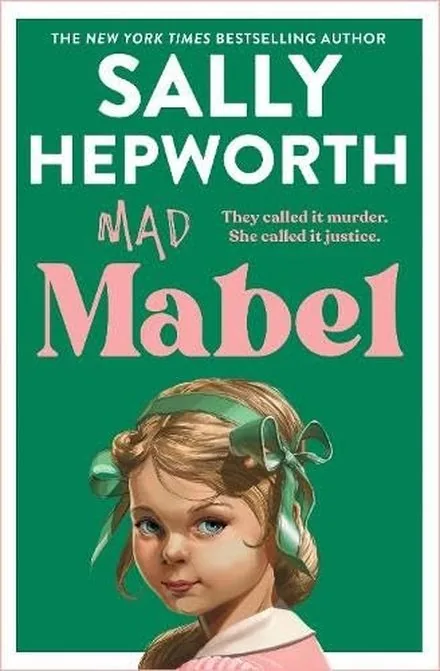
Cover of Mad Mabel by Sally Hepworth
Genre
Crime & Thriller
First published
2025
Length
about 352 pages
ISBN
9781761266492
RNKD readers
3

Cover artwork © its publisher, shown to identify the book under review. Rights

Verdicts at a glance

No RNKD reader scores a book out of five, so there is no average here. Just 3 people saying what they thought. Each of them wrote before reading the others.

READER 01 OF 3

The Murder Mystery Is Fine. The Friendship Is the Point.

Emily Johnson

Emily Johnson, 29

11 reviews on RNKD

WOULD RECOMMEND Finished the book

SPOILERS This review discusses the whole book, including how it ends.

Mabel Waller is eighty-one, six feet tall, and rude in a way that is mostly entertaining. She lives on Kenny Lane in Melbourne under the name Elsie Fitzpatrick. She finds her neighbour Ishaan dead on his kitchen floor, gets questioned because she was the one who found him, and then discovers that the media has connected his death to her own past. In 1959, at fifteen, Mabel was convicted of murdering her father. She was already known as Mad Mabel because people had decided that a lonely, intelligent, socially awkward girl must be dangerous. The new investigation into Ishaan's death turns her old story into public property again.

That setup worked for me right away. Mabel is funny, but not in a way that makes her harmless. She insults a child, a dog, her neighbours, two police officers, a paramedic, and several varieties of tea. She also notices exactly who is doing the work of keeping a household or a street functioning. When Ishaan dies, she climbs the fence, checks him, calls emergency services, deals with the dog, and then complains about all of it. The complaints are not a substitute for kindness. They are how she avoids having to announce that she cares.

The first section is very good at making an elderly woman's ordinary competence feel like part of the suspense. Mabel knows where everyone lives, who is avoiding whom, which neighbour buys unnecessary goods at Aldi, and which dog is going to leave a mess in her roses. She is also aware that her body is no longer as reliable as it used to be. She can still climb a fence, but she has to think about what happens after she gets over it. She can still live alone, but a broken wrist, a late-night intruder, and a child who needs help make that independence less theoretical.

I liked that tension. Mabel is not written as a sweet old lady who surprises everyone by having a sharp tongue. She is genuinely difficult. She is also lonely, and the book does not pretend those qualities are unrelated. She has built a life around not needing people, then spends the present-day story being forced to accept help from them. Peter brings her things from Aldi and stays with her in hospital. Joan reports her to the police, then gets her nephew to help once she realises the consequences have gone too far. Roxanne trusts Mabel with Persephone because she has no safe and affordable childcare. Persephone decides Mabel is her friend whether Mabel agrees or not.

That child could have been unbearable. Sometimes she is. Persephone enters Mabel's house, takes food, asks intrusive questions, steals arrowroot biscuits, refuses to go to bed, and calls her Elsa after being corrected repeatedly. Mabel's irritation is funny because it is specific. She is not making a general complaint about children. She is trying to put one actual child to sleep while the child requests additional stories, water, a stuffed animal, a toilet trip, and a back rub. The back rub lasting forty-five minutes is the kind of detail that makes the relationship believable. Nobody needs to explain why Mabel is exhausted. The book has already shown us.

The friendship between Mabel and Persephone is also where the novel's emotional argument becomes clear. Mabel was raised by adults who treated children as inconvenient extensions of their own lives. Her father blamed her for her baby sister's death, her mother could not protect her from him, and the adults around her let the story of Mad Mabel grow because it was easier than asking what had actually happened. Persephone, meanwhile, is being raised by a loving but exhausted mother who works nights and tries to stay away from an abusive former partner. Mabel recognises the danger of leaving a child alone, but she also understands why Roxanne did it. This is where the book is strongest. It gives the practical problem and the emotional problem at the same time.

I also appreciated that Roxanne's situation is not treated as a decorative subplot. Shane has isolated her, taken control of her money and transportation, violated an apprehended violence order, and uses Persephone as a way to reach her. The police repeatedly offer responses that are technically available and practically inadequate. Mabel's anger at this is more persuasive than the book's bigger speeches about justice. A restraining order is not protection if the person violating it keeps finding you and the system only tells you to call again after the next incident.

The present-day plot is less steady. Mabel's old case gives the book several strong questions. Did she kill her baby sister? Did she cause her mother's death? Did she kill her teacher, Mr Loukas? Did she murder her father and her aunt? The answers are arranged to make the reader revise Mabel's reputation several times. Her sister died from polio, although Mabel's father blamed her. Her mother died by suicide after a lifetime of abuse and betrayal. Mr Loukas was killed by his fiancée, after sexually exploiting Mabel and other students. Mabel did kill her father, after finding him standing over the body of her aunt Cess. The most important twist is that Daphne, Mabel's lifelong best friend, was not real in the ordinary sense. She was an imaginary friend who helped Mabel survive a childhood with almost no reliable affection.

I understand what the novel is trying to do with these reveals. Mabel has spent her entire life being described by other people, so the book lets her tell the story in her own voice. Whether she is guilty is not really the question. The harder question is whether a person can be reduced to the worst thing they did, the thing other people think they did, or the label they attached to her when she was a child. The story keeps returning to the way a community prefers a simple explanation. Mad Mabel is easier to understand than a lonely girl blamed for a sister's illness, abused by her father, exploited by a teacher, and left without an adult who could consistently protect her.

The problem is that the plotting sometimes treats emotional truth and legal truth as interchangeable. Mabel says her father killed everyone indirectly because he was poison. I understand the feeling. He creates the conditions for several tragedies, and he uses Mabel as a convenient container for the community's fear. But the book occasionally pushes too hard toward the neatness of that conclusion. Her father's murder is morally understandable. It is still murder. Her aunt's death is presented as something he caused, but Mabel does not have evidence that he killed her beyond what she saw and inferred. The novel wants the reader to accept that Mabel's interpretation is the deepest truth, even when the facts are messier.

The Daphne reveal caused a similar problem for me. It is emotionally effective, especially when Mabel says that an imaginary friend cannot be dismissed as unreal when she was the only friend Mabel had. That line earns its place. But the book has spent hundreds of pages presenting Daphne as a separate person who interacts with the neighbours, doctors, police and media. The ending then asks us to reinterpret all of those scenes through a psychological explanation that the story did not fully prepare. I was moved by what Daphne meant. I was less convinced by how the novel handled what she was.

There is also a lot of foreshadowing that is not subtle. The references to socks, the recurring use of Anne of Green Gables, the close attention to names, and the repeated insistence that friendship is oxygen all point toward the final explanation. That did not ruin the reading experience, because the book cares more about how Mabel survived than about whether I could guess the answer. Still, the mystery is not as twisty as the cover copy wants it to be. The emotional information is usually stronger than the investigative information.

The prose has the same unevenness. Mabel's insults are often excellent. Her description of a dog as a snarling footstool made me laugh. So did her assessment of the police officers she privately names Hairy and Baldy, and her concern that a young man's waistline might make him less attractive to women. But the book sometimes explains a joke after it has already landed, then explains the emotion underneath the joke. Mabel says what she feels, makes a joke about it, and then tells us what the joke was protecting. The repetition is understandable for a character who has spent a lifetime narrating herself, but it can make the writing feel over-managed.

I finished the book because I cared about Mabel, Persephone, Roxanne and the small group of neighbours who gradually stopped treating care as an embarrassing accident. The ending, with Mabel stepping in front of Persephone when Shane points a gun at her, is melodramatic. It is also consistent with the book's central idea that love is a choice made through action. Mabel has spent her life being told that she is dangerous. In the final crisis, she chooses exactly what kind of danger she is willing to face. Then the book gives us Persephone's perspective, including the revelation that her imaginary friend Daisy was Mabel's friend Daphne under another name. That is a little too neat, but I still found it affecting.

The Ishaan mystery resolves with a lethal vitamin overdose, which is probably the least interesting part of the ending. Mabel did not kill him. Her DNA was present because they were neighbours, because she found him, and because he scratched her. The investigation is mostly a machine for dragging Mabel's past into public view. Once that past is exposed, the plot has done what it needed to do. I was more interested in the fact that Mabel sells her house to protect the people on Kenny Lane, then realises that leaving would also hurt the child who has finally chosen her.

Mad Mabel is a thriller about murder that is most successful when it stops trying to be a thriller. Its best subject is not whether Mabel is guilty. It is what happens when a person who has been defined by isolation is finally surrounded by people who notice when she is missing, bring her flowers, sit with her in hospital, take her dog, feed her child, and object when she tries to leave. The book's final answer is that Mabel was not saved by innocence. She was saved by being known.

I had issues with the plotting, the psychiatric explanation, and the amount of information the book repeats after I already understood it. I also kept reading, which is the more useful fact. Mabel is funny, unpleasant, lonely, observant and loving in ways she would deny. I wanted to know what happened to her, but more importantly, I wanted to see who stayed.

READER 02 OF 3

A murder story about the people who stay

Jessica Brown

Jessica Brown, 48

14 reviews on RNKD

WOULD RECOMMEND Finished the book

SPOILERS This review discusses the whole book, including how it ends.

The practical question in Mad Mabel is not whether Mabel Waller killed people. She did. The harder question is what happens when a person has been treated as dangerous for so long that the label begins to explain everything about her, including the parts of her life that were never her fault. Sally Hepworth gives us an eighty-one-year-old woman, a dead neighbour, an old murder conviction, a suspicious police investigation, an abusive father, an imaginary best friend, an inconvenient dog, and one seven-year-old girl who refuses to respect a boundary. I finished it quickly, although I had several occasions to press my lips together and say, "That is not how a reasonable person would behave."

Mabel is living under the name Elsie Fitzpatrick in a narrow Melbourne lane when her neighbour Ishaan dies. She finds him on his kitchen floor after climbing over the fence, because asking the police to conduct a welfare check would apparently be too sensible and not nearly as entertaining. The police take an interest when her shoe contains Ishaan's DNA and his DNA turns up beneath his fingernails. The media learn that Elsie is actually Mad Mabel, convicted at fifteen of murdering her father. Then the street fills with reporters, internet true-crime presenters, angry young vigilantes, and neighbours who have suddenly discovered that their quiet elderly resident has a history.

That setup is enjoyable in the way a well-organised household crisis is enjoyable from a safe distance. Everyone has a role, though several people are not performing it properly. Mabel is the narrator, and she is funny, rude, vain, observant, lonely, and more emotionally intelligent than she wants to admit. She calls the police officers Baldy and Hairy in her head, refers to a threatening man as the Italian Stallion, and has strong views about other people's dogs, clothing, tea, sexual decisions, and lack of basic punctuality. Her complaints are often excessive, but they are not random. Mabel has spent her life noticing who is looking away, who is withholding information, and who is being allowed to define the situation.

I liked the voice more than I expected to. Mabel's humour can be broad, especially when she is describing the neighbours or the young people who make a documentary about her, but the jokes are doing more than decorating the page. They are her method of remaining in control. If she can make a comment first, she does not have to wait for somebody else to decide what she is. The humour also shows the gap between how she wants to be seen and what she needs. She says she wants peace and quiet, but she keeps opening the door. She says Persephone is an irritating little despot, but she feeds her, protects her, signs up to babysit her, and eventually allows herself to be called Grandma.

Persephone is the most important person in the present-day plot. She is seven, loud, intrusive, imaginative, and completely unafraid of Mabel. She demands food, asks rude questions, climbs into Mabel's house, steals biscuits, and treats an eighty-one-year-old convicted murderer as a combination of neighbour, babysitter, and grandmother. Mabel is initially horrified by this arrangement. She also understands the child's loneliness before she is willing to say so. That is where the present-day story becomes more than a parade of eccentric neighbours. Mabel and Persephone recognise something in each other. Both have learned what it feels like not to be chosen. Both cover uncertainty with bold behaviour. Neither is good at asking directly for what she needs.

The friendship between Mabel and Daphne is the emotional centre of the novel, and this is also where the book asks for the most patience. As a child, Mabel is isolated, bullied, neglected by her parents, and blamed by her father for the death of her baby sister Kitty, who died from polio. Daphne was her friend in kindergarten, then returned to England. When Mabel is fourteen and recovering from a serious accident, Daphne reappears in the story and becomes her constant companion. They laugh together, exchange a friendship oath based on Anne of Green Gables, defend one another, and provide the kind of loyalty Mabel has never received from her parents.

The problem, of course, is that Daphne did not return to Australia. She is an imaginary friend created from Mabel's memories of the girl she once knew. The novel makes this clear late in the book, when Libby and Adeem point out that there is no record of Daphne returning to Melbourne. Mabel understands what they are saying but does not accept the conclusion in the simple way they expect. For her, Daphne's reality is not settled by whether other people can see her. Daphne carried Mabel through the worst years of her life. That matters.

I thought this worked emotionally, although the reveal is not subtle. The book has been telling us for a long time that Mabel and Daphne occupy an unusual space. Daphne is always available, always perfectly aligned with Mabel's needs, and rarely has an independent life that is not connected to Mabel's memories. I did not need the documentary hosts to explain the evidence. Still, whether the twist surprises us is not really the point. The point is that an imaginary friend can be more reliable than the real adults who were supposed to protect Mabel. When Mabel says she does not need to describe Daphne as real or unreal because Daphne was real enough to save her, I believed her.

The historical sections are much darker than the opening suggests. Mabel grows up in Rosehill, an enormous home that her father loves more than his family. Her mother drinks, her father is cruel and controlling, and the household's wealth protects its reputation more effectively than it protects the child living inside it. Mabel is bullied at school and blamed for Kitty's death. Her mother later dies by suicide after learning that her husband is travelling with another woman. Her father continues to portray Mabel as unstable and dangerous because it helps him preserve control of the house.

The book is especially effective when it shows how abuse becomes an administrative fact in a child's life. Mabel is not simply called difficult once. She is repeatedly described as strange, mad, jealous, and morally defective. Adults do not need to prove these claims because they agree with one another. The community accepts the story because it gives them a convenient explanation for a child who does not behave in a socially comfortable way. Mabel is tall, intelligent, angry, unfashionable, and lonely. Those qualities are treated as evidence against her.

There is also an upsetting subplot involving Mr Loukas, Mabel's teacher. He has a sexual relationship with her when she is fifteen and has evidently done the same with other students. Mabel believes he loves her, then discovers that he has a fiancée and a history of targeting young girls. His fiancée kills him and stages the death as an accident. Mabel is not responsible for that murder, though her presence, her anger, and her earlier attempt to puncture his tyre make it easy for the community to believe she is.

This section matters because it shows the difference between Mabel's actual actions and the story other people prefer. She is angry at Loukas. She damages his car. She is relieved when he dies. None of that makes her the murderer. But she has already been labelled Mad Mabel, so each new fact is arranged to fit the old conclusion. It is a familiar workplace problem in a much more dangerous setting. Once a person is categorised, later information is not evaluated fairly. It is filed under the existing label.

The actual murder is revealed near the end. Mabel returns to Rosehill and sees her father standing over the body of Aunt Cess, who has been in a relationship with Ness. Her father has discovered them and killed Cess. Mabel attacks him with his own umbrella, striking him repeatedly until he dies. She is convicted of both murders because she cannot prove what happened to Cess and because her imaginary friend, Daphne, cannot testify. Mabel admits killing her father but maintains that she did not kill Cess. The court's interpretation is that her trauma created multiple personality disorder, allowing her to be placed in a psychiatric institution rather than prison.

I appreciated that the book does not pretend Mabel's killing of her father was a clean legal or moral solution. She chose to kill him. She was also responding to a lifetime of abuse and to the immediate murder of Cess. The novel is interested in justice, but it does not reduce justice to a courtroom finding. Mabel's declaration that her father killed everyone indirectly is emotionally true even when it would not be a sufficient legal argument. He did not physically kill Kitty or her mother, but he created the conditions in which blame, fear, and despair did the work for him.

The present-day mystery is resolved in a way that is both sensible and slightly absurd. Ishaan died from a lethal vitamin overdose. Mabel is exonerated. The people who judged her apologise in public, which is probably the least expensive form of regret. The media documentary, Magnificent Mabel, turns her into a sympathetic figure and attracts millions of views. I found the sudden reversal a little too neat. A community that has spent decades accepting the worst version of Mabel does not become morally clear simply because a documentary is popular. The police apology is especially thin, since the system still is not offering the same practical protection to Roxanne, who remains at risk from Shane, Persephone's violent father.

That point matters. The book is strongest when it refuses to treat public sympathy as the same thing as safety. Mabel's reputation changes, but Roxanne still has to work night shifts, evade an abusive former partner, move repeatedly, and listen to police officers tell her to call if he comes back. Mabel recognises the unfairness because she is used to systems offering help only after the danger has become visible to everyone. Her anger on Roxanne's behalf is one of the clearest signs of her moral growth.

The ending is openly sentimental, but I was willing to go with it. Shane breaks into Roxanne's house and takes Persephone at gunpoint. Mabel confronts him and throws herself in front of the child when he raises the weapon. She dies protecting Persephone, surrounded by the people she has spent decades insisting are not her friends. The final section reveals that Mabel left money to Peter, who shares it with Roxanne and Persephone, and that Peter is the son Mabel gave birth to while incarcerated. Persephone then tells her imaginary friend Daisy about Elsa, and Daisy reveals that she used to be called Daphne.

The plot does not need the reader to believe every legal or procedural detail. There are several moments when adults behave in ways that serve the story more than real life. The police investigation is particularly convenient, and the documentary hosts have unusually generous access to a traumatised woman's entire history. The novel also has a habit of explaining an emotional point after the scene has already made it clear. I understood that Mabel was learning to love Persephone before she announced that the pain in her chest was the pain of being loved.

Even so, Mad Mabel earned its emotional conclusion. It began as a murder mystery about whether an old woman had killed her neighbour. It became a story about how people survive when the official record is wrong, incomplete, or controlled by someone who benefits from the wrong version. Mabel's life is not redeemed by becoming famous, receiving an inheritance, or being forgiven by strangers. She is changed because she finally allows other people to care for her, and because she chooses to care for them without pretending that care is weakness.

I enjoyed the book's humour, its messy female friendships, and its understanding that a person can be difficult and still deserve protection. I was less convinced by the tidy public vindication and some of the plot mechanics. But the central argument held. Mabel was never mad in the way people meant it. She was lonely, angry, harmed, imaginative, and sometimes violent. She was also capable of loyalty, repair, and love. Those facts were true at the same time. That is what the book ultimately gets right.

READER 03 OF 3

A murder mystery held together by friendship, paperwork and one very large problem

Sarah Williams

Sarah Williams, 51

8 reviews on RNKD

DEPENDS Finished the book

SPOILERS This review discusses the whole book, including how it ends.

I finished Mad Mabel convinced that Mabel Waller needed an office manager, a safeguarding plan, and somebody to write down who was responsible for the children before another adult disappeared. Her father blamed her for her baby sister's death, her mother left a child to manage the emotional consequences of an unhappy marriage, the neighbours turned gossip into evidence, and the police treated a fifteen-year-old as though she were an unusually articulate suspect rather than a child who needed an adult in the room. The book is presented as a twisty thriller about murder and justice, but for me it became a book about what happens when every system around a vulnerable person fails to assign responsibility properly.

There are spoilers throughout, including the ending.

The opening is lively and immediately establishes Mabel, now Elsie Fitzpatrick, as an elderly woman with a sharp tongue, a long memory and very little patience for anybody else's nonsense. She finds her elderly neighbour Ishaan dead after climbing over a fence, while a child called Persephone follows her about asking intrusive questions and the neighbours gather to turn a welfare check into a public investigation. Elsie is funny in a blunt, rather rude way. She dislikes almost everyone, including a dog she eventually takes in, and she notices the practical details of her street: uncollected vitamin deliveries, barking, bins, parking, who is watching from which window. I liked that part of her. She is not written as a sweet old lady waiting to dispense wisdom. She is difficult, observant and often unfair, which makes her more convincing.

The present-day sections have a good domestic rhythm. Elsie quarrels with Joan, trades insults with Persephone, is rescued by neighbours she does not want to need, and slowly becomes responsible for Roxanne's child when Roxanne's violent former partner, Shane, starts turning up again. The book is strongest when it shows friendship and care through ordinary actions. Peter brings a dog bed. Joan arranges legal help after realising she has caused some of the trouble. Roxanne hangs Elsie's underwear on the washing line without making a performance of it. Persephone wants apple pie, a back rub and somewhere safe to sleep. None of this is complicated, but the accumulation matters. People are not saved by one grand speech. They are kept going by whoever notices the problem and stays to deal with it.

That is also where the book's main argument is clearest. Mabel survives because Cess and Ness care about her, because Daphne offers companionship, because later neighbours decide she is more than the story attached to her name, and because Persephone refuses to accept that an elderly woman cannot be her friend. Mabel's understanding of friendship is extreme, even dangerous. She calls it oxygen. She believes it is the thing that kept her alive. I believed that emotional point. A person who has been repeatedly isolated will treat friendship as a matter of survival, not an optional social extra.

The trouble is that the novel keeps explaining this point after it has already made it. Mabel tells us that Daphne is the great love of her life. She tells us friendship is oxygen, a lifesaving force, a fixed line through chaos, and the reason she survived. Then the present-day plot repeats the same message through Persephone, Peter, Joan, Roxanne, Libby and Adeem. By the time the book reaches its final third, I understood the theme very clearly. I did not need another person to say that Mabel had been saved by being loved.

The historical sections are more effective when they show Mabel being failed rather than when they describe the failure. Her childhood is bleak in specific ways. Her parents have money, a beautiful house and plenty of guests, but not much interest in their daughter. Her father loves Rosehill more easily than he loves the people living inside it. Her mother offers occasional affection but is too absorbed in alcohol, grief and maintaining the appearance of a marriage to protect Mabel. Mabel is bullied at school, isolated by gossip and treated as responsible for the death of Kitty, her baby sister, even though Kitty died of polio. The adults around her know pieces of the truth, but they do not sit her down, explain it properly and protect her from the consequences. They let rumour perform the work of parenting.

Cess and Ness are the exception. Their relationship with Mabel is the warmest material in the book. Cess is direct, politically ahead of the people around her and willing to fight Mabel's father, while Ness provides the patient attention Mabel has never received. Their friendship is not merely decorative. It is the structure that gives Mabel a home after her mother dies. I also liked the way the book presents female friendship as practical rather than sentimental. Ness cooks, reads, visits, organises and stays. Cess studies the legal paperwork and makes a plan. They do not solve grief, but they make it possible for Mabel to continue living through it.

The relationship with Mr Loukas is handled more seriously than the tone of the rest of the book might suggest. Mabel is fifteen and he is her teacher. She thinks she has found her Gilbert Blythe, because she is trying to understand her life through Anne of Green Gables. He tells her he loves her, arranges secret meetings and makes her believe that entering a room with him amounts to consenting to whatever happens there. He begins touching her, she does not know how to stop him, and the scene is uncomfortable in the right way. Mabel does not have the language or power to understand what is happening. His later death is not presented as a romantic punishment, but the book does allow Mabel to feel relieved that he is dead. That is psychologically believable, even if the surrounding plot becomes increasingly theatrical.

The large reveal is that Daphne, who has appeared throughout the present and historical sections, is an imaginary friend. The real Daphne left Australia after kindergarten and never returned. Mabel invented the adult Daphne as a way of surviving loneliness, trauma and the lack of anyone reliable beside her. I had suspected something was wrong with Daphne long before the reveal, partly because her appearances are so convenient and partly because nobody else ever directly interacts with her. It was still a moving twist. Mabel's refusal to reduce Daphne to real or unreal makes sense. If a person has helped you survive, her physical status is not the only measure of whether she mattered.

But the revelation also creates a practical problem for the earlier chapters. Daphne physically handles objects, goes to shops, speaks to neighbours and appears to take part in events witnessed by other people. The book asks us to accept this as Mabel's altered perception, but it does not always provide enough distance or instability in the narration to make that work. The twist is emotionally useful, but mechanically untidy. The same is true of the final family connection, when Mabel reveals that Peter is the son she gave birth to while incarcerated. It is a sentimental payoff that explains why Peter has always felt protective of her, but it arrives with the convenience of a television serial. I did not dislike it, exactly. I simply stopped believing in the machinery behind the reveal.

The ending is both effective and over-arranged. Mabel sells her house because she believes her presence is endangering the neighbours. She is then shot while protecting Persephone from Shane, and the community finally gathers around her. Ishaan's death is eventually explained by a lethal vitamin overdose, which is a good joke at his expense and a reminder that the police investigation was built on assumptions about Mabel rather than evidence. The documentary Magnificent Mabel restores her public reputation, while the neighbours apologise and support her. Mabel dies knowing that she is loved. The emotional destination is clear, and I was glad she reached it. I also felt the author placing each person carefully on the correct square before the final scene.

There is a lot of humour here, and much of it worked for me. Elsie's complaints about police procedure, young people, tea, footwear and Aldi are often properly funny because they come from character rather than from the author pausing to announce a joke. Her practical irritation is familiar to anyone who has watched a simple problem become a group discussion. She wants names beside tasks. She wants people to answer the question she asked. She has no patience for vague reassurance. This is a woman who would absolutely complain that a babysitting arrangement lacked a start time and emergency contact details.

The difficulty is that the humour sometimes undercuts scenes that need more room. Mabel can make a joke immediately after grief, abuse or violence, and while that is part of her defence mechanism, the novel does not always let the underlying pain settle before moving on. The voice remains entertaining when it ought perhaps to be more restrained. I understood why Mabel jokes. I did not always think the book needed to join in.

I enjoyed Mad Mabel, but I did not find it as tightly constructed as the author wants it to appear. The central idea is strong: a child labelled dangerous may actually be a child abandoned to other people's stories, and friendship can be the difference between surviving and disappearing. The book is best when it shows that through practical care, especially in the scenes involving Cess, Ness, Persephone and the neighbours of Kenny Lane. It is weaker when every emotional point is stated, restated and then turned into a final revelation.

I would recommend it to readers who enjoy domestic thrillers with an elderly narrator, dark humour, found family and a strong emphasis on female friendship. If you need every twist to survive close inspection, some of the arrangements will annoy you. I was willing to forgive a fair amount because I liked Mabel and because the book understood something important: being loved is not the same as being admired, and it is usually shown by somebody turning up, making the tea and staying when the story becomes inconvenient. That part was done properly.

Where they agreed

Emily, Jessica, and Sarah all responded to Mabel as a voice first, rude, funny, and specific rather than performing sweet-old-lady charm. All three single out the friendship with young Persephone as the book's real center, and all three flag the same habit, that the novel explains an emotion right after the scene has already made it clear.

Where they split

Sarah is the outlier, calling the Daphne reveal mechanically untidy and the documentary's public vindication too neat, staying skeptical even as she liked the book overall. Emily and Jessica notice the same convenient plotting but are more willing to let it go, saying the friendship at the center earns the sentimentality.

Written from the reviews above and checked by an RNKD editor against what the readers actually wrote. It adds nothing they did not say. How Roundtables work

Report an error on this page How we review Cover image rights